Deploying better mobile connectivity in a modern city is rarely straightforward. Doing it in Rome, where much of the historic centre is protected and almost every street seems to contain something of archaeological or architectural significance, takes the challenge to another level.
This makes the Roma 5G project particularly interesting from a telecoms infrastructure perspective. Rather than relying simply on more conventional macro sites, the project combines neutral host infrastructure, small cells, fibre, Distributed Antenna Systems (DAS), Wi-Fi and IoT infrastructure to improve connectivity while minimising the impact on the city itself.
The project was originally led by Boldyn Networks through a 25-year public-private partnership with Roma Capitale. The original plan included more than 2,200 small cells, public Wi-Fi across 100 squares, around 1,800 IoT modules, 2,000 connected cameras and extensive mobile coverage across the Rome Metro.
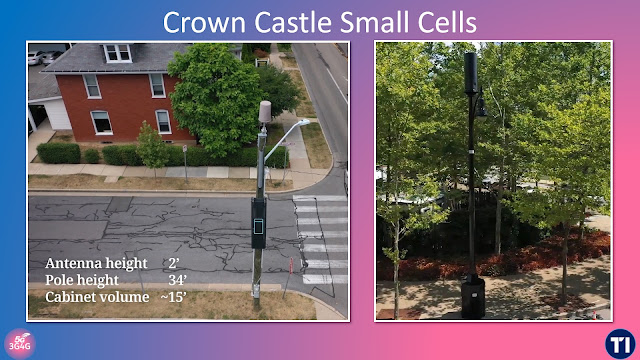
One of the biggest challenges is obvious when walking around central Rome. Large towers and conspicuous new infrastructure are simply not suitable in many areas. The Boldyn case study explains that existing urban infrastructure, including lamp posts and bus shelters, could instead be used as mounting locations for small cells. This allows capacity to be placed closer to users while keeping the radio equipment relatively unobtrusive.
This is an increasingly important aspect of mobile network densification. In very busy locations, improving capacity is not necessarily about building another large macro site. A layer of smaller radio nodes, supported by fibre and integrated with existing street furniture, can provide capacity exactly where it is required.
Rome provides an unusually demanding example of this approach because infrastructure deployment also has to coexist with archaeological restrictions, visual-impact requirements and huge numbers of residents and visitors.
The project goes beyond outdoor small cells. The Metro is another major part of the connectivity problem.

The original project envisaged 4G and 5G coverage through the stations and tunnels, creating a shared infrastructure that could be used by the mobile operators. The network uses a multi-operator Distributed Antenna System, with fibre and radio infrastructure carrying the operators' services through the underground environment.
This is important because neutral host infrastructure avoids every operator having to independently install essentially the same physical infrastructure. A shared fibre, DAS and antenna layer can support multiple operators while reducing duplication, construction work, cost and disruption.
The same principle applies above ground. The infrastructure is designed to be open to mobile network operators rather than acting as another competing mobile network. Neutral hosting effectively separates ownership of much of the physical connectivity infrastructure from the retail mobile services running over it.
This is arguably one of the most interesting lessons from Roma 5G.
As networks become denser, particularly in city centres, transport systems, stadiums, airports and other high-footfall locations, it becomes increasingly difficult to justify every operator installing a completely separate set of infrastructure. Shared infrastructure can provide a more practical way of achieving the required density.
The project has evolved considerably since Boldyn published its original case study.
In October 2024, INWIT acquired a controlling 52.08% stake in Smart City Roma, the project company originally known as Boldyn Networks Smart City Roma. Boldyn remained involved in the infrastructure build-out, while Smart City Roma became part of the INWIT Group.
Deployment has also moved from plans into operational infrastructure.
In April 2025, the first nine Metro A stations were activated with multi-operator 4G and 5G coverage, including connectivity through the tunnels between the stations. The infrastructure supports Fastweb-Vodafone, Iliad, TIM and WINDTRE.
By September 2025, coverage had been completed across all 27 stations and tunnels on Metro Line A, using more than 85 km of fibre and around 1,500 mini-antennas. At the same time the city was progressively activating Wi-Fi 6, cameras and other smart-city infrastructure across Rome's public squares.
#ROMA5G pic.twitter.com/X8ApcOdLC2
— ロマ/Roma (@romajacks3) February 7, 2026
The rollout has continued during 2026. INWIT reported that by the end of June, work had been completed across Lines B and B1, reaching 48 Metro stations overall, while deployment was under way at seven stations on Line C.
The outdoor network has also continued expanding. By March 2026, infrastructure including public Wi-Fi, IoT systems, cameras and small cells had reached 92 squares, and INWIT subsequently reported free Wi-Fi connectivity across 100 Rome squares during summer 2026.
There is an important distinction here between connectivity infrastructure and smart-city applications.
The network does not automatically make Rome a smart city. What it provides is the digital foundation on which applications can be built. The original plan included connected cameras, environmental sensors and other IoT systems, potentially supporting areas such as traffic management, public safety, environmental monitoring and waste management.
The diagram in the Boldyn case study provides a good summary of this layered approach. It combines indoor coverage for buildings, street-level sensors and cameras, outdoor small-cell coverage, Wi-Fi 6 in public squares, fibre connectivity and 4G/5G DAS throughout the Metro.
The result is therefore much more than a conventional mobile-network rollout.
It is effectively a shared digital infrastructure layer for the city, with different access technologies being used depending on the requirement: macro mobile where appropriate, small cells for street-level capacity, DAS underground, Wi-Fi for public access, fibre for transport and backhaul, and IoT connectivity for municipal applications.
The recently released Threads of Connectivity documentary, featured on National Geographic's digital platforms, looks at the challenge of bringing modern connectivity into two cities whose infrastructure was built long before anyone imagined mobile networks: Rome and New York. The Rome segment is particularly interesting because much of the successful infrastructure is deliberately designed not to be noticed.
That may ultimately be one of the most important lessons from Roma 5G.
As mobile networks continue to densify, the infrastructure supporting them may increasingly need to disappear into the environment rather than dominate it. Small cells integrated into street furniture, shared fibre, multi-operator DAS and neutral-host models make it possible to add significant network capacity while reducing duplication and visual impact.
Rome may be an extreme example because of its history and architecture, but the underlying problem is common to cities everywhere.
The future of urban mobile infrastructure may therefore be less about building more obvious mobile sites and more about creating a dense, shared and largely invisible connectivity layer woven into the city itself.
Related Posts:
- The 3G4G Blog: Why Connectivity on Trains Is Still So Poor
- Telecoms Infrastructure Blog: Bringing Connectivity to Underground Rail Network
- Telecoms Infrastructure Blog: Upcoming “Line 15 South” Metro Line of the Grand Paris Express gets 4G/5G Mobile Infrastructure
- Telecoms Infrastructure Blog: Helsinki Metro’s Cellular Network Pilot
- Telecoms Infrastructure Blog: Seoul Metro Wi-Fi Backhauled by Samsung's 5G mmWave Network Solution
- Telecoms Infrastructure Blog: London Underground Mobile Network Infrastructure
- Telecoms Infrastructure Blog: Crown Castle bringing more Small Cells to the USA
- Connectivity Technology Blog: Deutsche Bahn to get Seamless Mobile Network Along all Tracks
- Connectivity Technology Blog: China Unicom Brings 5G Connectivity to Nanjing Metro
- Connectivity Technology Blog: Deutsche Bahn to get Seamless Mobile Network Along all Tracks
- Telecoms Infrastructure Blog: TIM and INWIT to deploy small cells in Italy