Showing posts with label Country USA. Show all posts

Tuesday, 18 February 2025

Meta's Project Waterworth: The Next Evolution in Subsea Connectivity

Meta has unveiled its most ambitious subsea cable project to date — Project Waterworth, previously referred to as "W", because of it's shape. The multi-billion-dollar initiative is set to become the longest subsea cable in the world, spanning over 50,000 km and connecting five major continents, including the U.S., India, Brazil, and South Africa. With 24 fibre pairs delivering the highest capacity technology available, Project Waterworth will redefine global digital infrastructure and enhance connectivity for billions of users.

Subsea cables form the backbone of the internet, carrying more than 95% of intercontinental traffic and enabling global communication, financial transactions, and AI-driven innovations. With this latest venture, Meta aims to open three new oceanic corridors, ensuring high-speed, reliable connectivity that will power the next wave of AI advancements worldwide. By leveraging cutting-edge routing techniques, enhanced burial methods in high-risk areas, and deep-sea deployments up to 7,000 metres, Project Waterworth is designed for maximum resilience and security.

India at the Centre of Meta’s Connectivity Vision

India is central to Meta’s strategy, with its platforms—Facebook, Instagram, and WhatsApp—serving over a billion users in the country. With AI adoption accelerating, demand for data centre capacity and seamless connectivity is at an all-time high. Project Waterworth is expected to play a pivotal role in supporting India’s digital economy by providing the necessary infrastructure to handle AI workloads, cloud services, and high-speed internet demands.

The project also underscores Meta’s shift in subsea cable strategy. Unlike its earlier 2Africa initiative, which followed a consortium approach, Project Waterworth appears to be a fully owned and controlled system. This mirrors Google's model of securing dedicated infrastructure for strategic markets rather than relying on shared capacity. While this approach ensures end-to-end control and security, it diverges from the collaborative model that has been highly successful in previous large-scale subsea cable projects.

Bypassing Global Chokepoints

One of the key aspects of Project Waterworth is its avoidance of politically sensitive and high-risk regions. Meta has reportedly designed the cable to steer clear of the Red Sea, the South China Sea, Egypt, and the Malacca Strait—areas that have become significant geopolitical bottlenecks for global internet traffic. By taking a direct route between the U.S. and India with strategic stops in South Africa and potentially Australia, Project Waterworth aims to ensure long-term security and avoid the risks associated with conflict zones and regulatory challenges in transit countries.

However, this bypassing of traditional routes does come with a trade-off: increased latency. Despite this, Meta appears to prioritise long-term security and reliability over marginal improvements in data transmission speeds. The project will also likely face regulatory hurdles, particularly in India, where obtaining permits for marine surveys and installations is notoriously complex and time-consuming.

The Battle for AI Connectivity Dominance

Meta’s decision to fully own Project Waterworth could have wider implications for the subsea cable industry. If Meta excludes partners, it may push competitors like Google to develop their own dedicated infrastructure to serve India’s growing digital ecosystem. Given the scale of investment—potentially exceeding $10 billion over the next decade—this move signals a new era of tech giants building independent, AI-optimised connectivity solutions.

While Project Waterworth marks a significant leap forward in global connectivity, the challenge will be balancing rapid deployment with regulatory constraints. If successful, it will not only strengthen Meta’s position as a digital infrastructure leader but also cement India’s role as a global AI powerhouse in the decades to come.

Related Posts:

Friday, 19 January 2024

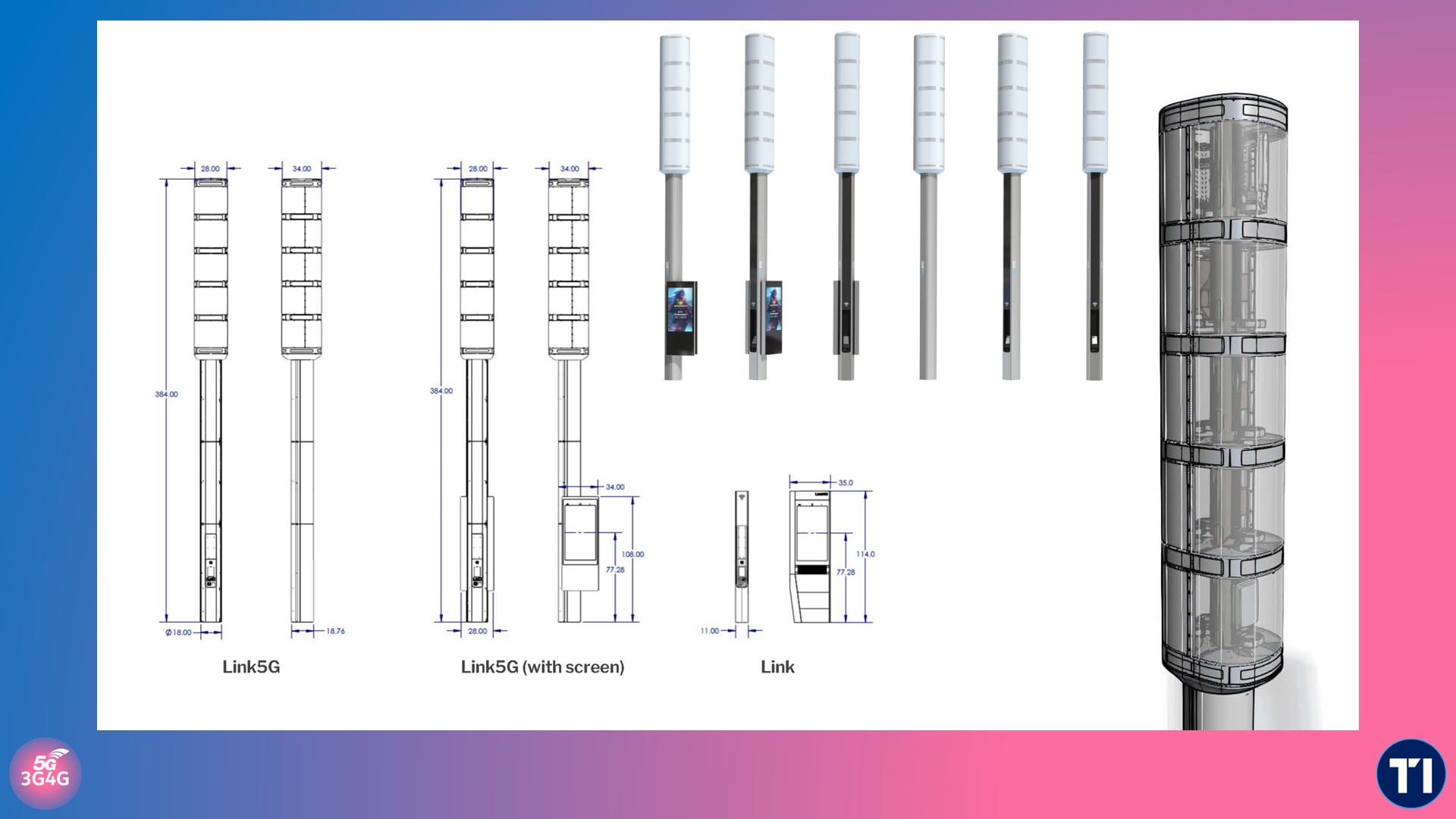
5G and Wi-Fi Connectivity from Link5G and LinkNYC's Tall Towers

Link5G is LinkNYC’s second generation offering that aims to improve the digital connectivity in New York City. The official website says:

Conceived in 2021 (the Year of 5G), Link5G enables the equitable deployment of both 5G cellular coverage and Wi-Fi connectivity across the five boroughs. Using multi-tenant structures, transmitters for telecommunication service providers will be housed within Link5G kiosks, expanding 5G options and enhancing coverage in underserved areas.

Link5G kiosks will bring better cellular service, increased opportunities to connect to free Wi-Fi, and improved options for in-home broadband internet access.

90% of the new Link5G kiosks, which are enabled for 5G and feature the same free services as the original Link kiosks, will be deployed in The Bronx, Queens, Brooklyn, Staten Island and above 96th Street in Manhattan. Additionally, 13 Community Districts have been specifically chosen by New York City to receive a minimum number of kiosks. Link5G will enhance neighborhoods’ cellular connections and provide businesses and pedestrians with improved high-speed Wi-Fi coverage. Link5G’s 32 foot height ensures that a 5G signal is effectively broadcast from optimal height for all carriers to reach New Yorkers' mobile devices.

Urban Omnibus has a good explainer of the issue and the infrastructure here. Quoting from the article:

CityBridge largely failed to accomplish its goal of helping to bridge the digital divide in the six years after kiosk installation began. The company put the majority of its more than 1,800 LinkNYC units in Manhattan but relatively few in the Bronx, Brooklyn, Queens and Staten Island, where neighborhoods lack at-home and mobile broadband at a higher rate. As THE CITY, the state comptroller and other news outlets have documented, the company fell short of ad revenue projections and was unable to pay $60 million it owed the city. The revenue shortfall resulted in an abrupt halt to kiosk installation, leaving many areas outside Manhattan without the access they were promised. The company faced bankruptcy in 2019. The city contemplated terminating the deal in 2020.

But despite the LinkNYC program’s history of delinquency, city officials are giving CityBridge another chance to bolster digital equity citywide: The company is now preparing to install hundreds of 32-foot-tall Link5G towers, beginning this summer. The city’s Public Design Commission approved the Link5G design for commercial and manufacturing areas at a meeting in December. Members postponed a vote on a residential rollout in order to review data on the service and infrastructural impacts of the towers’ first wave.

The new structures will be more than three times as tall as the original LinkNYC design. Like their predecessors, the lower part of the new structures will have a 911 button, USB ports, a tablet, calling capabilities and advertising displays. The structures will also provide free Wi-Fi. But the new designs will be topped by fifth-generation cellular network technology, or 5G, which will radiate from their upper chambers to enabled devices at street level. Multiple telecom companies could pay CityBridge to house their 5G equipment inside the chambers of a single structure. Their payments would bring in a new revenue stream to CityBridge, funding the company’s operations and expanded footprint.

The structures’ signals will supplement existing 5G networks that currently provide consumers speedy wireless internet service. City officials and CityBridge insist that more cell sites are necessary given the technical specifications of 5G, which require a “line of sight” to work: 5G is carried on millimeter waves that, unlike 4G frequencies, cannot penetrate most surfaces, whether a building or a bus.

Not everyone agrees that these look good or they will help in the future but there is a lot of support behind their installation. This article in NY Daily News for example argues:

Reliable wireless service requires the deployment of new infrastructure that supplements existing technology, such as rooftop antennas and underground fiber cable — or Link5G kiosks, which have space for up to five wireless carriers’ equipment. That means they can provide better, faster, and cheaper service for more people and small businesses nearby.

Bronx residents are not the only New Yorkers who could benefit from Link5G. Across New York City, approximately two-in-five households lack either a home broadband connection or mobile broadband through cell service. More than 1.3 million New Yorkers lack both. For these people, the social, educational, economic, and public safety consequences can be catastrophic. Here in the Bronx, nearly one in five teens cannot finish their homework because they live on the wrong side of the digital divide.

Link5G will eventually roll out to 2,000 locations, with 90% installed in the Bronx, Queens, Brooklyn, and Staten Island and above 96th St. in Manhattan. The need for these kiosks in underserved areas is illustrated by the fact that Link5G’s predecessor, LinkNYC, has provided more than 13 million New Yorkers with free, high-speed wireless internet since 2016 and is used to make around 425,000 phone calls monthly. It also offers access to 911 emergency services and valuable community-oriented public service announcements.

Even in districts with historic or commercial corridors, where locals have questioned the need for these kiosks, it’s unwise to assume every person who lives in the neighborhood, commutes there for work or is visiting has the same access to connectivity. My constituents often commute to other boroughs for work; their ability to stay connected is a necessity — not a luxury.

Still, many critics see the kiosks — which stand only as tall as traditional light posts — and attack their location, size, or ad screens without acknowledging the benefits of the kiosks to the city at large.

Let us know what you think.

Related Posts

Monday, 12 September 2022

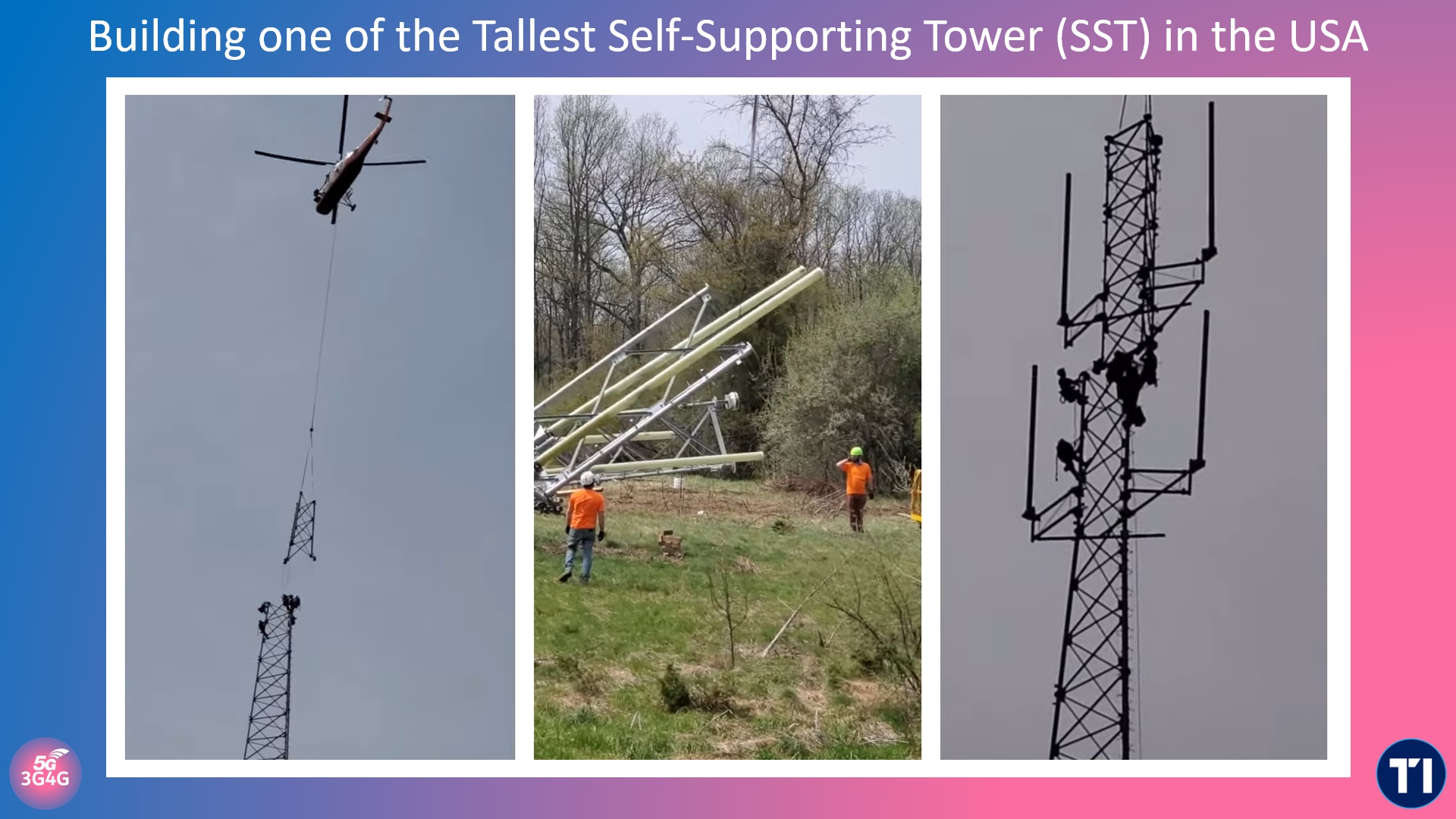
Construction of a Self-Supporting Tower (SST)

Inside Towers shared a video of SST (self-supporting tower) construction on YouTube. According to the article, invited to observe the installation of the last three preassembled sections of a very new, very big SST. Article here and the video as follows:

Related Posts

Monday, 8 August 2022

Verizon's Growing Small Cells Footprint

Verizon was in news recently when their CTO, Ed Chan, mentioned that the operator had plans to speed up its small cell buildout starting in 2023. Light Reading quoted in an article:

His comments, made to financial analysts at Wells Fargo, come after the small cell market in the US took a breather during 2021 as big network operators focused on building out their new midband spectrum holdings via bigger, macro cell sites.

"Verizon anticipates small cells activity will ramp in 2023 as activity shifts toward 16t16r deployments from early 8t8r deployments built in 2022," wrote the Wells Fargo analysts of their recent meeting with Chan. Newer 5G radios can generally support more antennas, including 16T16R configurations.

"Chan also referenced that a third party had taken longer to grow scale and expertise to handle the installs Verizon had planned, but that it is reaching a point where a higher mix will trend toward third-party deployments from self deployments today," the analysts added.

Verizon officials did not respond to questions from Light Reading about Chan's meeting with Wells Fargo executives. The meeting is not listed among the operator's recent public investor events.

The small cell news could be important to equipment vendors, ranging from Airspan to Ericsson to CommScope. Jennifer Fritzsche, managing director at investment bank Greenhill & Company, wrote recently that Chan's comments could presage a resurgence in the US small cell market. She speculated that Verizon could turn to third-party small cell providers like Crown Castle and ExteNet Systems.

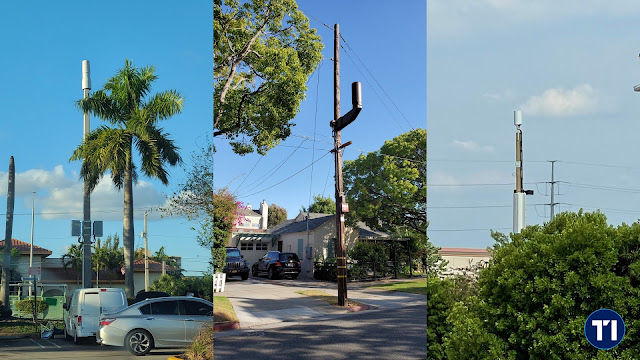
Small cells are big in the USA but the definition of it has become a bit fuzzy. In the old days it used to be an all-in-one unit but now anything that is deployed with an omnidirectional antenna or anything that is deployed on lamp posts or poles can be considered a small cell. 

Over the last few years we have looked at the small cells pics in the USA (see related posts at the bottom), so here are some of them from Verizon.

Quoting again from the Light Reading article:

Verizon is widely regarded as the leader in small cells in the US. The company has so far deployed 30,000 small cells sites for its millimeter wave (mmWave) 5G network.

"We continue to deploy millimeter wave, which is a key part of our network, providing massive bandwidth in dense urban areas," said Verizon's Rima Qureshi, the operator's chief strategy officer, during a recent Verizon investor event. But company officials haven't provided any specific goals for small cell buildout in 2023 and beyond.

T-Mobile has said that it eventually expects to operate around 40,000 to 50,000 small cells as it completes its big 5G network buildout, while AT&T at one point had planned to operate 40,000 small cells by 2015. But AT&T did not meet its goal, and company officials have remained quiet about small cells since.

Verizon, AT&T and T-Mobile have all been working to deploy their midband 5G spectrum holdings, and that work has shifted their focus away from small cells. Macro cell towers can cover wide geographic areas, while small cells – which typically sit atop street lights and rooftops rather than large cell towers – are primarily viewed as a method to improve capacity rather than coverage.

Which one is your favourite? Let us know if you have more pictures.

Related Posts

Friday, 11 February 2022

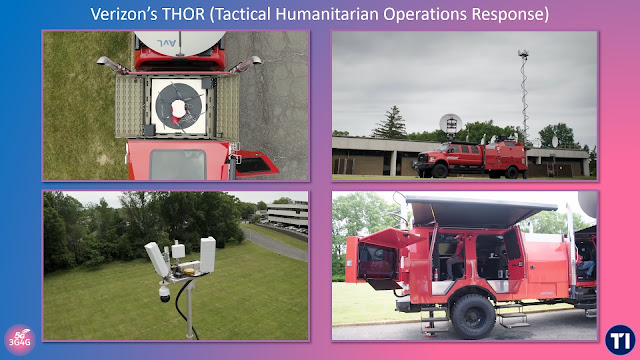
THOR - Verizon's Disaster Response COW

When we wrote about how Verizon uses satellite connectivity to restore services after hurricanes, someone made us aware of THOR, the Verizon disaster response vehicle in a league of its own.

The Verizon Response Team (VRT) has a collection of different types of field equipment, which they refer to as 'The Barnyard'. This includes COWs (Cell On Wheels), COLTs (Cell On Light Trucks), CROWs (Cellular Repeater On Wheels) and GOATs (Generator On A Trailer). The latest addition to this is THOR (Tactical Humanitarian Operations Response).

The press release points out:

THOR is National Incident Management System — or NIMS-1 — compliant and offers full radio interoperability and onboard Joint Operations Center services. It provides a multitude of connectivity options, spanning private 5G, commercial 4G LTE, Land Mobile Radio and tactical radio, wireless networking, microwave, mesh and more. Other components include 4G/5G radios, a rear command center, a camera, a six-seat cabin and an exterior touch screen display.

It also comes equipped with a tethered drone to capture an aerial view that can be fed over the network to devices on the ground and the command center below, potentially helping those in public safety or the military with risk and damage assessment, situational awareness or search and rescue operations.

As a prototype, there are currently no plans to build a second THOR, as designs for future 5G-enabled response vehicles continue to evolve.

Here is a video with more details of THOR.

Related Posts:

Monday, 31 January 2022

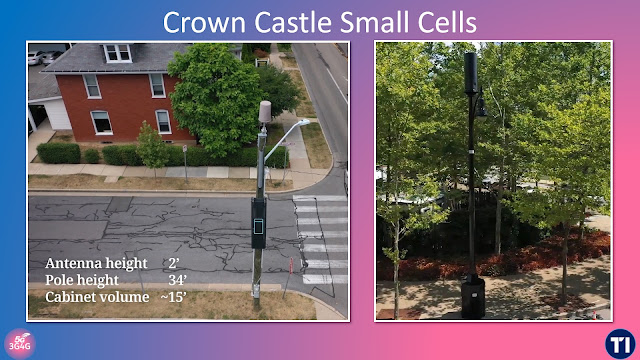
Crown Castle bringing more Small Cells to the USA

Crown Castle owns, operates and leases more than 40,000 cell towers and approximately 80,000 route miles of fiber supporting small cells and fiber solutions across every major U.S. market.

Earlier this month, T-Mobile US, Inc. and Crown Castle announced that the companies have signed a new 12-year agreement to support the continued build-out of T-Mobile's nationwide 5G network with increased access to Crown Castle's towers and small cell locations. The agreement enables the Un-carrier to further expand and deepen the reach of its industry-leading 5G network to serve consumers across the U.S. while also realizing financial synergies following its merger. The agreement also helps Crown Castle generate long-term tower and small cell revenue growth.

An RCR Wireless News article said:

Crown Castle secured commitments for over 50,000 new small cell nodes during the last twelve months, which equates to approximately 70% of the total small cells the booked in its history prior to 2021, the company’s CEO Jay Brown said in a release.

“As a result, we now have approximately 55,000 small cell nodes on-air and more than 60,000 committed or under construction in our backlog. Our customers are already planning for the next phase of the 5G buildout that will require small cells at scale, and this inflection in our small cells business reflects how well-positioned we are to support their wireless network needs for years to come, with our more than 80,000 route miles of fiber concentrated in the top U.S. markets,” the executive said.

“I believe 2022 will be an important transition year for our small cells and fiber business, as we prepare to accelerate our deployment of small cells from approximately 5,000 this year to what we expect will be more than 10,000 per year starting in 2023,” Brown added.

A Light Reading article from last year talked about a new report from Altman Solon. 

Altman Solon said it derived its findings from a database it constructed of small cells across more than 70 US markets. "Leveraging analysis of this database and augmenting with other primary and secondary research and our deep experience and knowledge base in the space for all small cell ecosystem players, Altman Solon has developed preliminary critical insights about the competitive landscape in the US small cell market," the firm boasted.

Among its findings:

  • "Small cell growth has been much slower historically than what industry reports have projected due to the regulatory climate, lack of neutral hosts, and limited backhaul," the firm wrote
  • Roughly 70% of the small cells it identified are located in dense urban and urban areas.
  • Crown Castle operates about 50% of all small cells identified, while mobile network operators like Verizon account for around 35%. Crown Castle operates about 50,000 commercially available small cells today, with another 30,000 on order. ExteNet Systems operates roughly 32,000 small cells across the country, while Mobilitie – recently acquired by Canada's BAI Communications – counts around 10,000 small cells.
  • Altman Solon identified very few neutral host small cells, which are small cells that transmit signals for more than one network operator. Such devices are considered critical to the growth of the industry considering neutral host small cells can generate significant revenues for the companies that operate them.

Here is a short video from Crown Castle explaining their view of small cells

Related Posts:

Thursday, 28 October 2021

AT&T Small Cells and Macrocells

It's been a while since I posted some small cell pictures from the USA. It's always nice of people to share their pics on Twitter and here are some of them I found interesting.

On it's website, Raycap has a case study with AT&T:

To see a range of solutions for concealing small cell wireless sites, look no farther than Dallas, Texas, home to AT&T corporate headquarters. Raycap worked with the carrier to complete two very different concealment projects.

  • Six custom-designed wall-mounted enclosures, designed, manufactured and painted to match the granite walls of AT&T’s buildings and provide 5G mmWave coverage around the AT&T Discovery District
  • Nearby, highly customized small cell poles were engineered to meet the carrier’s needs, the utility’s access requirements, and the city’s aesthetic guidelines—including an integrated image of the iconic Pegasus logo.

These two projects show how Raycap-led collaboration among all stakeholders can solve challenging wireless deployments: wall mounted, rooftop mounted, integrated in poles, and others.

You can download the PDF here.

Related Posts:

Friday, 17 September 2021

Bigbelly's Telebelly Small Cells to Connect Rural and Urban Users


Bigbelly claims to be the world leader of smart waste and recycling solutions for public spaces. According to their website, they have a proven solution that has been deployed in 50 countries around the globe. When the company started back in 2003, the mission was to transform one of the least efficient and resource heavy operations - waste operations. Today, Bigbelly provides a public right-of-way platform to deliver smart solutions and host communications infrastructure.

Earlier this year, they announced that Telebelly, an integrated pole and antenna solution that expands the Bigbelly station’s service by offering enhanced wireless services to the communities it serves, is set to boost connectivity across UK cities following its decision to launch. The press release said:

The move is expected to accelerate growth of the UK’s small cell network, which is a series of small antennas attached to existing urban infrastructure within densely populated areas. It will also pave the way for 5G by making it easier for telecommunication companies to deploy a faster and more reliable service without relying on large-scale mast installations.

Telebelly, which is 4G and 5G capable, will also reduce visual clutter associated with the growing number of small cells currently secured externally to fixed structures such as streetlights, as it is securely and internally housed.

Bigbelly anticipates interest in Telebelly from UK local authorities, which are seeking solutions for their public spaces that utliise, wherever possible, existing or multi-purpose infrastructure.

Councils, mobile network operators and other third parties are now able to consider the existing 2,500 Bigbelly units in operation across the UK, as well as new locations, for potential Telebelly sites. Wherever a public waste bin is appropriate, a Telebelly may be the solution to hide small cells in plain sight.

Meanwhile their press release in Australia announced:

Today Bigbelly Solar, Cellular Asset Management Services, and Smartsensor Technologies, Bigbelly distributor in Australia, announce they have deployed a number of Telebelly Wireless cabinets, a hybrid telecom and waste management cabinet to benefit the community providing waste services and wireless coverage.

Bigbelly Solar says this is a global first, with Blackman Park in the municipality of Lane Cove being the first one in the world to go live.

The Lane Cove council commented: “Lane Cove has been using Bigbelly compacting waste bins successfully in the community to help provide more capacity and a cleaner environment compared to conventional litter bins. The integration of this solution with mobile connectivity allows us to additionally provide much needed mobile service in currently underserved locations.”

Bigbelly Solar says the benefit of these units is that they blend in with the surrounding environment and matches the recognisable form of an adjacent big belly waste bin.

Not only does the community benefit from the increased mobile coverage footprint, each new Telebelly station now features a Bigbelly high capacity solar-powered waste compactor, complete with hands-free capabilities.

In addition to providing 4G voice and data services, the Telebelly could also be configured to provide Internet of Things (IoT) connectivity and Wi-Fi. A strong and reliable wireless connectivity not only provides a telecom advantage; such a service improves safety and security around public spaces.

Telecommunications have played an integral part during the recent Covid-19 crisis, allowing Australians to continue to work from home and stay connected with friends and family.

For those living in areas with limited coverage due to topography, small infrastructure solutions allow mobile operators to utilise public spaces such as parks and community ovals with coverage while also providing waste solution for the community’s benefit. Bigbelly Solar says these smaller solutions will reduce congestion on the network thus allowing mobile operators to provide mobile coverage in homes and businesses.

Meanwhile in the USA, where their Smart Waste & Recycling solution has been deployed in all 50 states, they deployed Telebelly small solutions in Milwaukee last year. Their blog post says:

The City of Milwaukee first connected with Bigbelly when a major wireless carrier reached out regarding siting challenges ahead of a significant event in the area. The event was fast approaching, and the city required a solution to host small cell in those central, inevitably high-traffic locations. The City looked to solve the all-too-common problem of hiding small cell infrastructure in a manner with the least visual impact. In other words: their complex technology needed to hide in plain sight.

Like many central locations, these high-traffic downtown areas were deemed to be “aesthetically sensitive.” Project approval was fully contingent on the Telebelly’s concealment solution: its ability to be compact, efficient, safe, and self-effacing.

The City was excited about the Telebelly’s multipurpose capabilities, such as small cell hosting, smart waste, IT hosting and more. But most importantly, Milwaukee was intrigued by the Telebelly’s ubiquitous form factor; its simple & understated aesthetic is inherently non-intrusive. This was essential to their form factor challenge.

Within six months of the initial conversation with the wireless carrier, the Telebellies were installed and ready to go! Already, both wireless carriers and the City are thrilled with the installation & performance of their new fleet, and assert that the Telebelly units are an excellent solution for areas which are traditionally difficult to permit.

Readers of this blog will no doubt be aware of many different solutions for both the scenarios listed above, coverage and capacity, that I have covered over the years with similar solutions. It remains to be seen how operators and councils embrace it. 

Embedded below is a detailed video from them from Smart Cities Week 2020, discussing "Smart Alternatives to Small Cell Deployment":

Related Posts

Sunday, 8 March 2020

Super Bowl 2020 Infrastructure in Miami, Florida, USA


Superbowl is a big thing in the US and is catching on in other parts of the world. My favorite part is all the trailers for the upcoming movies that gets dropped in the half time. All the US operators spend months getting ready with the infrastructure in the city and the stadium. After all, as an operator, you expect a fantastic feedback from your existing customers and show off the speeds after the game.

Quoting from Verizon news:

Verizon is on the ground in Miami working hand-in-hand with first responders, local and state government agencies to help keep everyone connected during the big game. 

Our work in Miami has been focused on three key areas: network investment, our state-of-the-art Command Center and being embedded at Florida’s Emergency Operations center.

Verizon's network engineers have been hard at work for more than two years to ensure that our network is ready for the big game and all the festivities that go along with it. As part of the preparations, Verizon has invested over $80 million dollars to enhance our to support the Super Bowl in and around the stadium and the greater Miami area.

Other investments include laying more than 230 miles of fiber throughout Miami, adding existing capacity to over 280 existing cell sites, installing 5G nodes to support NFL Super Bowl venues and events, installing close to 30 in-building solutions to enhance performance around the city (i.e. popular hotels and shopping centers), installing 5G at both the Miami and Fort Lauderdale Airports and more.

These are permanent network enhancements that will benefit the Miami residents and visitors for years to come.

In their announcement, AT&T said:

We’ve been working for more than a year – and have invested more than $85 million – to boost our network through a series of both permanent and temporary upgrades in the city. All this is designed to help residents, first responders and fans stay connected wherever they are.

And to keep fans safe at one of the year’s biggest sporting events, the FirstNet team at AT&T and the First Responder Network Authority (FirstNet Authority) are working hand-in-hand with dozens of public safety agencies to prepare. This advance work helps ensure first responders have the coverage, capacity and capabilities – network priority and preemption included – that they need to stay connected throughout the festivities.

We’ve upgraded our portion of the in-stadium Distributed Antenna System (DAS) and other network enhancements – like adding 5G+ and Band 14 spectrum – to provide over 300% more LTE capacity than what was available at the start of the football season. That means we’re utilizing the most LTE capacity currently available on any AT&T DAS in the state of Florida.

The DAS, a system of strategically-placed antennas that distribute and actively manage wireless network coverage throughout the stadium, help evenly distribute coverage, creating a better fan experience. This capacity boost helps manage heavy wireless traffic and gives fans and first responders strong wireless coverage throughout game day – from early tailgating to the final trophy presentation.  

We didn’t stop with in-stadium enhancements. Fans and first responders will be able to enjoy improved coverage in hotels, arenas, airports and convention centers, among other venues through a series of network enhancements:

  • We now offer extra speed and capacity over 5G+ in parts of 35 cities, including Miami and Miami Gardens.
  • We’ve upgraded or installed a new DAS at 29 additional locations throughout the Miami area.
  • We’re deploying 6 Cell on Wheels (COWs) to handle expected increased wireless network demands. They will improve reliability and data speeds during the week leading up to and during the Big Game.
  • We’re also enhancing network coverage for the 10th annual AT&T TV Super Saturday Night. The deployments will include a Super COW capable of 5G+ at Meridian Island Gardens to enhance coverage for all the fans headed to see Lady Gaga perform the night before the Big Game.
These investments will allow Florida residents, businesses, visitors and attendees at the festivities to celebrate the Big Game over the AT&T network at home, at work or on the go.
  
In addition to these network enhancements, we’ve been making public safety-specific preparations to ensure the FirstNet communications platform is ready for the Big Game:
  • We deployed high-quality Band 14 spectrum across the area to provide optimal coverage and capacity for first responders. We look at Band 14 as public safety’s VIP lane. In an emergency, it can be cleared and locked just for FirstNet subscribers, further elevating public safety’s connected experience and emergency response.
  • We’ve installed metro cells at numerous local and federal public safety agency centers. These enhancements provide agencies with a direct network connection to the critical information they need.
  • We’ll place three FirstNet Satellite Cell on Light Trucks (SatCOLTs) outside of the stadium for extra redundancy and to provide additional coverage to first responders, if needed.
  • We’re equipping first responders with FirstNet Ready™ devices to help ensure they have communications across the highly secure FirstNet network core.
Plus, members of the FirstNet team will staff the public safety command posts to support local, state and federal agencies in the week leading up to and through the day of the Big Game. This will help ensure communication needs for public safety officials are met.

In their announcement, T-Mobile said:

Over the last year, T-Mobile permanently boosted network capacity at venues throughout Miami so customers can share their game day moments in real time. T-Mobile and Metro by T-Mobile customers already have the biggest 5G network in Miami.  And now, customers with capable 5G smartphones can get a speed boost from millimeter wave 5G in places like Hard Rock Stadium and Bayfront Park.

With 150,000 people predicted to travel to Miami for Super Bowl LIV events, T-Mobile focused network enhancements where the biggest crowds will be, including Hard Rock Stadium, Miami Beach Convention Center, Bayfront Park, Miami Beach and Miami and Fort Lauderdale airports. And almost all the updates are permanent, so Miami residents and visitors can enjoy the improvements long after the Super Bowl is over.

T-Mobile more than doubled LTE capacity at Hard Rock Stadium so customers can stream, tweet, post and chat about every big moment from the game. To enhance indoor capacity at key venues throughout Miami, T-Mobile built new distributed antenna systems (DAS) and deployed small cells throughout the city to provide additional performance boosts in places that can be difficult for towers to reach.

Almost all of Miami is covered with T-Mobile’s far reaching low-band 5G and fast LTE, so whether customers watch the game from the couch or the beach they’ll be ready to share the action.  In addition to launching broad 5G coverage last month, T-Mobile has newly deployed millimeter wave 5G for customers with capable smartphones in parts of Miami, including nearly all of Bayfront Park and at Hard Rock Stadium in the lower bowl, parking lot and main entrances.

To ensure customers with compatible smartphones know where they can access 5G in Miami, T-Mobile has an interactive map of its nationwide low-band 5G to show where coverage is available down to the neighborhood level and created new millimeter wave maps for the city.

Finally, Sprint, who is the only one to share it's deployment pictures and equipment (shown on the top) said:

As part of our Next-Gen Network build, over the last two years we’ve invested millions of dollars in network infrastructure and upgrades to improve our customers’ wireless experience across Miami.

For the second year in a row, Sprint’s Big Game MVP for increased capacity and faster speeds than before is our innovative Massive MIMO technology. And this year, we’re not only bringing customers a better LTE experience, but we’ve lit up Sprint True Mobile 5G service in some areas of Miami including the stadium, in preparation for this exciting event!

Those who live, work or visit Miami should be fired up because these aren’t temporary fixes. These permanent solutions will benefit Sprint customers for a long time to come.

Based on the huge increase in customers’ data usage last year and in 2018, we’re using two different technologies this year to help meet fans’ demands to stream, download, video chat, text and connect on social.
  • In and around the stadium, Sprint’s Massive MIMO radios using our fast 2.5 GHz spectrum and breakthrough “split-mode” feature will enable us to simultaneously deliver our most-advanced LTE service and Sprint 5G for customers attending the showdown in person.
  • In addition, we will be providing 4G/5G dual connectivity within the stadium, transmitting 4G over a state-of-the-art distributed antenna system (DAS) with more than 1,800 antennas and 5G through Massive MIMO radios.
Together, these solutions will provide the equivalent of 10 macro cell towers at the stadium. That will give fans the coverage and capacity they need whether they’re in their seats, at the concession stand or tailgating in the parking lot.

With massive crowds expected throughout Miami and the surrounding areas, we extended our network upgrades in Downtown and Midtown Miami and Miami Beach, as well as areas in West Palm Beach and Ft. Lauderdale.
  • Several dozen new Massive MIMO radios in high-traffic areas such as Downtown Miami, Midtown Miami, Miami Beach, Fort Lauderdale Beach and the Palm Beach Convention Center will provide improved capacity and faster LTE speeds than before. Customers on Sprint 5G devices in these areas will automatically connect to even faster speeds on our next-generation wireless network. Sprint’s average 5G download speed of 215 Mbps is over 5X faster than our LTE.*
  • Hundreds of new small cells have been installed across the urban and dense areas of the city to “fill in” the network with our 2.5 GHz spectrum. This will result in more capacity in that area and a boost in speed for customers.
  • Nearly 300 cell sites throughout the area have been upgraded to use all three of Sprint’s spectrum bands - 800 MHz, 1.9 GHz and 2.5 GHz - for faster, more reliable service than before.
  • Dozens of new macro cell sites have also been built in areas including Delray Beach, Doral, Hialeah, Homestead, Miami, Palm Beach Gardens, and Pompano Beach to further expand wireless coverage in the Southeastern, Florida market.

So who won? Well, that depends on who you ask.

On the Speedtest blog, they said:

Sprint’s home team might have won the game, but Verizon triumphed when it came to mobile download speeds, coming in 143.7% faster than second-place T-Mobile when considering Speedtest® results over all technologies. Sprint had the third fastest mean download speed in this category and AT&T came in fourth.

Focusing on their 5G game really helped Verizon take the day when considering overall speeds as T-Mobile had the fastest mean download speed (66.35 Mbps) on LTE. Sprint was second on LTE with a mean download speed of 56.16 Mbps, AT&T third at 39.18 Mbps and Verizon fourth at 30.67 Mbps. We break out 5G speeds for each operator below.

T-Mobile’s mean upload speed over all technologies was far better than competitors’. Upload speed is especially important at big events like this as fans try to share their game day experience with those not in the stadium.

T-Mobile also had the lowest latency, coming in 26.0% faster than second-place AT&T. Sprint was third for latency and Verizon fourth.

For comparison, the mean download speed over mobile in the U.S. in January 2020 was 41.23 Mbps, upload was 10.55 Mbps and latency was 46 ms.

Verizon easily beat T-Mobile and Sprint when it came to mean download speed over 5G during the big game. Verizon came in last, however, for both mean upload speed over 5G and latency. T-Mobile showed the fastest mean upload speed over 5G and Sprint had the best latency on 5G. While we did see 5G Speedtest results for AT&T during the game, there were fewer than 10, the minimum threshold we set for this event.

In 2019, fans at Mercedes-Benz Stadium in Atlanta used over 24 TB of data on the stadium Wi-Fi network on game day with an average Wi-Fi download speed of 30.98 Mbps. To get a baseline on the Miami experience, we looked at Wi-Fi performance during the Bengals v. Dolphins matchup on December 22, 2019.

Wi-Fi at the stadium did show some game day stresses yesterday, with a mean download speed 33.7% slower than the December 22 game. Mean upload speed dropped 25.7% and latency was up 28.6%.

Verizon also provided Wi-Fi for their customers during the big game yesterday, and the mean download speed was comparable to that on the stadium’s SSID. Mean upload speed on Verizon’s SSID was 12.1% slower than on the stadium’s, but Verizon’s Wi-Fi latency was also lower, showing a 22.2% improvement over stadium Wi-Fi.

It’s worth noting that mean upload speed in all cases was faster than that on download. This is impressive and helpful to fans trying to livestream their experience for friends back home.

This does not mean that it has stopped T-Mobile in claiming that they were winners.

You can say that based on the 5G coverage, this was justifiable

Hopefully in the next Superbowl, we will see some more concrete deployment pictures along with the marketing spin.

Related Posts:

Saturday, 15 February 2020

Verizon's Small Cells Start Paying Dividends

Pictures Source: Dr Jonathan L Kramer

In their recent investor meeting presentation, Verizon talked about many different approaches that have helped them keep pace with the increasing traffic.


While basic improvements like 256-QAM, 4x4 MIMO, Carrier Aggregation and CBRS/LAA have helped, other innovations like Interference Management Software has helped improve capacity.


Densification solutions include increasing number of small cells and more carriers per sector.


This chart above from the deck is a good summary of how different enhancements affect the LTE User Peak Throughput as well as the LTE Network Spectral Efficiency. According to the graph, this year they are planning to deploy FD-MIMO, a.k.a. Full-Dimension MIMO.

This research paper (link) on FD-MIMO provides an excellent overview of the topic. According to that "3GPP decided to use tens of antennas with a two dimensional (2D) array structure as a starting point. Full-Dimension MIMO (FD-MIMO), the official name for the MIMO enhancement in 3GPP, targets the system utilizing up to 64 antenna ports at the transmitter side."


This chart above is a good summary of how these enhancements have helped Verizon expand capacity to handle the increase of user traffic.


With regards to the small cells, the number of 5G small cells is expected to increase by at least 5 times this year to cope with the 5G traffic increase and coverage improvement. As Verizon has deployed mmWave spectrum for 5G, they will need significant number of smaller cells to provide coverage.


The tweet below shows an example of 5G Small Cell


Here is an interesting recent video from Verizon explaining small cells to their end users.


It would be interesting to see in the next few years how these small cells solve the coverage gap and handle the capacity need.

Related Posts:

Monday, 2 September 2019

5G Small Cells on 'Smart Poles' in Denver


There was a good report in FierceWireless about Verizon installing 5G in Denver using special ‘smart poles’. We have covered this topic of smart lampposts and poles extensively for many different countries including India, UK, Portugal, China and even Japan.

The article states:

The Boulder, Colorado-based company Comptek Technologies has designed stand-alone poles to house wireless small cell equipment that is completely hidden within the poles. The City of Denver has approved the design of these Comptek City Poles, and Verizon is now deploying them in Denver for 4G and 5G small cell equipment.

In addition to Verizon, Comptek is also working in different parts of the country with all the other major wireless carriers either directly or through their deployment partners. For instance, Comptek is working closely with its customer Xcel Energy, which has an eight-state footprint. Xcel is helping carriers to deploy their small cells on the utility’s existing vertical infrastructure. And in some cases, Xcel is taking down existing light poles and replacing them with Comptek poles that combine small cell equipment along with a streetlight.

The company has a national agreement with Verizon. Besides Denver, Comptek is working with Verizon in other cities including Columbus, Cleveland and Cincinnati, Ohio; Anaheim, San Diego and Los Angeles, California; as well as Salt Lake City. In the Denver/Front Range area, the company has about 350 poles under contract. And across the U.S. it’s got contracts to erect about 1,000 poles by the end of 2019.

CityPoles' website here isn't updated with the latest info but the earlier press release stated 300 small cells in Denver.


Continuing from the article:

The poles are designed in modular sections. There’s a foundation, base cabinet, shroud, upper pole and top antenna section. They’re custom-designed to incorporate various wireless equipment configurations, cabling, power supplies and antennas. In addition to the physical pole itself, Comptek also provides electronics and environmental controls. The poles can support single or multiple carriers.

Jim Lockwood, CEO of Comptek said that for 5G, Ericsson’s mmWave equipment is mounted in a tri-sector format, meaning that the radios and antennas are integrated with each other and they’re mounted at the top of the pole in three panels that face in different directions. Representatives from Ericsson and Verizon could not verify the "tri-sector format" or provide any additional information about it.

Related info:

Related Posts: