Showing posts with label Country Germany. Show all posts

Tuesday, 13 January 2026

Powering Vodafone’s Mobile Network with Solar Energy in Germany

Iberdrola has brought its first solar park in Germany into operation, with the renewable electricity generated at the site now supplying Vodafone’s mobile network nationwide. The project represents a growing convergence between energy and telecom infrastructure, as mobile operators look to secure reliable and sustainable power sources to support expanding network demands.

The solar park is located in Boldekow in the state of Mecklenburg-Western Pomerania and marks Iberdrola’s entry into onshore photovoltaic generation in the German market. The site covers an area equivalent to more than 65 football pitches and is equipped with around 80,000 solar panels. Once fully operational, the installation is expected to generate up to 53 gigawatt hours of electricity each year, with the entire output dedicated to Vodafone under a long-term power purchase agreement.

For Vodafone, the project provides a direct and predictable supply of renewable electricity for its mobile infrastructure across Germany. The annual energy output is sufficient to power around 3,000 mobile base stations, supporting the radio access network and associated systems that underpin nationwide mobile coverage. As networks continue to evolve to handle higher traffic volumes and increased densification, access to stable and locally generated energy is becoming a strategic consideration alongside spectrum, sites and backhaul.

The environmental impact of the solar park is significant. By replacing conventional grid electricity with solar generation, the project is expected to reduce carbon dioxide emissions by approximately 20,000 tonnes per year. Over an anticipated operational lifetime of around 30 years, this contributes meaningfully to emissions reduction targets while aligning network operations with wider sustainability objectives.

From an infrastructure perspective, the project illustrates a shift in how telecom operators source energy. Rather than relying solely on indirect mechanisms, such as renewable energy certificates, operators are increasingly entering direct supply agreements linked to specific generation assets. This approach improves transparency, strengthens energy security and creates a clearer relationship between network growth and renewable energy investment.

For Iberdrola, the Boldekow solar park complements its existing presence in Germany, where the company already operates offshore wind assets in the Baltic Sea. Expanding into onshore solar generation allows for a more diversified renewable portfolio and demonstrates how utility-scale energy infrastructure can be closely aligned with the needs of digital networks.

The project has also delivered local benefits, including regional investment during construction and long-term contributions to municipal revenues. This underlines how renewable energy developments tied to telecom infrastructure can support local economies while addressing national connectivity and sustainability goals.

As mobile networks progress towards higher capacity, lower latency and greater automation, their energy requirements will continue to grow. Projects such as Iberdrola’s solar park supplying Vodafone’s mobile network show how renewable energy is becoming a foundational element of modern telecom infrastructure, rather than a parallel or secondary consideration.

Related Posts

Tuesday, 11 November 2025

Vodafone’s 5G Advertising Pillars Bring Connectivity to Urban Streets

Vodafone Germany is giving a new lease of life to an old part of the cityscape. The familiar advertising pillars found across German cities are being transformed into 5G mobile base stations, delivering high-speed connectivity in areas where traditional masts are difficult to install.

In Düsseldorf, more than 100 such columns are already operational, providing 5G coverage across the city. Each pillar houses three compact antennas and all the equipment normally found on large masts, integrated neatly within the structure’s roof and concrete body. The design, developed in partnership with Ilg Outdoor Advertising, allows each pillar to cover an area of about 400 metres. The system is connected via fibre optics, ensuring low latency and data speeds of up to 1 Gbps.

This approach offers a practical solution to one of the biggest challenges of urban network expansion: finding new sites for antennas. Rooftop locations are often limited and subject to complex planning processes. By reusing existing structures, Vodafone has found a way to speed up deployment while blending infrastructure discreetly into the urban environment. The entire installation process for a 5G pillar takes less than half the time required for a conventional mobile base station.

The benefits of the project are already clear. In Düsseldorf, each 5G advertising pillar supports around 6,000 connections per day and handles roughly 200 gigabytes of data every week. The network, built with Ericsson’s equipment and operating on Vodafone’s standalone 5G+ technology, offers minimal latency and improved reliability. These compact sites helped strengthen coverage ahead of the European Football Championship, ensuring stable service in and around the stadium, fan zones and transport hubs.

Following the success in Düsseldorf, Vodafone is now extending the concept to other cities. Stuttgart recently became the first city in Baden-Württemberg to host a 5G advertising pillar, with five more due to follow by the end of the year. In total, up to 100 of Stuttgart’s 600 advertising columns could eventually be upgraded to 5G, enhancing coverage across busy streets, squares and landmarks such as the Mercedes-Benz Museum and the MHP Arena.

Each Stuttgart pillar uses Ericsson’s antenna technology and can deliver download speeds of up to 500 Mbps. The initiative is supported by local authorities who view it as a sustainable and space-efficient way to boost digital infrastructure. The combination of heritage and high technology brings a modern function to an iconic feature of German cities that dates back to the 19th century.

Vodafone’s 5G advertising pillars represent a clever mix of innovation, design and practicality. By making use of existing street furniture, the company is not only accelerating the rollout of next-generation connectivity but also showing how urban infrastructure can evolve to meet the digital needs of modern life.

Related Posts

Tuesday, 2 September 2025

Conical Antennas Boost Vodafone Germany’s Tunnel Coverage

Mobile coverage in tunnels has always been one of the most difficult challenges for network operators. Concrete walls, restricted space and the constant movement of air caused by passing vehicles all interfere with signal stability. Vodafone Germany has now taken a major step forward in overcoming these barriers with the deployment of a new generation of conical antennas. Designed by Ericsson, these antennas are engineered specifically for tunnel environments and have been introduced in the 1,400 metre Arlinger Tunnel near Pforzheim.

The new solution is based on a conical multi-band antenna that combines wide frequency support with a form factor able to withstand tunnel-specific conditions. Traditional antennas in tunnels often struggle with vibrations and pressure changes that occur whenever trains or cars move large volumes of air. These effects can cause instability in reception and transmission performance. The conical design offers superior resistance to these forces. Its aerodynamic shape reduces the impact of airflow and turbulence, which results in more stable signal propagation and higher reliability.

Ericsson’s antenna, known as the Antenna 9011 1LM (KRE 101 2571/1), operates across the 617 to 4200 MHz range. This wide frequency coverage ensures compatibility with all major mobile technologies from legacy 2G through to 5G mid-band and even C-band. The antenna achieves a gain of around 10 dBi and uses cross polarisation to support advanced features such as MIMO. It has been tested under demanding tunnel conditions, including alternating pressure cycles that simulate the effect of trains passing at high speed. These design elements make it particularly suitable for deployment in both road and rail tunnels.

In the Arlinger Tunnel, five of these antennas have been installed. Together they provide seamless coverage along the full tunnel length, ensuring that drivers and passengers can stay connected without interruptions. For commuters this means fewer dropped calls and more consistent data performance, while for Vodafone it represents a significant step in eliminating dead spots in challenging locations. The project also demonstrates how antenna engineering is evolving to meet the requirements of complex environments.

Delivering mobile coverage in tunnels is more complicated than simply placing antennas inside the structure. In shorter tunnels, antennas positioned at the entrance and exit can often suffice. In longer tunnels, however, operators must deploy signal repeaters and distribute the signal along the length of the tunnel using multiple antennas. This requires the installation of cabling and associated equipment, usually during periods when tunnels are closed for maintenance. To avoid duplication, one operator typically provides the infrastructure and others connect their networks to it.

Germany has a particularly extensive tunnel network with more than 270 tunnels on federal highways, over 400 on district and urban roads, and 761 railway tunnels. Collectively these extend for more than 1,200 kilometres. The introduction of conical antennas marks a practical response to the specific difficulties these environments present. Vodafone has already announced that it intends to use the new antenna type in 20 further tunnel projects across the country.

From an infrastructure perspective, the Arlinger Tunnel deployment highlights a broader trend towards highly specialised antenna systems. Rather than adapting generic equipment, manufacturers such as Ericsson are now producing models tailored for environments where airflow, vibration and space constraints dominate. The Antenna 9011 1LM shows how much progress has been made. Its mechanical robustness, compact size and wideband capability make it a versatile component for future-proof tunnel deployments.

Vodafone Germany’s network already reaches more than 93 percent of the population with 5G and the addition of tunnel coverage strengthens this footprint. For the growing number of travellers who depend on uninterrupted connectivity, solutions like the conical antenna are not just a technical achievement but also a practical improvement to everyday digital life. They also underline the importance of collaboration between operators and equipment vendors in tackling some of the toughest remaining infrastructure gaps.

Related Posts

Tuesday, 12 August 2025

Transforming Stadium Connectivity with SOLiD’s GENESIS DAS at Dortmund’s Signal Iduna Park

SOLiD is a global leader in innovative RF Amplifier, RF Radio and Optical Transport solutions that support some of the world’s most demanding wireless environments. The company’s Distributed Antenna Systems (DAS) power reliable cellular coverage and capacity in hospitals, sports and entertainment venues, airports, metro systems, government and corporate buildings, and other high-profile locations. From early 2G systems to 5G-ready and cloud-based solutions, SOLiD has a track record of delivering robust, scalable infrastructure that meets the growing demands of mobile users while reducing complexity, risk and energy consumption.

Signal Iduna Park in Dortmund, home of Borussia Dortmund and the iconic Yellow Wall of supporters, has become the first stadium in the world to feature a fully operational Open Radio Access Network (O-RAN) solution. In partnership with 1&1 and Rakuten, SOLiD has delivered a state-of-the-art Distributed Antenna System (DAS) that combines cutting-edge 4G and 5G capabilities with the benefits of open standards and advanced radio technology.

With a capacity of more than 81,000, the stadium is the largest in Germany and one of the most famous in European football. It is celebrated for its atmosphere, high attendance figures and the vast standing terrace on the south bank that can hold more than 24,000 fans. The venue has hosted matches during the 1974 and 2006 FIFA World Cups, the 2001 UEFA Cup Final, and was part of the 2024 European Championships. A stadium of such scale and reputation demands a mobile connectivity solution capable of delivering a seamless experience to tens of thousands of users simultaneously.

Large sports venues present unique challenges for mobile coverage. The system must deliver consistent connectivity across vast seating areas, indoor hospitality and operational zones, and high-traffic access points, all while managing peak usage during major events. The solution at Signal Iduna Park meets these demands through 30 network sectors in the stands, four more in indoor areas, and two covering the north and west entrances and parking zones.

The deployment includes 48 radio units and 128 antennas in the stands, complemented by 60 radio units and 21 antennas indoors. More than 10 kilometres of fibre optic cable and 30 kilometres of additional cabling underpin the network’s performance. This infrastructure ensures that not only 1&1 customers, but also those on other German mobile networks, benefit from the improved coverage and capacity.

At the heart of the project is SOLiD’s GENESIS DAS, a fully digital system that supports simultaneous transmission from all major mobile operators. More than 150 slimline, low power radio units are strategically placed throughout the stadium to deliver robust 4G and 5G coverage. By integrating O-RAN technology, the system enables hardware and software from different vendors to work seamlessly together while reducing power consumption and minimising physical space requirements.

This landmark project, completed ahead of the stadium’s 50th anniversary in 2024, is an example of how next-generation network solutions can transform the fan experience. For SOLiD, it is further proof of their role in advancing wireless densification in high-profile venues around the world. By bringing together O-RAN, mMIMO and advanced DAS capabilities, the Signal Iduna Park installation sets a benchmark for stadium connectivity and points towards the future of mobile infrastructure in large-scale sporting and entertainment environments.

Related Posts

Tuesday, 3 December 2024

Deutsche Telekom's Hydrogen-Powered Mini-Masts

Earlier in the year we wrote about Deutsche Telekom's Mini-Mast a.k.a. “Cell Tower To Go”.  Last year, DT set a new benchmark in sustainable technology with the deployment of hydrogen-powered antennas at the Nibirii Festival in Germany. This initiative replaced the traditional diesel generators with hydrogen fuel cells to provide eco-friendly energy for mobile base stations. The hydrogen is sourced in a CO₂-neutral process, marking a significant step towards green innovation.

For anyone who doesn't understand what hydrogen fuel cell is, this video has a good explanation.

At the festival, a hydrogen-powered mast supported 30,000 attendees with seamless LTE and 5G connectivity. The fuel cells, developed by SFC Energy, ensured reliable, uninterrupted service for 28 days, showcasing their potential for large events, emergencies, and remote areas. This shift underscores Deutsche Telekom's commitment to combining sustainability with technological advancements.

Additionally, compact mobile masts and stage-mounted small cells enhanced coverage and user experience. These innovations promise to redefine mobile connectivity, emphasizing rapid deployment and reduced environmental impact.

You can read the full story here.

Related Posts

Monday, 26 August 2024

O2 Telefónica Deutschland's Sustainable Phone Mast in Bavaria

It's amazing to see that the German operators are always sharing a lot of interesting trials and results. Last month O2 Telefónica announced that they have put Bavaria's first mobile phone base station into operation that operates completely independently of the general power supply. The press release said:

In Sindlbach, in the district of Neumarkt in der Oberpfalz, photovoltaic modules and biomethanol fuel cells supply the newly erected mast with sustainable energy. O2 Telefónica is thus closing a white spot for its local customers. They can now surf and make calls using the modern 5G standard, 4G (LTE) and 2G (GSM). O2 Telefónica is working on closing the last white spots and driving forward the network expansion quickly and sustainably.

The new mobile phone mast in Sindlbach is located in the middle of agricultural and forestry land. A power line to operate the technology is lacking far and wide. The innovative solution: at the mobile phone tower in Sindlbach, the energy is generated directly on site and emission-free. The main source of energy is a photovoltaic system. The electricity is temporarily stored in large lithium-ion batteries and is therefore always available. A biomethanol fuel cell supplies the energy for days with little sunshine. This alone could supply energy for two months in continuous operation with just one charge. The system is controlled using state-of-the-art cloud technology and AI. This makes it possible to switch automatically between the two energy sources as required. The self-generated energy on site saves over 13,000 kilowatt hours of electricity per year compared to a conventional installation.

In spring 2024, O2 Telefónica launched the first mobile communications site in Germany in Kirtorf, Hesse, that operates without a conventional power connection. In the video, Dag Hüdepohl, Senior Engineer Infrastructure, explains the goal O2 Telefónica is pursuing with this innovative concept.

Related Posts

Tuesday, 23 April 2024

'Connected Urban' - CU Phosco's 5G Smart Pole Streetlight Solution

When it comes to deploying outdoor small cells and infrastructure on streetlights and lamp posts, Germany is at the forefront. Check out the related posts at the bottom of this post to see all that's going on there.

In a recent press release, Telefónica Deutschland announced (Google translated from German):

The telecommunications provider O2 Telefónica and the infrastructure provider 5G Synergiewerk, together with the Würzburg public utilities, have put the first 5G street light into operation in Bavaria as part of a pilot project. The 5G lighting tower combines street lights and cell phone sites. In doing so, it fulfills two central utility tasks: to provide lighting at night and at the same time to offer the city's citizens a high-performance 5G mobile network.

The aim is to use the existing urban infrastructure as efficiently as possible for an improved mobile network and new digital applications - and thus increase the quality of life for city residents.

CU Phosco Lighting, which supplied the smart pole solution, announced on its website: 

CU Phosco Lighting is thrilled to announce the successful deployment of Connected Urban, its pioneering new smart pole solution designed to enhance mobile network capacities. As part of a Pilot project with our German partner, 5G Synergiewerk, the first 5G streetlight was recently installed in Würzburg, Bavaria, in collaboration with telecommunications provider O2 Telefónica and the Würzburg public utilities.

A smart city, modular, and fully customisable lighting and small cell high-performance mobile network solution within a single, compact footprint, Connected Urban is a break away from more traditional rooftop or cell phone mast locations, and so the installation marks a significant milestone in the evolution of street-level mobile network densification.

Replacing a conventional lamp post, the innovative solution efficiently utilises existing infrastructure and grid connections, to provide citizens with both night-time lighting and advanced telecommunications capabilities, setting a new standard for high-performance 4G and 5G mobile connectivity.

With digital infrastructure facing increasing demands, including music and video streaming, the Metaverse, AI-based programmes, augmented and virtual reality, as well as connected driving and autonomous logistics, Connected Urban is poised to significantly improve the quality of life for city residents and businesses.

5G Synergiewerk has a time-lapse video of the installation of 5G mast system on their website. A video of that embedded below:

Quoting again from Telefónica's press release:

The location on Versbacher Straße is the first active 5G street light in Bavaria . Another location will follow shortly on Schweinfurter Straße, which will conclude a successful pilot project . Coordination discussions are currently being held with all those involved for additional locations. The 5G street light offers smartphone users high bandwidths with 5G and 4G/LTE for mobile telephony and data use in the O2 network. The densification of the mobile network via such small radio cells, which are known in technical jargon as “small cells” , is particularly helpful with regard to the increasing data usage of O2 customers as well as future digital applications in the private and business customer sector. In addition to everyday music and video streaming, this will also include the Metaverse, AI-based programs, augmented and virtual reality, connected driving and autonomous logistics . In Würzburg, more than 40 mobile phone locations are already operating in the O2 network . They ensure comprehensive network coverage with 2G (GSM), 4G (LTE) and the modern 5G standard. Rooftop locations or cell phone masts are usually used for this extensively developed city network.

Street lights are widely used as part of any urban infrastructure and are also suitable as radio cells. They have a power connection, so only a powerful fiber optic connection needs to be added to transport the mobile phone signals. In addition, the 5G light fits harmoniously into the cityscape with its light distribution. The replacement of the conventional street light was carried out in collaboration with the Würzburg public utilities. The infrastructure provider 5G Synergiewerk supplied the special intelligent light pole , a so-called “Smart Pole”. O2 Telefónica then installed the energy-efficient 4G/5G mobile communications technology in the light and ensures a seamless connection to the nationwide O2 mobile network .

Related Posts

Tuesday, 13 February 2024

Deutsche Telekom's Mini-Mast a.k.a. “Cell Tower To Go”

Last year Deutsche Telekom developed a mini-mast (or as they call it, ultra-mobile mast) prototype called "cell-tower-to-go". Think of this as Cell On Wheel (COW) with no wheels. In a recent press release they indicated that it has already become a customer favourite within a short space of time. 

Around a dozen companies are testing the flexible solution so far. "With our call to test our ultra-mobile cell tower, we have raised great interest among companies from a wide range of industries. This high demand shows: The need for a flexible mobile communications solution is there - also among business customers. This has strengthened our decision to offer this innovation 'made by Telekom' commercially in the future," says Klaus Werner, Managing Director Business Customers at Telekom Deutschland.

One of the first testers is the leading Swiss construction and real estate service provider Implenia. The company will provide its bridge construction site in Bad Lobenstein (Thuringia, Germany) with 5G and 4G/LTE during the two-year construction phase. The construction site in the valley could not be reached by the conventional mobile phone masts in the surrounding area. However, due to the high degree of digitalization of the construction site, a fast and reliable mobile network connection is essential. 

Telekom's cell-tower-to-go provides high-performance coverage at the construction site. Smartphones and computers then use fast mobile connections via frequencies in the 2.6 and 3.6 gigahertz range. For Implenia, this basic mobile communications coverage is also an ideal basis for IoT applications. The company uses them to optimize processes and material flows on the construction site. The easy-to-connect mast is linked to the network on the bridge construction site via fiber optics. However, the connection via satellite will also be tested in a next step. This will provide additional flexibility and an even faster connection to the network. 

The micro-container is also making a big impact at the delivery service flaschenpost SE. The food and beverage delivery service from Münster, Germany, uses the additional 5G supply within a logistics hall. This speeds up its operational processes.

The special feature of the ultra-mobile mast is that it is significantly smaller, lighter and more flexible than previous solutions. The entire radio technology fits into a compact micro-container (length: 1.6 meters, width: 2 meters, height: 2.6 meters). This makes the mobile mast space-saving and easy to transport. It can be set up by one person in less than an hour - and is immediately ready for use. The micro container can be connected to a local power supply or operated using any other mobile power source. It can be connected to the data network via fiber optics or radio relay.  

These advantages make the mobile “dwarf” not only the first choice for fast or temporary coverage for business customers. The use of mobile masts also provides rapid assistance in disaster areas thanks to their enormous flexibility.

Deutsche Telekom will launch a commercial offer for the use of ultra-mobile transmission masts in spring 2024.

Related Posts

Thursday, 21 September 2023

Vodafone's 5G+ Street Lights in Cologne, Germany

Last year Vodafone Germany announced that they have collaborated with the City of Cologne, RheinEnergie AG and 5g Synergiewerk to bring into operation the first 5G+ street lights in Germany. The first 5G+ street lights in Europe are located in the heart of Cologne city centre in the immediate vicinity of the lively squares at Heumarkt and Domplatte. 

The press release said (Google translated in English from German): 

Vodafone has equipped the two street lights with its own mobile communications technology - this includes the antennas, the active technology and the cable guides. The technology for the 5G network is housed in the lantern base (podium) of the nine meter high lanterns, the antennas are mounted six meters above the ground. The connection to the landline network is via fiber optic lines. RheinEnergie supplies the electricity for the street lights of the future. The antennas have a range of up to 400 meters and offer a speed of up to one gigabit in the 3.5 GHz band of the 5G+ network.

The so-called small cells are small radio cells that supplement the actual base stations of the mobile phone networks. They cannot replace a cell phone location on a roof or mast, but they provide additional capacity or increase the range in smaller areas within the cell phone cell. They are used primarily where there are a particularly large number of people in a small space. Small cells will play a particularly important role in the future for the 5G+ real-time network: in networked mobility offerings, for mobile augmented reality applications or for the social networks of tomorrow.

As part of its 'Gigabit Masterplan Cologne 2025', the city of Cologne is aiming for a comprehensive gigabit network with fiber optics in the ground and 5G in the air by 2025. The city of Cologne's goal is to facilitate network expansion in the cathedral city. Therefore, antenna locations of the city of Cologne and the Cologne public utilities as well as fiber optics and electricity are bundled and rented to the network operators or respective radio tower companies. The commissioning of the innovative street lights is part of the strategy for the comprehensive rollout of 5G+ throughout Cologne. Vodafone and its infrastructure subsidiary Vantage Towers are responsible for thisUse antenna locations in combination with fiber optic and power connections from the city and RheinEnergie. Vodafone is the first user of this 'Cologne model' of combined infrastructure provision. In principle, this model is open to all network operators.

A more detailed video is available in the post here.

In a post that no longer exists, LIGMAN Evolve provided their involvement:

LIGMAN Evolve worked closely with partners 5G Synergiewerk and Stadtsysteme to deliver a bespoke solution for the deployment of the 5G+ network which would blend in with the existing street lighting infrastructure.

The LIGMAN Evolve solution has provided Vodafone with the ability to conceal and thermally manage the radios within the base section of the pole. This podium section also incorporates the power and fibre connections.

The poles incorporate hatches with bracket arms designed for the passive antennas. These provide the ability to accurately align the antennas to the required sector to maximise coverage in the streets.

The Extended podium has been designed with separate compartments for the MNO’s and the local electricity company – ESB. Both have a locked enclosure and neither has access to the others enclosure.

Related Posts

Tuesday, 16 May 2023

Deutsche Telekom 5G Small Cells in Phone Boxes

Vodafone and BT/EE in UK have been deploying small cells in phone boxes for years, now the German operator Deutsche Telekom is going the same way as it starts dismantling the last remaining 12,000 public telephones of the 160,000 that used to exist. 

The Museum for Communication in Frankfurt (link) has models of the German Phone Boxes. The following is an extract from DT's blog post, translated in English by Google Translate:

The well-known "yellow telephone boxes" have not been there since 2018. There are currently around 12,000 public telephones from Telekom. The steles or so-called basic telephones are often located at train stations, airports or on exhibition grounds. They are not economical, they are outdated and consume large amounts of energy. On average, it is between 500 and 1,250 kilowatt hours per year - depending on the equipment at the location. By switching off the unused technology dinosaurs, between six and 15 million kilowatt hours can be saved annually. This corresponds to the power consumption of several thousand apartments. The supply of spare parts for the old ISDN technology is also being discontinued by the manufacturers and is becoming increasingly difficult. Despite all the good memories, it's about time, even with this look, 

Telekom will gradually phase out the service by early 2023. From November 21, 2022, coin payment will be gradually deactivated nationwide for the remaining 12,000 telephones. From the end of January, the payment function using telephone cards and thus the entire telecommunications service at the telephone pillars or booths will also be discontinued.

The dismantling of the steles will then begin, which is expected to be completed by the beginning of 2025. In consultation with the communities, Telekom continues to use around a quarter of the sites to improve local mobile communications without a public telephony function. It is converting the locations with so-called small cells. These are small antennas that amplify cellular signals and thus further improve cellular communications. 

Since the Telecommunications Act was amended at the end of 2021, there is no longer any obligation to operate public telephones. Due to the low usage, the public telephones no longer contribute to the basic service of the population. Even for emergency calls, the public telephones are no longer relevant. Here, too, the mobile phone takes over and supports, for example, by transmitting the exact location information.

This video below shows how some of these phone boxes will have Ericsson's small cells. There are two different approaches. Some of them will be D-RAN and some of them will be C-RAN, where C is Centralised in this case. Switch on the subtitles for English translation.

Related Posts

Friday, 21 January 2022

Telefónica Deutschland Activates Germany's First Open RAN Small Cells with Airspan Networks

O2 / Telefónica is a technological pioneer in the use of Open RAN. Since December 2020, it has successfully integrated four base stations in Landsberg am Lech into its mobile network. At present, they are testing the technology, gaining experience and planning further expansion at other locations once all tests have been successfully completed. 

In an announcement this week, it said that it is the first German mobile network operator to have activated the first mini-radio cells with innovative Open RAN technology (ORAN) in Munich. They are intended to provide all O2 Germany customers with even more capacity and higher bandwidths at busy locations in the future. 

While the press release doesn't mention the vendor, Airspan Networks Tweeted that the ORAN Small Cell is supplied by them

Selected extract from the press release as follows:

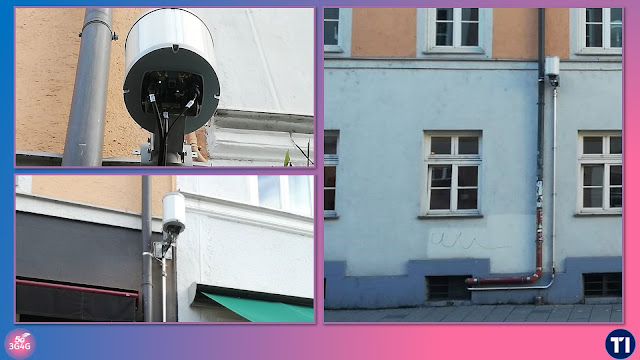
With the compact, flexibly deployable latest-generation mini mobile cells, the company is able to increase 5G/4G capacities in the O2 network at high-traffic locations in urban areas faster than before. The mini-radio cells, attached to a building facade on Klenzestraße in Munich's Gärtnerplatz district, supplement the 4G/5G mobile network installed on rooftops in the city center, but do not replace it.

Small Cells directly enhance the network experience for local customers. The new technology, which is not much bigger than a shoebox, provides customers in very close proximity with 4G and bandwidths of up to 100 Mbps. In the near future, O2 / Telefónica will also use the small cells for targeted, selective 5G coverage. Here, too, the focus will primarily be on particularly busy locations in German city centers, such as very busy squares, shopping streets or public transport stops.

In addition to a power supply, the small cells required a connection via fiber optics. In Munich, this is provided by the fiber optic infrastructure of Stadtwerke München and the local telecommunications provider M-net.

In the coming weeks, further installations will follow in Munich's city center: First, two 4G radio cells at Gärtnerplatz and later this year, O2 / Telefónica will also install pure 5G Open RAN mini radio cells ("5G Standalone") for the first time in the area of Kaufinger Straße in the Bavarian capital. In the course of these expansions, it is also conceivable to use existing infrastructures of Stadtwerke München - such as bus stops or power distributors.

Related Posts

Friday, 10 December 2021

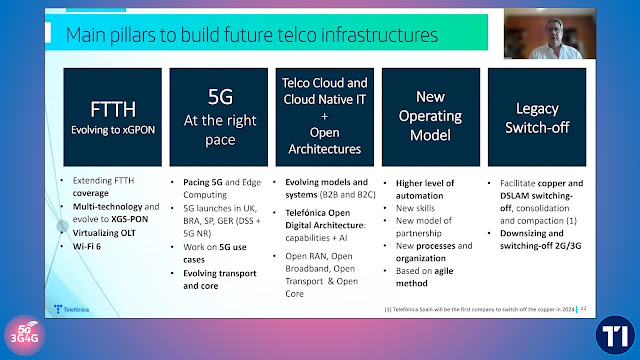
Telefonica on the Impact of 5G so far

Enrique Blanco, Global CTIO, Telefónica presented a Keynote at Telecoms Europe 5G 2021 virtual event on 9 Nov 2021. The title of his presentation was What’s the impact of 5G so far? and it discussed how the unprecedented speed is just the start of how 5G is changing the face of connectivity. What has been the impact so far on how people live, work, and play, all over the world? 

The video of his talk is embedded below.

Related Posts:

Friday, 5 November 2021

Deutsche Telekom Launches Indoor Booster 5G Repeater


On his LinkedIn post, Dr. Alex Jinsung Choi, Deutsche Telekom Senior Vice President, Head of Strategy & Technology Innovation and COO of O-RAN Alliance announced the launch of Telekom Deutschland GmbH's Indoor Booster 5G in Bavaria. The post said:

This small low-power repeater brings 5G into offices and homes that did not have sufficient indoor coverage of mobile networks before. It enables customers to experience best streaming, gaming, education services, home office and video conferences with 5G indoors.

I am proud to announce that this new product is result of the cooperation of Deutsche Telekom with our strategic partner SK Telecom. SKT developed and launched 5G repeaters in 2019. In 2020, DT and SKT colleagues trialed a customized 5G repeater in a customer test in Germany which was starting point for the successful launch this year.

Furthermore, the Indoor Booster 5G is the first product of Techmaker GmbH, the tech joint venture of SK Telecom and Deutsche Telekom. I would like to thank all the many colleagues in Techmaker, SK Telecom and Deutsche Telekom who made the project a success!

We looked at SK Telecom's In-building 5G NR Repeaters couple of years back here.

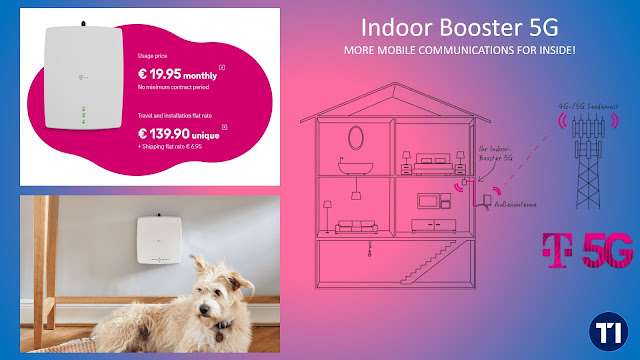
The website explains the working of the booster as can be seen in the picture on the top. All information is in German and is translated using Google translate below: 

The 5G signal is picked up by an antenna on the outside and routed inwards by cable to a so-called booster. This only requires a 230V connection. This results in faster cell phone reception even in remote rooms with stable walls. You can continue to use the Indoor Booster 5G with your existing mobile phone contract.

The Indoor Booster 5G consists of an outside antenna and a booster inside. You should be authorized to have an antenna installed on your building and to grant access.

Couple of FAQ's have interesting info as well:

Why can you only rent the Indoor Booster 5G and not buy it?

Since the indoor booster reproduces the cellular signal, Telekom is the operator of the device and cannot transfer ownership of it to the customer.

Why do I have to commission the installation service?

Since the Indoor Booster reproduces the cellular signal, Telekom is responsible for the operation of the device and must ensure that the radio signal does not interfere with the cellular network. At the installation appointment, you will also be advised where the external antenna is best placed in order to achieve the best possible improvement in performance.

If you own one of these, we would love to hear from you about your experience.

Related Posts:

Monday, 24 August 2020

Leveraging Streetlights for the Digital Future

If you are a regular reader of this blog then you will know we love lamp posts, street lights and poles. There are quite a few posts whose references you can find at the end of this post.


The mmWave Networks group at Telecom Infra Project (TIP) have recently released a new whitepaper, Leveraging Streetlights for the Digital Future. Street fixtures like lamp posts, light poles, traffic signals and other vertically-oriented assets that provide line of sight to targeted facilities and residential areas were identified as having a huge potential for rapid deployment of high speed future broadband networks (including 5G) in the TIP Playbook for Smart Cities.


This new whitepaper looks at "Deployment of high capacity urban mobile networks and smart city applications converges on assets in the public space, such as streetlights. This study and analysis deepens the understanding of the obstacles to deploying on streetlights today and points to possible pathways to accessing such assets to enable fast and flexible deployments"


Quoting from the whitepaper:

In a Digital Networks Working Group handbook by the Federal Ministry of Transport and Digital Infrastructure (Germany), streetlighting infrastructure has been identified as being very suitable in comparison to other street fixtures.

Deutsche Telekom initiated a study to explore such fixtures and possible pathways to accessing them. Before tackling any challenges, we wanted to understand what the "landscape of the players' ecosystem" looks like, what drives it, what slows it down or stops it from moving, how it works today, and what may need to change.

We did this specifically for our German home market, but feel confident that the study results can serve as pointers for the challenges and opportunities this asset poses for many other markets. We also believe the political and legal challenges will be very similar for similar assets apart from streetlights.

The study set out to describe the rules and regulations of public administration, public economy, and public law to which this infrastructure is subject, as well as to identify challenges, opportunities, and potential for its future design.

We chose a design thinking approach because we need to understand the players and stakeholders who control this infrastructure. And we wanted to undertake this before assessing what can and should be done with these potential assets to enable comprehensive broadband coverage and smart city development.

The whitepaper is available here.

Related Posts:

Friday, 24 July 2020

FC Bayern and Deutsche Telekom bring 5G to the Allianz Arena in Munich, Germany

Allianz Arena is a football stadium in Munich, Bavaria, Germany with a 70,000 seating capacity for international matches and 75,000 for domestic matches. Widely known for its exterior of inflated ETFE plastic panels, it is the first stadium in the world with a full colour changing exterior.

The official website, not too long ago, announced that 5G mobile connection is now available in the stadium and complements the previous LTE network.


A total of eleven 5G antennas in and around the stadium ensure the best network quality in the Allianz Arena. This new mobile connection makes it possible to transmit larger amounts of data more quickly - almost in real time. As soon as the stadium reopens, every visitor will now have the capacity to upload multiple pictures or videos.


Telekom Blog had more details (Google translated from German):

When the Allianz Arena was opened in 2005, mobile communications were still in the middle of the GSM era. And the cell phones were from Nokia. Since then, UMTS ( 3G ) and LTE ( 4G ) have also moved into the FC Bayern stadium . Now 5G is added. To this end, Telekom has set up antennas in three places. Where exactly, knows Frank Buchholz, the radio network planner for the arena. First of all, there is "an antenna behind the facade that is not visible from the outside. It supplies the motorway, the driveway and the esplanade" - in other words, the large square in front of the stadium where fans meet.

It continues on the other side of the Esplanade: "There we have a location in the Park and Ride building. It also supplies the Esplanade and the ways to the subway." And besides, "of course we have the antennas that are in the stadium. They supply the bowl inside and provide a 5G basic service".

A lot of bandwidth is required for 75,000 spectators who come to the Allianz Arena for every home game - if there is no Corona . Because 75,000 people, that corresponds to the population of a larger city. And almost everyone wants to send their selfies, photos and videos of the games directly from the arena to their homes, or post them on Instagram, TikTok and YouTube.

In the Allianz Arena, Telekom installed so-called "massive MIMO " antennas for 5G. With this state-of-the-art technology currently available, a large number of antennas in a single housing ensure particularly high bandwidths. In addition, radio technology, power supply and cooling are housed together.

All this makes the 5G antennas not only particularly powerful, but also particularly heavy. An antenna weighs up to 45 kg. With three units, in order to be able to emit the signal in all directions, this can amount to around 135 kg, which were hoisted under the roof of the Allianz Arena and assembled there. "This high weight must be taken into account for roof loads, statics and wind loads. That is a massive intervention in the infrastructure of such an object," says Telekom radio network planner Frank Buchholz.

He also had to take into account and calculate that the antennas for GSM, UMTS and LTE also remained in operation in order to really be able to provide all visitors to the stadium with mobile communications. In the end, the 5G assembly in Fröttmaning worked perfectly - because the planning was as clever as an action by Thomas Müller.

Although 5G smartphones are only gradually coming onto the market, the new antennas should already offer 5G coverage with high quality and high area coverage. To do this, they use the 3.6 GHz spectrum for which Deutsche Telekom bought the frequencies in 2019. "This has the advantage that we can offer there in the gigabit range and that we have an undisturbed spectrum that is not yet fully utilized," explains radio network planner Buchholz.

The extremely fast 3.6 GHz spectrum already enables downloads at 1,000 megabits per second. For football fans for comparison: This is at least as fast as left-back Alphonso "Phonzie" Davies, the new Bayern rocket from Canada.

Shortly after the installation, a test with the 5G smartphone on the esplanade in front of the stadium showed a speed of 889 megabits / second. And that is by no means the end of the story, as the UMTS example shows. There, the downloads increased from an initial 384 kilobits / second to a maximum of 42 megabits / second within a few years. This shows the enormous potential of successor 5G.

And in the future, the new mobile radio in the Allianz Arena will also enable completely new applications - such as graphics that are placed directly over the smartphone's camera image using augmented reality (AR). Then everyone can see the calibrated offside line on their cell phone , or cheer a goal from all perspectives.

Here is the video, in German with no English subtitles. It still gives an idea on how the installation was done.


If you know more details, feel free to add in comments below.

Related Posts:

Friday, 30 August 2019

Deutsche Telekom, Huber+Suhner are jointly developing 5G small cell antennas

According to Telekom press release:

Deutsche Telekom, Huber+Suhner are jointly developing 5G small cell antennas

Deutsche Telekom is now also preparing its network for the use of 5G small cell antennas. To do so, it is collaborating with Huber+Suhner, the specialist for electrical and optical connectivity. The Swiss company has developed five small cell antennas for Deutsche Telekom that support 4G and 5G frequencies. The Sencity Urban antennas cover the range of frequencies from 1.7 to 4.2 GHz. Small cells are small amplifiers for the mobile network. The data throughput can thus be systematically expanded in areas where many customers are on the move or surfing.

The new small cell antennas first operate in Deutsche Telekom’s 4G network. They can be upgraded to 5G in just a few simple steps. Sencity Urban antennas will be used for the first time in Kiel, Lüneburg, Osnabrück, Munich, Mülheim and other cities.

Small cells will play an increasingly important role in Deutsche Telekom’s network in the future. They are creating a significant increase in data capacity in their coverage area. This is currently up to an additional 150 MBit/s. The new types of Huber+Suhner antenna make it possible to increase quality further with what is referred to as the MIMO (Multiple Input Multiple Output) technology. Using this technology, several antennas provide higher data throughput – both at the transmitters and in the receiver.

“Small cell antennas are an important component of our expansion strategy. We can systematically cover squares and streets with the new antennas. This helps us create more capacity in the downtown areas and thus further optimize our network,” states Walter Goldenits, Telekom Deutschland’s CTO. “A big added value of our Swiss partner’s antennas is their flexible handling: we can convert the supply to 5G in a few easy steps.”

The small cell antennas made by Huber+Suhner will be installed on public telephone boxes, bus and streetcar shelters, walls, or on LED furniture. There are various types of antennas and housing, adapted to the various requirements. Omnidirectional antennas are used for market squares, for example, and directional antennas for narrow streets.

Small cells will be required in the future to provide urban areas with 4G and 5G. Combined with the conventional locations, the network can thus provide the necessary coverage and capacity to supply more and more wireless devices. The Sencity Urban antennas are very compact and can be easily installed in existing infrastructures. This saves space and enables future networks to perform at their best.

The press release is also available on Huber+Suhner site here.

Back in May, Huber+Suhner had already announced outdoor MIMO antennas for 5G Urban Deployments:

HUBER+SUHNER has developed small omnidirectional and directional antennas to maximise performance. The new SENCITY Urban 100 and 200 outdoor MIMO antennas cover both 4G and 5G high frequency ranges and are as compact as possible for discreet installation in different types of street furniture, such as bus shelters, poles or walls, depending on the location, thanks to various bracket mounting options.

Further details:


Related Posts: