Showing posts with label Vendor Airspan. Show all posts

Friday, 21 January 2022

Telefónica Deutschland Activates Germany's First Open RAN Small Cells with Airspan Networks

O2 / Telefónica is a technological pioneer in the use of Open RAN. Since December 2020, it has successfully integrated four base stations in Landsberg am Lech into its mobile network. At present, they are testing the technology, gaining experience and planning further expansion at other locations once all tests have been successfully completed. 

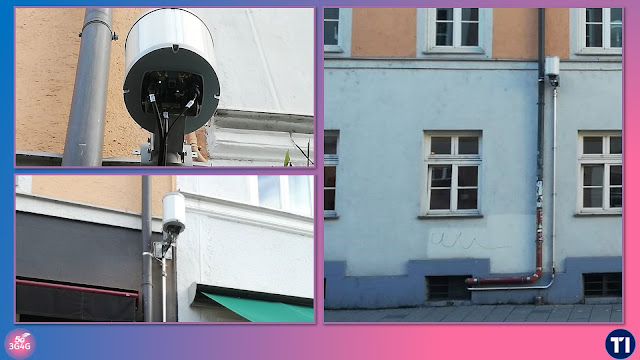
In an announcement this week, it said that it is the first German mobile network operator to have activated the first mini-radio cells with innovative Open RAN technology (ORAN) in Munich. They are intended to provide all O2 Germany customers with even more capacity and higher bandwidths at busy locations in the future. 

While the press release doesn't mention the vendor, Airspan Networks Tweeted that the ORAN Small Cell is supplied by them

Selected extract from the press release as follows:

With the compact, flexibly deployable latest-generation mini mobile cells, the company is able to increase 5G/4G capacities in the O2 network at high-traffic locations in urban areas faster than before. The mini-radio cells, attached to a building facade on Klenzestraße in Munich's Gärtnerplatz district, supplement the 4G/5G mobile network installed on rooftops in the city center, but do not replace it.

Small Cells directly enhance the network experience for local customers. The new technology, which is not much bigger than a shoebox, provides customers in very close proximity with 4G and bandwidths of up to 100 Mbps. In the near future, O2 / Telefónica will also use the small cells for targeted, selective 5G coverage. Here, too, the focus will primarily be on particularly busy locations in German city centers, such as very busy squares, shopping streets or public transport stops.

In addition to a power supply, the small cells required a connection via fiber optics. In Munich, this is provided by the fiber optic infrastructure of Stadtwerke München and the local telecommunications provider M-net.

In the coming weeks, further installations will follow in Munich's city center: First, two 4G radio cells at Gärtnerplatz and later this year, O2 / Telefónica will also install pure 5G Open RAN mini radio cells ("5G Standalone") for the first time in the area of Kaufinger Straße in the Bavarian capital. In the course of these expansions, it is also conceivable to use existing infrastructures of Stadtwerke München - such as bus stops or power distributors.

Related Posts

Tuesday, 4 August 2020

Some Pictures of Macrocells (and Small Cells) from Rakuten, Japan

If you have been following the Japanese operator Rakuten's progress, you will already know that they use variety of radio hardware vendors. Some of these we have covered in this blog. For example, Airspan's macros and small cells that I blogged here is used in quite a few locations. Similarly, I blogged about NEC O-RAN radios here that are being used in the live network too.

Here are some pictures from Twitter.

Rakuten mobile base station in Akiba (source)

Rakuten Mobile 5G base station, Komazawa Dori from Kanhachi (source)

Rakuten Mobile's 5G n77 base station. (source)

Indoor Rakuten mobile base station at the Haneda Airport International Terminal (source)

Antenna for high-rise buildings (source)

NEC on Rakuten Mobile 5G (source)


Airspan Air5G RDU 46, 28GHz (n257) (source)

You can't have a post on base stations without a speed test, so here we go

Speedtest on Rakuten 4G network (source)

Related Posts:

Thursday, 12 September 2019

Airspan Small Cells and Macrocells Portfolio, including 5G


Back in April, a presentation from Airspan showed that they have shipped nearly 500k small cells. Sprint has nearly 300k MagicBoxes while Jio has around 120k small cells.


As you can see above, Airspan has a range of outdoor small cells and as shown below, a wide range of indoor small cells.


Airspan recently announced that it has partnered with Rakuten, the newest MNO in Japan, to bring comprehensive 4G and 5G solutions to the world’s first fully virtualized cloud-native mobile network. The announcement said:

Airspan’s Air5G OpenRange28 mmWave platform in 28GHz will deliver ultra-high capacity to Rakuten Mobile with record time-to-market, enabling unprecedented monetization opportunities. Airspan’s open RAN platforms will provide Rakuten Mobile the flexibility to disrupt the economics of traditional network operators and lay the foundation for transformational 5G architectures. With over half a million systems deployed globally, Airspan brings its proven disruptive economics to the fully virtualized Rakuten Mobile network.


Airspan’s mmWave virtualized Air5G OpenRange28 platform utilizes Qualcomm’s FSM100xx 5G chipset and supports open RAN architectures, seamlessly connecting to Rakuten Mobile’s virtualized BBU to deliver the world’s most advanced open interface virtualized RAN solution.  The OpenRange28 mmWave platform supports multiple functional splits for the widest possible set of deployment options, ensuring Rakuten Mobile customers benefit from the highest level of efficiency and the best user experience in Japan.

Airspan's 5G products can be viewed here.

With so many innovators working with Rakuten, it would be interesting to see their 4G & 5G network rollout. Looking forward to some big announcements at MWC next year.

Related Posts:

Sunday, 16 June 2019

Turkcell's Small Cell Strategy

Turkcell is one of the industry’s leaders in extending the traditional MNO model into new services, illustrated how the business case is strengthened by diversity, with small cell roadmaps which span multiple spectrum bands, form factors, vendors and deployment environments.

During Small Cells World Summit, Turkcell presented their Small cell strategy and case study.


As the tweet above says, they have 3 separate use cases for small cells:

  • VIP/business complaints & retention
  • General in building / enterprise
  • Outdoor capacity & coverage enhancement


Their strategy is to work with multiple vendors for different use cases. The strategy has clearly paid off as different small cells are working seamlessly with the macrocells indoors and outdoors.


Indoor Femtocell Trials with Airspan and Nokia has significantly improved user experience and throughput indoors.


Various deployments with Huawei Micro has been done to improve coverage and capacity outdoors, for voice and data.


Related Posts:


Tuesday, 5 February 2019

Sprint's Trebl: Magic Box + Alexa + HiFi Speakers


Sprint's award winning MagicBox that we have written about multiple times in this blog has launched a new product called Trebl that contains indoor Magic Box small cell, integrated Amazon Alexa voice capabilities and Harman Kardon sound quality.

According to Electronics 360:

The TREBL with Magic Box, introduced this week at CES 2019, won a CES Innovation Award in the Smart Home product category. TREBL is a wireless small cell that accelerates LTE data coverage and speed while controlling smart home devices using Amazon Alexa. The small cell can also play music with Harman Kardon audio through two 8 W speakers, an embedded amplifier, three built-in far-field microphones, Bluetooth, and noise and echo cancellation.

The TREBL with Magic Box is water-resistant, making it suitable for both indoor and outdoor use, and it is lightweight for portability.

And it has been nominated for MWC 2019 Glomo award too


While we love the style, we are not exactly sure why someone would need this combination of Magic Box and Alexa. We will wait and see if it succeeds. In the meantime we wish Sprint the best of luck for Glomo awards.

Friday, 11 January 2019

Dense Air: The Neutral Host Small Cell Wholesale Network Operator


Dense Air was launched at MWC 2018 as a new wholesale network operator, that “enhances and extends” the coverage and capacity of existing Mobile Networks as a “Carrier of Carriers” operator, typically on a neutral host basis.

According to the announcement:

Dense Air uses Airspan’s comprehensive portfolio set of 4G and 5G small cells to offer services to Mobile Operators in licensed spectrum dedicated to small cells for densification/extension deployments.

According to Paul Senior, Acting CEO of Dense Air, “By adding small cells, running in dedicated licensed spectrum to Macro networks at cell edge either outdoors or indoors, we can dramatically improve the service experience to end users, increase speeds and network capacity. Importantly, Dense Air does not and will not offer retail mobile services and does not compete in any way with mobile service providers.”

“The economics of both 4G and 5G small cell deployments can be dramatically improved when deployed using a neutral host solution, i.e. when a single network of small cells can host multiple operators. Our mission is to help MNOs and MVNOs improve their networks by densification without the need to spend CAPEX”.

Interested readers can refer to earlier posts about Airspan's Magic Box and their deployment in Reliance Jio.

According to the website, Dense Air now has spectrum in following countries:
  • Dense Air Ireland: Operating in 3.6GHz (Band 42 & 43)
  • Dense Air Belgium: Operating in 2.6GHz (Band 38)
  • Dense Air Portugal: Operating in 3.6GHz (Band 42 & 43)
  • Dense Air New Zealand: Operating in 2.6GHz (Band 7 & 41)
  • Dense Air Australia: Operating in 3.6GHz (3GPP Band n77 & n78)

Their most recent win has been the spectrum win in the six largest Australian cities, by participating in the ACMA 5G Spectrum Auction. The acquired spectrum supports 5G operation in 3GPP bands n77/n78.

So what exactly is Dense Air and what do they do? As per their launch press release:

Dense Air is an optimised network densification and network extension service.
  • Solution delivered using Indoor and Outdoor Small Cells
  • Service operates in licensed, dedicated spectrum
  • Dense Air small cells provide services on a “Neutral Host” basis
  • We support 4G LTE and LTE Pro networks and later 5G NR
  • Dense Air fills coverage holes and capacity weak spots in Macro Networks
  • Services are offered on a wholesale “Carrier of Carriers” basis to Mobile Network Operators
  • We DO NOT compete with Mobile Operators or other Service Providers
  • Our services are delivered in Urban, Suburban or Rural areas
  • The focus is on mobile use cases, including eMBB, IoT, Public Safety
  • We also enable Private LTE Networks for Large Enterprises and Governments

A presentation by Paul Senior at UK Spectrum Policy Forum meeting last year is embedded below and can be downloaded from techUK website here:


Wednesday, 10 January 2018

Relays (RN) and Donor eNode Bs (DeNB)

Relays a.k.a. Relay Node (RN) in standards has been a part of the standards for a while but I don't hear about them often. The only time recently when I heard about them were with Airspan's MagicBox small cells deployed in Sprint (see news here). In fact the article speculates:

LTE UE Relay was specified within 3GPP’s Release 10. There are different types of Relay and it would seem Sprint’s will be Type 2, which sees the Relay Node (or MagicBox) retransmit on the same code as provided by its macro “donor” cell.

While I don't have any further details about it, I am not too sure about it. Type 2 relays are complex and require change in the existing eNodeB's. I should clarify here that we are talking about Layer 3 relays in this post. An earlier presentation from Airspan mentioned that they use Type 1a/1b relay architecture. See here.


The presentation below has some nice simple explanation of the Relay nodes and its workings


In case of Type 2 relays, there is a much more architecture change involved. This architecture change requires modification of the existing eNB to Donor eNB (DeNB).

Going back to 3GPP TS 36.300: E-UTRA and E-UTRAN Overall description; Stage 2 document:

The DeNB hosts the following functions in addition to the eNB functions:
- S1/X2 proxy functionality for supporting RNs;
- S11 termination and S-GW/P-GW functionality for supporting RNs.

Further on, in section 4.7

E-UTRAN supports relaying by having a Relay Node (RN) wirelessly connect to an eNB serving the RN, called Donor eNB (DeNB), via a modified version of the E-UTRA radio interface, the modified version being called the Un interface.

The RN supports the eNB functionality meaning it terminates the radio protocols of the E-UTRA radio interface, and the S1 and X2 interfaces. From a specification point of view, functionality defined for eNBs, e.g. RNL and TNL, also applies to RNs unless explicitly specified. RNs do not support NNSF.

In addition to the eNB functionality, the RN also supports a subset of the UE functionality, e.g. physical layer, layer-2, RRC, and NAS functionality, in order to wirelessly connect to the DeNB.


The RN terminates the S1, X2 and Un interfaces. The DeNB provides S1 and X2 proxy functionality between the RN and other network nodes (other eNBs, MMEs and S GWs). The S1 and X2 proxy functionality includes passing UE-dedicated S1 and X2 signalling messages as well as GTP data packets between the S1 and X2 interfaces associated with the RN and the S1 and X2 interfaces associated with other network nodes. Due to the proxy functionality, the DeNB appears as an MME (for S1-MME), an eNB (for X2) and an S-GW (for S1-U) to the RN. 

In phase II of RN operation, the DeNB also embeds and provides the S-GW/P-GW-like functions needed for the RN operation. This includes creating a session for the RN and managing EPS bearers for the RN, as well as terminating the S11 interface towards the MME serving the RN.

The RN and DeNB also perform mapping of signalling and data packets onto EPS bearers that are setup for the RN. The mapping is based on existing QoS mechanisms defined for the UE and the P-GW.

In phase II of RN operation, the P-GW functions in the DeNB allocate an IP address for the RN for the O&M which may be different than the S1 IP address of the DeNB.

Based on the complexity and additional changes required for Type 2 relays, I am not surprised that they are not very popular. If you think otherwise, do let me know.

Thanks to Dr. Kit Kilgour for providing insights into this topic.

Thursday, 28 September 2017

Drones, More Drones & Droneway

I have written about Drones and Balloons in the past, mainly to BT/EE. Take for instance this presentation by Mansoor Hanif at TIP Summit and this one on Flying Small Cells. In addition I have also talked about Telefonica's Nano cell, which is a small cell on a drone; Verizon's 'flying cell-site' and AT&T's flying COW.


This week the US operator Sprint announced that they are trialing their Magic boxes on drones. Here is a video on that:


Back in August, IEEE Spectrum ran an article on how Flying Cell Towers Could Aid Search and Rescue. Base stations carried by drones would form an ad hoc network and connect first responders.

Picture Source: IEEE Spectrum

From the IEEE Spectrum article:

An aerial communications system supported by drones could be deployed much faster and operate with minimal interference. In 2013, we started to think about what such a drone-based communications system for public safety agencies might look like. We knew it would need a shared radio-frequency channel for first responders, drone-portable base stations, a power supply, and a digital database for exchanging information. We would also need controllers that would be easy enough for a licensed drone pilot to operate in a crisis.

Our first major challenge was to find a base station small enough for a drone to support. Drones under 25 kilograms—the limit now imposed by U.S. air-safety regulators—can carry a maximum payload of about 2 kg, so we would need a base station that weighed less, even with its battery.

Finally, my search led me to a startup named Virtual Network Communications. This company, based in Chantilly, Va., sells a product called a GreenCell that seemed suitable. It’s a scalable LTE base station, known as a picocell, which is typically used to extend the reach of an existing network but can also generate its own network. The base station contains an E-UTRAN Node B radio with two antennas and a credit-card-size component called a Micro Evolved Packet Core, which uses LTE technology to form an ad hoc network with nearby radios. Then, that local network connects to a nationwide cellular network.

With these components, our GreenCell can support communications for up to 128 users at a time from a distance of up to about 2 kilometers on any LTE frequency. Better yet, it measures just 12.5 by 12.5 centimeters and weighs only 2 kg with its battery, just light enough to be lifted by a drone.

Once we had found a suitable base station, we still needed to find a suitable drone. Ideally, it would be affordable and be capable of flying for 10 to 12 hours before needing a recharge. Unfortunately, no such drone exists today. Most commercial drones can stay aloft for fewer than 45 minutes.

After some research, I found a company named CyPhy Works, which has developed a drone powered through a 150-meter cord that extends up from a grid or generator. Technically, this drone could stay in the air for as long as it had access to a power supply on the ground. But in a disaster scenario, it would have to be tethered to a van loaded with a generator and fuel. That would limit it to serving the same road-accessible places to which mobile units already travel. Another drawback: The drone’s tether restricts its mobility once it’s in the air. We wanted to be able to reconfigure our network in an instant.

We briefly considered using balloons instead of drones, but we discovered through trial and error that balloons are difficult to reposition and hold in place, especially during high winds.

We decided instead to use the AR200 drone from AirRobot, a company based in Arnsberg, Germany. The AR200 has six rotors that allow it to hover more steadily than the usual four. And because the AirRobot drone is battery powered, it can zoom off to any location.

In summer, Qualcomm unveiled [PDF report] the results of a months-long drone trial program, which found LTE networks today already provide the aerial connectivity necessary to support commercial unmanned aerial vehicle deployments. But the tech giant noted some network optimizations will be necessary to take drone deployments to new heights. As per their blog post:

During the field trial, approximately 1,000 flights were performed to collect datasets that were post processed and analyzed. We also performed simulations to complement field trial results by allowing study of performance tradeoffs when the network is serving many mobile devices and LTE-connected drones simultaneously over a wide area. Simulations also enabled rapid testing of parameter and feature changes that are more difficult to study in a commercial network.

The field trial demonstrated that LTE networks can support safe drone operation in real-world environments. Our findings showed that existing commercial cellular networks can provide coverage to drones at low altitudes up to 400 feet AGL. Our test drones also showed seamless handovers between different base stations during flights. Below is a glimpse of these findings.


According to Mobile World Live,

The head of AT&T’s Unmanned Aerial Vehicles (UAV) business development team said the operator is working with regulatory authorities and standards organisations to “unlock” the potential of drones.

Speaking with Mobile World Live, Greg Belaus said many tests of drones on cellular networks so far have been conducted at a height of 400 feet. In the US, Belaus explained that airspace is governed by the Federal Aviation Administration’s (FAA) Part 107 rules. Belaus said “a lot of work” on drones right now is focused on what needs to be done to open that area for drone services.

There is an interesting AT&T Flying COW presentation on Youtube for anyone interested, here.

Finally, looks like "Droneway" may be becoming a reality soon. As one of the partners involved in the project, I may not be at a liberty to say much but this photo of the article below (click to expand) provides an idea 😊


*Full Disclosure: I work for Parallel Wireless as a Senior Director, Strategic Marketing. This blog is maintained in my personal capacity and expresses my own views, not the views of my employer or anyone else. Anyone who knows me well would know this.

Thursday, 6 July 2017

Small Cells are growing in India

Its been a long time since I looked at small cells (femtocells) in India. Things have changed significantly in these last 8 years. India now has second highest number of mobile phone users (1.2 billion), just after China. Free and cheap data has given rise to consumers who want to do more on their phones than just call and WhatsApp.
I recently came across a presentation by Paul Senior, Airspan in UK Spectrum Policy Forum workshop on Spectrum Sharing in 3.8 - 4.2GHz Band. This presentation provides interesting insight into Reliance Jio Small cells deployment and also provides much more details of the Sprint MagicBox.

The presentation is embedded below:


Friday, 5 May 2017

Sprint's Magic Box


Is Sprint doing Small Cells? That's a question probably asked too many times. Back in January, their COO Günther Ottendorfer said the company’s small cell partners conducted a range of trials last year in order to determine fast and efficient methods to deploy small cells, a situation he said led to some misunderstandings in the market. However, he said those trials are largely behind the carrier and that he expects the carrier’s small cell efforts to expand this year.

“There was a learning process in 2016. We did a lot of trials in the beginning. We had some trials that led to misunderstandings, when you have a lot of boxes there because you were trialing different things, different—for example—transmission methods,” said Ottendorfer, Sprint’s chief operating officer for Technology, in a recent interview with FierceWireless. “But now we have streamlined the concepts and so I’m very confident that with streamlined and very elegant small cell solutions we will have a good rollout this year.”

They again mentioned about their small cells commitment at MWC. Finally this week, they announced the Magic Box.

Sprint has billed it as "World’s First All-Wireless Small Cell". This is a point where I would disagree with them, mainly for two reasons.The first being that for an all-wireless claim, they have to get wireless power to the small cell and secondly, this has already been done for a while. I have explained about In-band backhaul here and have provided examples of how Parallel Wireless has been using this for a while.

The Magic Box is made by Airspan and is 4G/LTE only in band 41 (2500 MHz TD-LTE). One of these units provide an average coverage of 30,000 square feet indoors and can benefit adjacent Sprint customers inside the building. The signal can also extend coverage 100 meters outside a building, benefiting customers in nearby buildings and improving street–level network performance. It does not use the closed subscriber group (CSG) feature hence anyone can camp on it and use it.


Sprint has a large amount of 2.5GHz spectrum available, as a result they are able to use dedicated spectrum for the Magic Box. This ensures that interference is kept to minimum. They also announced the availability of HPUE that will allow this band reach to improve. See my blog post here for details.

“It’s a far cry from just a repeater,” he said, explaining that it improves the efficiency of the network as long as it has a good connection to the macro cell. It will work with any Sprint phones using 2.5 GHz. The backhaul channel uses 2.5 GHz or 1.9 GHz, but ideally it would use 2.5 GHz because that offers a lot more capacity.

The Magic Box includes self-organizing network (SON) capabilities and operates on its own channel in Sprint’s spectrum, allowing it to decrease the noise level and increase the capacity of the overall system, which is the big difference from repeaters, explained Sprint Technology COO Guenther Ottendorfer.

Some of the details I couldn't find but hopefully some of the readers would know and can answer are:
  • Whats the power output of these small cells?
  • I am assuming they will support VoLTE calling for voice - even though generally that feature is transparent to small cells?
  • Does the small cell radiate a single 20MHz channel?
  • Does the backhaul do carrier aggregation?

Further Reading:

Monday, 5 September 2016

LTE Relay as a disruptive backhaul technology for Small Cells?


Came across this interesting presentation from Airspan which their CTO Paul Senior delivered at Small Cells World Summit in May. Here they are suggesting that relays could be used used on the cell edge to backhaul small cells and hence improve throughput for a UE that is camped on small cell. Probably much easier to understand from the picture below.


This approach is similar to in-band backhaul that is used by other vendors. I gave an example of in-band backhaul from Parallel Wireless in my Rural coverage post here. The advantage of relays & in-band backhaul is that the small cells could be deployed easily and also moved/relocated later on as there is no limitation due to backhaul provision.

In an article from last year on ThinkSmallCell, Paul said:

The 3GPP standard includes a feature to support remote relays at the cell edge, which only needs power to rebroadcast the signal into poor coverage areas. However, this requires a separate protocol stack in the macrocell – something which not all vendors have implemented.

Instead, we've built a simple relay using a directional antenna to the macro which operates at a different frequency band, say 2.6GHz TD-LTE, and rebroadcasts at 1800MHz FDD-LTE. The antenna form factor and design enables much better utilisation of the link that when serving smartphones directly, using 64QAM rather than QPSK to achieve much higher throughput within the same spectrum and macrocell resources. The short range radio link to the end users also provides the potential for higher speeds and better service quality. It's a quick and effective solution for enterprise buildings at the edge of coverage.

The potential capacity of an LTE Relay isn't insignificant. If we used LTE with 256QAM, 8x8 MIMO we could see a consistent throughputs of 450Mbps.

I could also see this being useful in transport applications, such as for Connected Cars. We'll be releasing products later this year for vehicle based solutions at various frequency bands.

They did demo some of the products in SCWS2016, which can be seen in another ThinkSmallCell report here.

The Airspan presentation is as follows:


Related posts:

Sunday, 20 September 2015

Summary of Small Cell Forum Champions day


Small Cell forum held its champions day in Rome this month. There were some interesting case studies and presentations (details below). I have embedded some presentations and provided links to others. Interested people, feel free to explore further.

The Small Cell Forum has identified six key work items where they will be focusing their energies. These are:
  • Small cells in Enterprise
  • License Exempt Spectrum
  • HetNet & SON
  • Virtualization of small cells
  • Multi operator support
  • The role of small cells in 5G, IOT & M2M
Spidercloud did a presentation on Enterprise small cells. They were also one of the sponsors for a study by analyst firm iGR that showed strong demand among Enterprises for Managed Services based on Small Cells.

Cisco shared a case study from a university campus deployment where existing WI-FI APs were ‘upgraded’ to add a small cell capability.


Quortus demonstrated the range of architectures possible with virtualized small cell core networks including the on site MEC server supporting small cells across an enterprise and mission critical small cells supporting public safety applications. See presentation below:


iBwave showed how deployment within the enterprise had improved, with a case study which reduced indoor small cell planning down to one site visit.

MVNO TalkTalk outlined their plans to add LTE small cells to their home routers enriching customer experience as well increasing traffic offload from the macro network. The residential 4G small cells use a dedicated 3.3MHz carrier frequency already compatible with existing 4G handsets to provide good coverage indoors and in the surrounding streets.

Nokia demonstrated the importance of 3D thinking when planning small cell HetNets in dense urban indoor and outdoor environments due to building and user topography.

Qualcomm described how their SON technology provides zero touch integration for both the small cells and the macros, optimizing handovers in both directions.


Huawei shared their vision for small cell evolution, incorporating emerging technologies which leverage license exempt spectrum. Their demonstration of LAA mobility with Vodafone notching up 600Mbps peak rates clearly showing the potential of a joined-up approach to spectrum.


Airspan trials with SoftBank demonstrated an early nFAPI implementation working in a virtualized small cell / macro HetNet. The small cells filled in coverage gaps, and their densification increased capacity. Centralised CoMP and eICIC were demonstrated over a pre-standard nFAPI which works over commonly available packet based transport with significantly less stringent performance requirements than required with CPRI based C-RAN.

Tuesday, 14 May 2013

LTE-A Metrocells to boost the data capacity capabilities in HetNet base stations


From Business Weekly:
A transatlantic technology collaboration between Cambridge Consultants in the UK and Florida-based Airspan Networks is set to enhance speed and capacity over the transformational LTE (long term evolution) platform.
The partners have unveiled an LTE-Advanced metrocell boost for mobile broadband; 4G LTE, is a standard for wireless communication of high-speed data for mobile phones and data terminals.
Cambridge Consultants has collaborated with Airspan, a leading vendor of LTE small cells and broadband wireless products and solutions, to boost the data capacity capabilities of the US company’s heterogenous network (HetNet) base stations.
The enhancements include LTE-Advanced features that support the deployment of HetNets, allowing operators to deploy small cells on the same radio channel as macrocellular LTE networks. Integrated networks deliver better coverage and capacity to users on both the small-cell and macrocell base stations, Cambridge Consultants’ Tim Fowler said.

Complete article can be read from the Business weekly website here.

There is also an interesting presentation from Airspan that I posted earlier here.