Showing posts with label Infrastructure Lampposts and Poles. Show all posts

Thursday, 15 October 2026

Designing the Invisible Network: Should Mobile Infrastructure Really Be Hidden?

Everyone wants better mobile coverage, faster speeds and more reliable connectivity, but not everyone wants a mobile mast or a collection of telecoms cabinets outside their home. This contradiction has been around since the early days of mobile networks and remains one of the challenges facing operators and infrastructure providers as they expand and densify their networks.

It was the central theme of a recent CWConnected Mobile Networks SIG event, Innovation in Cell Site Aesthetics: Designing the Invisible Network, held at St Catharine's College in Cambridge on 29 September 2026. The event brought together network specialists, infrastructure providers, property developers, planning authorities and equipment manufacturers to explore how mobile infrastructure can be made more acceptable to the communities it serves.

One of the interesting observations came from Paul Rhodes of Evolved Network Solutions, who introduced what he called the Streetlight Effect. The idea is that people tend to notice the mobile infrastructure that stands out, while remaining completely unaware of the many sites they pass every day that are already successfully integrated into their surroundings.

Paul described an exercise during Connected Britain in which he took a group of telecoms professionals on a 2 km walk to identify mobile infrastructure. Despite knowing what they were looking for, the group identified only around half of the sites. Of the 15 installations he had identified along the route, only two were easily visible and recognisable as telecoms infrastructure.

This raises an interesting question. Is the problem really that mobile infrastructure is inherently unattractive, or is it that the relatively small number of highly visible sites disproportionately influence public perceptions?

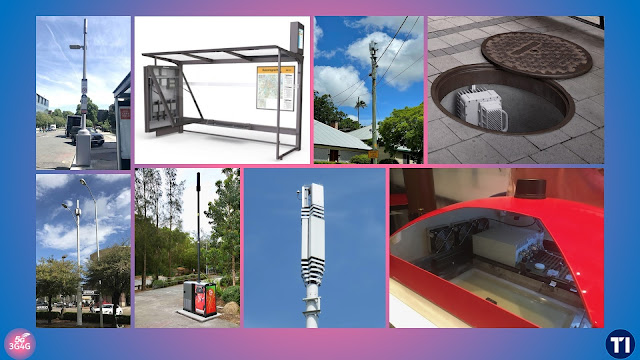
Paul showed examples of antennas concealed within buildings, chimneys, flagpoles, trees and even public artwork. One example was the mobile installation incorporated into the Golden Angel structure at Guildford Cathedral. Another local example was the equipment concealed within the tower of Great St Mary's Church in Cambridge, only a short distance from the event venue.

These installations demonstrate that mobile infrastructure can often coexist with sensitive architecture without dramatically changing its appearance. However, concealment is not always possible, practical or even desirable.

Laurence Moore, Senior Planning Officer at Greater Cambridge Shared Planning Service, provided the perspective of the local planning authority. His presentation was particularly useful because it explained why planning objections cannot simply be dismissed as opposition to technology.

Planning officers must consider the visual impact of new infrastructure, its relationship with surrounding buildings, the character of conservation areas, the effect on listed buildings and the cumulative impact of street furniture. Something as straightforward as a telecoms cabinet occupying part of a pavement can create accessibility problems for pedestrians, particularly those with reduced mobility.

An installation might be technically excellent while still being unsuitable for its proposed location.

Laurence also highlighted the importance of early engagement. Greater Cambridge offers free pre-application advice for telecommunications developments, allowing operators to discuss potential sites and designs before formally submitting planning applications. This can identify problems early, reduce redesign and potentially avoid unnecessary delays.

One important point was that local authorities are not necessarily opposed to telecommunications infrastructure. They recognise its economic, social and safety benefits but want it delivered in ways that respect the local environment.

Jenny Obee, Information & Digital Technology Director at Related Argent, approached the subject from a property developer's perspective, using King's Cross and Brent Cross Town in London as examples.

For developers, connectivity has become an important part of the value and attractiveness of a development. It supports residents, businesses, visitors, building management systems, energy monitoring, security and an expanding range of operational technologies. However, mobile connectivity is frequently considered too late in the development process.

By the time requirements are properly understood, rooftop space, plant rooms, risers and other infrastructure may already have been allocated. Incorporating mobile equipment then becomes considerably more difficult.

There is also a significant commercial challenge. The developer or property owner may have to fund infrastructure while the benefits are experienced by residents, tenants and mobile operators. This is particularly difficult for residential developments, where the economics of dedicated mobile infrastructure may be harder to justify than in commercial offices.

Jenny's central message was that connectivity needs to be designed into developments from the beginning, rather than treated as something that can be added later. Having a clearly defined responsibility for connectivity throughout the development lifecycle would make a significant difference.

Chris Stratton of Communication Property Services explored what happens when infrastructure providers, site owners, planning authorities and other stakeholders collaborate effectively, and what happens when they do not.

His examples illustrated how the same basic infrastructure can be received very differently depending on its location, surroundings and design. A structure that is barely noticed in an industrial environment might become highly controversial in a residential street or sensitive historic location.

Chris emphasised the importance of explaining why a particular installation is necessary, understanding what is actually behind local objections and considering whether sympathetic design could address those concerns.

This is particularly relevant because not every objection can be solved through technical changes. Sometimes the problem is poor communication, sometimes it is the proposed location, and sometimes a genuine design compromise is necessary.

David Gilligan, CTO of Constant Group, showed how equipment design and manufacturing can significantly reduce the visual impact of telecoms infrastructure.

Traditional macro sites can require multiple cabinets for power, radio equipment, fibre, baseband processing and other functions. Shared installations may introduce further complexity, particularly where several operators and multiple frequency bands need to be accommodated.

David demonstrated how modular designs can consolidate equipment, reduce the number of foundations and minimise the overall footprint. He also presented examples of small-cell installations designed to complement existing street furniture.

One interesting example involved deployments along London's South Bank, where equipment had to be integrated into a heavily used pedestrian environment with strict requirements around street furniture and appearance. Rather than simply installing standard cabinets, the designs incorporated bespoke arrangements and finishes that better matched the surrounding environment.

His presentation also explored the possibility of treating telecoms infrastructure as something closer to public art, with enclosures and structures designed to complement the local streetscape rather than merely conceal their technical purpose.

Ian Goetz of Parallel Wireless examined how changing mobile traffic patterns are influencing network design.

Historically, mobile networks have been built around macro sites providing relatively wide-area coverage. However, much of today's mobile data consumption occurs indoors or at street level, often with users moving slowly or remaining stationary.

This creates demand for network densification, particularly in urban areas where additional capacity and more consistent street-level coverage are needed.

Small cells mounted on lampposts and other existing street infrastructure can help address these requirements, but there are several practical challenges. Equipment must be sufficiently compact, suitable power and fibre connections must be available, and the mounting structures must accommodate the additional weight and wind loading.

Ian also discussed how Open RAN and centralised RAN architectures can provide flexibility in where equipment is located. Rather than placing all network functions at the installation site, some equipment can be centralised, leaving smaller radio units and antennas on street furniture. This can help reduce visual clutter while supporting more efficient network deployment.

The approach is also relevant to shared and neutral-host infrastructure, where one infrastructure provider can support connectivity for multiple operators. It could additionally support applications such as smart-city services, connected transport and wide-area private 5G networks.

Nick Wiggin from Wireless Infrastructure Group continued this theme by highlighting the growing role of shared outdoor small-cell infrastructure.

His presentation included examples of centralised RAN deployments in Aberdeen and Birmingham, demonstrating how equipment can be distributed across the network while minimising what needs to be installed on individual lampposts.

A particularly interesting comparison showed how conventional installations can involve several bulky equipment units attached to a lamp column, whereas more integrated shared solutions may require little more than a discreet antenna enclosure or wraparound arrangement.

Nick also highlighted Small Cell Forum forecasts pointing towards significant growth in public neutral-host small-cell deployments over the coming years, driven by increasing local-authority engagement, constrained operator capital expenditure and investment from specialist infrastructure providers.

This is important because simply replacing large mobile masts with hundreds of poorly designed small-cell installations would not necessarily improve the urban environment. Sharing infrastructure, reducing equipment dimensions and coordinating deployments are essential if densification is to avoid creating a different form of street clutter.

The panel discussion, chaired by Julie Bradford of Real Wireless, brought several of these themes together.

One important challenge raised during the discussion was the suggestion that small cells might somehow replace traditional macro infrastructure. As Professor Andy Sutton pointed out, macro and small cells perform different but complementary functions. A network cannot simply replace the wide-area coverage and capacity contribution of macro sites with small cells without considering the substantial technical and economic implications.

The consensus was that the future needs a suitable combination of macro sites, small cells and other deployment approaches, chosen according to the coverage, capacity, reliability and economic requirements of individual locations.

There was also discussion about the cost of delivering the level of connectivity the UK increasingly expects. Finding the right technology mix is not just a radio-planning problem. It requires investment, commercially sustainable infrastructure-sharing models, cooperation with local authorities and a better understanding of where additional sites will deliver the greatest benefit.

Towards the end of the panel, I raised a slightly controversial question.

Why are we always trying to make mobile infrastructure invisible?

After all, mobile connectivity is an essential part of modern life. We generally accept other forms of infrastructure, including railway stations, bridges, streetlights and electricity infrastructure, as visible parts of our environment. Some of these structures are purely functional, while others have become attractive architectural features or even landmarks.

Why should mobile infrastructure always be treated as something that needs to be hidden?

Perhaps there are opportunities to make some installations more colourful, incorporate local artwork, use distinctive architectural designs or even consider carefully designed advertising and branding.

In several countries, mobile infrastructure is visibly associated with the network operator providing the service. This could potentially have another benefit by making people more aware of the infrastructure delivering their connectivity, although shared sites and neutral-host networks make simple operator identification less straightforward.

There is also a wider question about public perception. If infrastructure is consistently hidden away, does that unintentionally reinforce the idea that it is something undesirable? Could attractive, recognisable and well-designed installations help people become more comfortable with the infrastructure they depend upon?

The response from the panel was interesting. There was recognition that infrastructure does not always need to be concealed and that attractive design can sometimes be preferable. The comparison with Victorian railway stations was particularly relevant. Many structures that are now regarded as important architectural landmarks were originally built to accommodate entirely new forms of infrastructure.

At the same time, practical experience from infrastructure deployments suggests that greater visibility can attract more objections. A highly visible design, however attractive to its creator, may not be welcomed by nearby residents.

There are also obvious limitations. Bright colours, advertising and prominent designs may be inappropriate in conservation areas or historic settings, while commercial advertising could introduce its own planning and visual-clutter concerns. What works in a modern shopping district may be completely unsuitable beside a medieval church.

Nevertheless, I think the industry should be willing to explore more than one approach.

In some places, hiding infrastructure within existing buildings or street furniture will clearly be the best solution. In others, carefully designed, visible infrastructure might actually improve the surroundings. Public art, sympathetic colour schemes, integrated seating, lighting or other useful street features could help turn infrastructure from an unwelcome necessity into something more positive.

The wider lesson from the event was that cell-site aesthetics cannot be considered in isolation. They are connected to radio-network design, infrastructure sharing, manufacturing, property development, planning policy, investment and public engagement.

Technology already provides many ways to reduce the footprint and visual impact of mobile infrastructure. The challenge is to bring those solutions together early enough, and with sufficient collaboration, to make a meaningful difference to real deployments.

Perhaps the objective should not always be to design an invisible network. It should be to design a network that people can accept, that works reliably, and that fits naturally into the places where they live and work.

And sometimes, rather than hiding it, we might even make it something worth looking at.

Related Posts: 

Tuesday, 11 November 2025

Vodafone’s 5G Advertising Pillars Bring Connectivity to Urban Streets

Vodafone Germany is giving a new lease of life to an old part of the cityscape. The familiar advertising pillars found across German cities are being transformed into 5G mobile base stations, delivering high-speed connectivity in areas where traditional masts are difficult to install.

In Düsseldorf, more than 100 such columns are already operational, providing 5G coverage across the city. Each pillar houses three compact antennas and all the equipment normally found on large masts, integrated neatly within the structure’s roof and concrete body. The design, developed in partnership with Ilg Outdoor Advertising, allows each pillar to cover an area of about 400 metres. The system is connected via fibre optics, ensuring low latency and data speeds of up to 1 Gbps.

This approach offers a practical solution to one of the biggest challenges of urban network expansion: finding new sites for antennas. Rooftop locations are often limited and subject to complex planning processes. By reusing existing structures, Vodafone has found a way to speed up deployment while blending infrastructure discreetly into the urban environment. The entire installation process for a 5G pillar takes less than half the time required for a conventional mobile base station.

The benefits of the project are already clear. In Düsseldorf, each 5G advertising pillar supports around 6,000 connections per day and handles roughly 200 gigabytes of data every week. The network, built with Ericsson’s equipment and operating on Vodafone’s standalone 5G+ technology, offers minimal latency and improved reliability. These compact sites helped strengthen coverage ahead of the European Football Championship, ensuring stable service in and around the stadium, fan zones and transport hubs.

Following the success in Düsseldorf, Vodafone is now extending the concept to other cities. Stuttgart recently became the first city in Baden-Württemberg to host a 5G advertising pillar, with five more due to follow by the end of the year. In total, up to 100 of Stuttgart’s 600 advertising columns could eventually be upgraded to 5G, enhancing coverage across busy streets, squares and landmarks such as the Mercedes-Benz Museum and the MHP Arena.

Each Stuttgart pillar uses Ericsson’s antenna technology and can deliver download speeds of up to 500 Mbps. The initiative is supported by local authorities who view it as a sustainable and space-efficient way to boost digital infrastructure. The combination of heritage and high technology brings a modern function to an iconic feature of German cities that dates back to the 19th century.

Vodafone’s 5G advertising pillars represent a clever mix of innovation, design and practicality. By making use of existing street furniture, the company is not only accelerating the rollout of next-generation connectivity but also showing how urban infrastructure can evolve to meet the digital needs of modern life.

Related Posts: 

Tuesday, 28 October 2025

ZTE’s Magic Pole Brings Smart Infrastructure to Kazakhstan

Beeline Kazakhstan and ZTE have taken another step in transforming the country’s connectivity landscape through the launch of the Giga City 2.0 initiative. The collaboration builds on the earlier Giga City project from 2024 and aims to create a new generation of smart, green, and AI-enabled telecom infrastructure across Kazakhstan.

At the heart of this initiative is the introduction of ZTE’s Magic Pole, installed in the centre of Astana. It marks the first deployment of this smart infrastructure solution in Kazakhstan. Designed as a multifunctional unit, the Magic Pole integrates a mobile base station with street lighting, offering both enhanced network coverage and a platform for future smart city applications. Its compact and modern design allows it to blend into the urban environment while improving connectivity in dense city areas.

The Magic Pole reflects the growing trend of infrastructure convergence, where telecom functions are seamlessly embedded into existing urban structures. Instead of constructing traditional tower sites, operators can deploy these smart poles to provide 4G and 5G coverage while supporting IoT sensors, environmental monitoring, or even public Wi-Fi in the future. It’s an example of how telecommunications infrastructure can evolve to serve broader urban development goals.

Beyond city centres, Beeline and ZTE are also testing hybrid-powered sites along the Astana-Borovoe national highway. These autonomous towers operate completely off-grid using a combination of solar and wind power. The hybrid design provides reliable signal coverage even in areas without access to electricity, significantly reducing environmental impact and operational costs. This approach highlights how renewable energy and telecom infrastructure can work hand in hand to extend digital connectivity into remote regions.

The Giga City 2.0 programme also includes demonstrations of ZTE’s Qcell solution for improving indoor coverage. A pilot installation at the Mega Silk Way shopping mall showcased how the system eliminates indoor coverage gaps and delivers consistent high-speed connectivity for users in busy commercial spaces.

ZTE and Beeline’s efforts align with Kazakhstan’s national vision for digital transformation, which emphasises sustainability, resilience, and inclusivity. From the Magic Pole in Astana to the off-grid sites along major highways, these projects showcase a model for how infrastructure modernisation can be both technologically advanced and environmentally conscious.

With initiatives like Giga City 2.0, Kazakhstan continues to position itself as a regional leader in smart and sustainable connectivity. For ZTE, the Magic Pole represents more than just a new product—it’s a glimpse into the future of how cities and operators can collaborate to build integrated, intelligent, and green digital ecosystems.

Related Posts: 

Thursday, 3 July 2025

Transforming Poles into 5G Sites with Alpha Fusion Streetworks Solutions

During a recent visit to Glasgow for the SCONDA project showcase, a collaborative initiative focused on advancing urban connectivity, I was struck by how far street-level network infrastructure has come in combining functionality with aesthetics. Among the most visually discreet and technically advanced deployments were those featuring Alpha Wireless' wraparound antennas. The AW4032 antenna stood out for its innovative design, enabling mid-pole mounting in a configuration that blended effortlessly with the urban environment while delivering high-performance 5G coverage. 

Live tests on attendees’ devices showed 5G download speeds reaching up to 720 Mbps, with improved coverage and congestion relief across city-centre locations. One attendee reported that the deployment achieved average 5G download speeds of 520 Mbps, while also reducing low-speed hours by 89% and reaching peaks of over 1 Gbps on small cells in a live dense environment.

Alpha Wireless has developed its Fusion Streetworks solutions with a clear understanding of the challenges faced by operators in urban areas. As network densification accelerates, especially with the move towards 5G standalone architectures, securing new street-level sites is proving increasingly difficult. The Fusion Streetworks platform responds to this by making better use of existing infrastructure such as lamp posts and streetlights. The AW4032 antenna, which forms the centrepiece of this platform, is designed to mount mid-pole without requiring sidearms or external hardware that would increase wind loading or visual impact. As it is an antenna-only product, the AW4032 pairs with external small cell radios, offering operators flexibility in radio selection.

The AW4032 combines compact form with support for advanced radio capabilities. It supports 16 ports across dual bands — 1695 to 2690 MHz and 3300 to 4200 MHz — and enables 4x4 MIMO, delivering strong signal quality and throughput. When ports in adjacent sectors are connected, the antenna produces a pseudo-omnidirectional pattern, providing seamless 360-degree coverage suitable for dense urban environments, hotspots and high-traffic venues. It is also highly adaptable. Operators can configure the ports to suit different patterns: back-to-back for focused directional coverage, or four-way for broader area coverage, all using the same hardware.

This modularity means the same unit can serve single or dual-operator deployments, with each operator connecting to a separate set of ports. This enables shared infrastructure without interference and lowers total cost of ownership. For instance, the dual-operator setup divides the 16 ports between two MNOs while still offering pseudo-omni performance, which is particularly useful in areas where zoning permissions limit the number of separate installations.

What makes the solution especially effective in public spaces is the attention to detail in concealment. The Fusion platform includes options for radio shrouds and integrated cabling management to maintain a neat appearance. This has been instrumental in speeding up approvals in areas traditionally sensitive to new telecoms infrastructure.

Alpha Wireless has already seen its Fusion Streetworks solutions rolled out as part of a 5G standalone deployment in central Birmingham. Working with Ontix and Virgin Media O2, these antennas have been deployed on existing poles in busy city locations, demonstrating how legacy infrastructure can be revitalised to meet the demands of next-generation connectivity.

From an infrastructure perspective, the AW4032 exemplifies how antenna technology is evolving to match the operational and regulatory pressures of modern small cell deployment. It simplifies rollout, minimises street clutter, and offers a level of future readiness that is essential for long-term network planning. For cities looking to accelerate their 5G ambitions without compromising on design, Alpha Wireless’ Fusion Streetworks platform offers a proven and practical approach.

Tuesday, 16 July 2024

EDOTCO Deploys Mobile Infrastructure in Bangladesh

Established in 2012, EDOTCO Group is the first regional and integrated telecommunications infrastructure services company in Asia, providing end-to-end solutions in the tower services sector from tower leasing, colocations, build-to-suit, energy, transmission and operations and maintenance (O&M).

EDOTCO Group operates and manages a regional portfolio of over 58,000 towers across Malaysia, Indonesia, Bangladesh, Cambodia, Sri Lanka, Pakistan, Philippines, Myanmar, and Laos. EDOTCO strives to deliver outstanding performance in telecommunications infrastructure services and solutions. Its state-of-the-art real-time monitoring service, echo, has driven significant improvements in field operations while maximising operational efficiencies in terms of battery, energy and fuel consumption for telecommunications infrastructure.

In Bangladesh, with a portfolio of over 18,000 towers and managed sites, EDOTCO have developed their built-to-suit and co-location offerings to enable telecommunications providers to efficiently meet their growing infrastructure requirements.

In a LinkedIn post last year, Sunil Issac, Country Managing Director of EDOTCO Bangladesh Co. Ltd talked about deploying telecom towers across Gazipur. Quoting from the post: 

Gazipur, the bustling hub of ready-made garment factories in Bangladesh, is witnessing remarkable growth. Readymade garment exports from Bangladesh have surged by 12.17% to $35.252 billion in the first nine months of fiscal 2022-23, reflecting the industry's incredible potential (Data released by the Export Promotion Bureau) 

At EDOTCO Group we understand the crucial need for reliable network connectivity in this industrial zone. That's why we've strategically deployed a significant number of telecom towers throughout Gazipur. This unique tower in Gazipur showcases ingenious space utilization and steel craftsmanship, enabling it to accommodate three tenants. 

By leveraging this inhouse innovative approach, we maximize efficiency and minimize costs, creating a win-win situation for all stakeholders involved. We believe Gazipur's factories have the potential to be the pioneering use case for Private Networks in Bangladesh.

In another post an employee shared their recent aesthetic Street Furniture pole installed at Nabisco Morh, Dhaka, designed specifically for mobile operators. Such poles not only blend seamlessly into the cityscape but also provide robust support for enhanced mobile connectivity.

Here is a slightly old but relevant video of EDOTCO infrastructure from Bangladesh:

Related Posts: 

Tuesday, 23 April 2024

'Connected Urban' - CU Phosco's 5G Smart Pole Streetlight Solution

When it comes to deploying outdoor small cells and infrastructure on streetlights and lamp posts, Germany is at the forefront. Check out the related posts at the bottom of this post to see all that's going on there.

In a recent press release, Telefónica Deutschland announced (Google translated from German):

The telecommunications provider O2 Telefónica and the infrastructure provider 5G Synergiewerk, together with the Würzburg public utilities, have put the first 5G street light into operation in Bavaria as part of a pilot project. The 5G lighting tower combines street lights and cell phone sites. In doing so, it fulfills two central utility tasks: to provide lighting at night and at the same time to offer the city's citizens a high-performance 5G mobile network.

The aim is to use the existing urban infrastructure as efficiently as possible for an improved mobile network and new digital applications - and thus increase the quality of life for city residents.

CU Phosco Lighting, which supplied the smart pole solution, announced on its website: 

CU Phosco Lighting is thrilled to announce the successful deployment of Connected Urban, its pioneering new smart pole solution designed to enhance mobile network capacities. As part of a Pilot project with our German partner, 5G Synergiewerk, the first 5G streetlight was recently installed in Würzburg, Bavaria, in collaboration with telecommunications provider O2 Telefónica and the Würzburg public utilities.

A smart city, modular, and fully customisable lighting and small cell high-performance mobile network solution within a single, compact footprint, Connected Urban is a break away from more traditional rooftop or cell phone mast locations, and so the installation marks a significant milestone in the evolution of street-level mobile network densification.

Replacing a conventional lamp post, the innovative solution efficiently utilises existing infrastructure and grid connections, to provide citizens with both night-time lighting and advanced telecommunications capabilities, setting a new standard for high-performance 4G and 5G mobile connectivity.

With digital infrastructure facing increasing demands, including music and video streaming, the Metaverse, AI-based programmes, augmented and virtual reality, as well as connected driving and autonomous logistics, Connected Urban is poised to significantly improve the quality of life for city residents and businesses.

5G Synergiewerk has a time-lapse video of the installation of 5G mast system on their website. A video of that embedded below:

Quoting again from Telefónica's press release:

The location on Versbacher Straße is the first active 5G street light in Bavaria . Another location will follow shortly on Schweinfurter Straße, which will conclude a successful pilot project . Coordination discussions are currently being held with all those involved for additional locations. The 5G street light offers smartphone users high bandwidths with 5G and 4G/LTE for mobile telephony and data use in the O2 network. The densification of the mobile network via such small radio cells, which are known in technical jargon as “small cells” , is particularly helpful with regard to the increasing data usage of O2 customers as well as future digital applications in the private and business customer sector. In addition to everyday music and video streaming, this will also include the Metaverse, AI-based programs, augmented and virtual reality, connected driving and autonomous logistics . In Würzburg, more than 40 mobile phone locations are already operating in the O2 network . They ensure comprehensive network coverage with 2G (GSM), 4G (LTE) and the modern 5G standard. Rooftop locations or cell phone masts are usually used for this extensively developed city network.

Street lights are widely used as part of any urban infrastructure and are also suitable as radio cells. They have a power connection, so only a powerful fiber optic connection needs to be added to transport the mobile phone signals. In addition, the 5G light fits harmoniously into the cityscape with its light distribution. The replacement of the conventional street light was carried out in collaboration with the Würzburg public utilities. The infrastructure provider 5G Synergiewerk supplied the special intelligent light pole , a so-called “Smart Pole”. O2 Telefónica then installed the energy-efficient 4G/5G mobile communications technology in the light and ensures a seamless connection to the nationwide O2 mobile network .

Related Posts: 

Friday, 19 January 2024

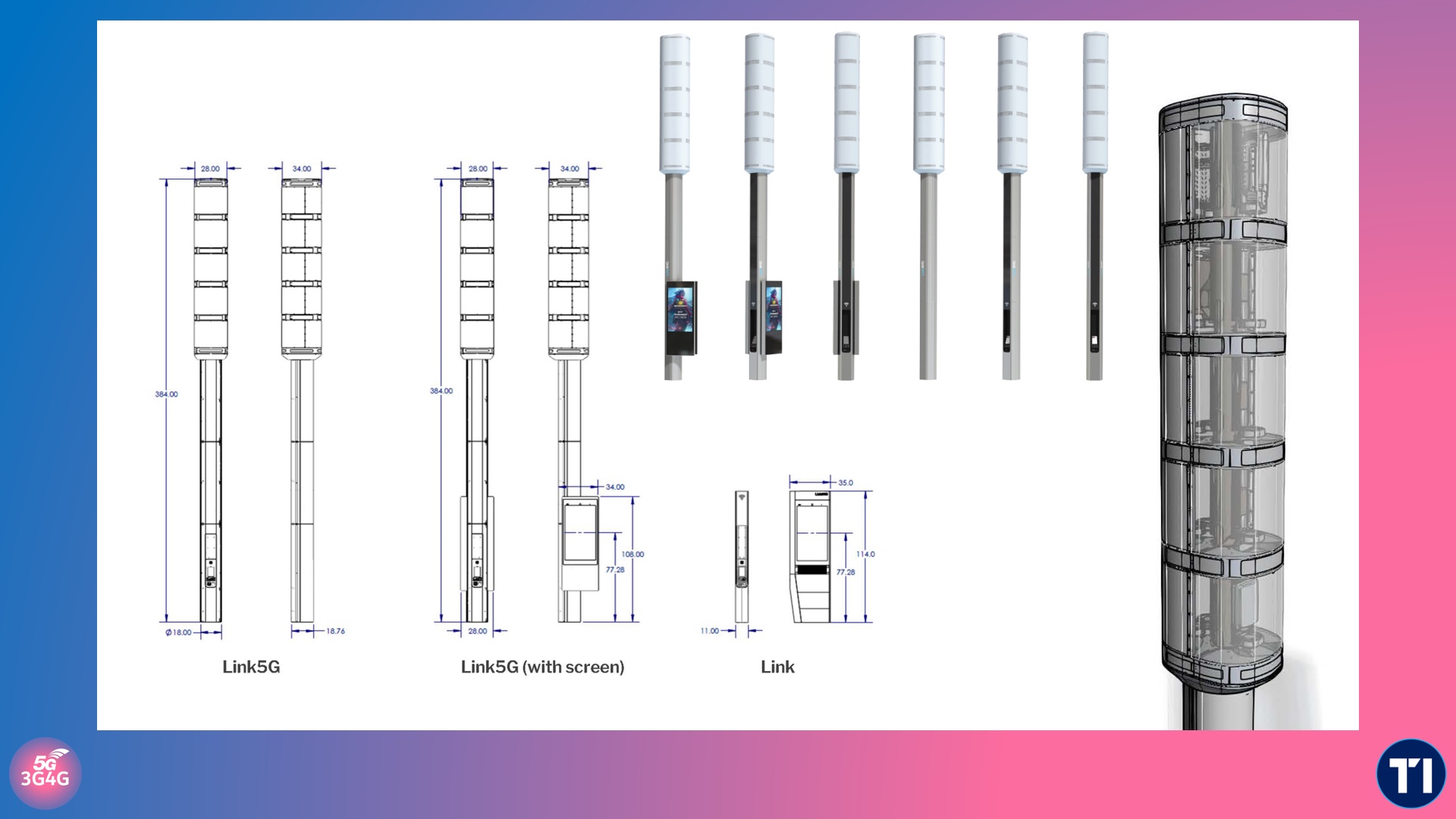
5G and Wi-Fi Connectivity from Link5G and LinkNYC's Tall Towers

Link5G is LinkNYC’s second generation offering that aims to improve the digital connectivity in New York City. The official website says:

Conceived in 2021 (the Year of 5G), Link5G enables the equitable deployment of both 5G cellular coverage and Wi-Fi connectivity across the five boroughs. Using multi-tenant structures, transmitters for telecommunication service providers will be housed within Link5G kiosks, expanding 5G options and enhancing coverage in underserved areas.

Link5G kiosks will bring better cellular service, increased opportunities to connect to free Wi-Fi, and improved options for in-home broadband internet access.

90% of the new Link5G kiosks, which are enabled for 5G and feature the same free services as the original Link kiosks, will be deployed in The Bronx, Queens, Brooklyn, Staten Island and above 96th Street in Manhattan. Additionally, 13 Community Districts have been specifically chosen by New York City to receive a minimum number of kiosks. Link5G will enhance neighborhoods’ cellular connections and provide businesses and pedestrians with improved high-speed Wi-Fi coverage. Link5G’s 32 foot height ensures that a 5G signal is effectively broadcast from optimal height for all carriers to reach New Yorkers' mobile devices.

Urban Omnibus has a good explainer of the issue and the infrastructure here. Quoting from the article:

CityBridge largely failed to accomplish its goal of helping to bridge the digital divide in the six years after kiosk installation began. The company put the majority of its more than 1,800 LinkNYC units in Manhattan but relatively few in the Bronx, Brooklyn, Queens and Staten Island, where neighborhoods lack at-home and mobile broadband at a higher rate. As THE CITY, the state comptroller and other news outlets have documented, the company fell short of ad revenue projections and was unable to pay $60 million it owed the city. The revenue shortfall resulted in an abrupt halt to kiosk installation, leaving many areas outside Manhattan without the access they were promised. The company faced bankruptcy in 2019. The city contemplated terminating the deal in 2020.

But despite the LinkNYC program’s history of delinquency, city officials are giving CityBridge another chance to bolster digital equity citywide: The company is now preparing to install hundreds of 32-foot-tall Link5G towers, beginning this summer. The city’s Public Design Commission approved the Link5G design for commercial and manufacturing areas at a meeting in December. Members postponed a vote on a residential rollout in order to review data on the service and infrastructural impacts of the towers’ first wave.

The new structures will be more than three times as tall as the original LinkNYC design. Like their predecessors, the lower part of the new structures will have a 911 button, USB ports, a tablet, calling capabilities and advertising displays. The structures will also provide free Wi-Fi. But the new designs will be topped by fifth-generation cellular network technology, or 5G, which will radiate from their upper chambers to enabled devices at street level. Multiple telecom companies could pay CityBridge to house their 5G equipment inside the chambers of a single structure. Their payments would bring in a new revenue stream to CityBridge, funding the company’s operations and expanded footprint.

The structures’ signals will supplement existing 5G networks that currently provide consumers speedy wireless internet service. City officials and CityBridge insist that more cell sites are necessary given the technical specifications of 5G, which require a “line of sight” to work: 5G is carried on millimeter waves that, unlike 4G frequencies, cannot penetrate most surfaces, whether a building or a bus.

Not everyone agrees that these look good or they will help in the future but there is a lot of support behind their installation. This article in NY Daily News for example argues:

Reliable wireless service requires the deployment of new infrastructure that supplements existing technology, such as rooftop antennas and underground fiber cable — or Link5G kiosks, which have space for up to five wireless carriers’ equipment. That means they can provide better, faster, and cheaper service for more people and small businesses nearby.

Bronx residents are not the only New Yorkers who could benefit from Link5G. Across New York City, approximately two-in-five households lack either a home broadband connection or mobile broadband through cell service. More than 1.3 million New Yorkers lack both. For these people, the social, educational, economic, and public safety consequences can be catastrophic. Here in the Bronx, nearly one in five teens cannot finish their homework because they live on the wrong side of the digital divide.

Link5G will eventually roll out to 2,000 locations, with 90% installed in the Bronx, Queens, Brooklyn, and Staten Island and above 96th St. in Manhattan. The need for these kiosks in underserved areas is illustrated by the fact that Link5G’s predecessor, LinkNYC, has provided more than 13 million New Yorkers with free, high-speed wireless internet since 2016 and is used to make around 425,000 phone calls monthly. It also offers access to 911 emergency services and valuable community-oriented public service announcements.

Even in districts with historic or commercial corridors, where locals have questioned the need for these kiosks, it’s unwise to assume every person who lives in the neighborhood, commutes there for work or is visiting has the same access to connectivity. My constituents often commute to other boroughs for work; their ability to stay connected is a necessity — not a luxury.

Still, many critics see the kiosks — which stand only as tall as traditional light posts — and attack their location, size, or ad screens without acknowledging the benefits of the kiosks to the city at large.

Let us know what you think.

Related Posts: 

Thursday, 21 September 2023

Vodafone's 5G+ Street Lights in Cologne, Germany

Last year Vodafone Germany announced that they have collaborated with the City of Cologne, RheinEnergie AG and 5g Synergiewerk to bring into operation the first 5G+ street lights in Germany. The first 5G+ street lights in Europe are located in the heart of Cologne city centre in the immediate vicinity of the lively squares at Heumarkt and Domplatte. 

The press release said (Google translated in English from German): 

Vodafone has equipped the two street lights with its own mobile communications technology - this includes the antennas, the active technology and the cable guides. The technology for the 5G network is housed in the lantern base (podium) of the nine meter high lanterns, the antennas are mounted six meters above the ground. The connection to the landline network is via fiber optic lines. RheinEnergie supplies the electricity for the street lights of the future. The antennas have a range of up to 400 meters and offer a speed of up to one gigabit in the 3.5 GHz band of the 5G+ network.

The so-called small cells are small radio cells that supplement the actual base stations of the mobile phone networks. They cannot replace a cell phone location on a roof or mast, but they provide additional capacity or increase the range in smaller areas within the cell phone cell. They are used primarily where there are a particularly large number of people in a small space. Small cells will play a particularly important role in the future for the 5G+ real-time network: in networked mobility offerings, for mobile augmented reality applications or for the social networks of tomorrow.

As part of its 'Gigabit Masterplan Cologne 2025', the city of Cologne is aiming for a comprehensive gigabit network with fiber optics in the ground and 5G in the air by 2025. The city of Cologne's goal is to facilitate network expansion in the cathedral city. Therefore, antenna locations of the city of Cologne and the Cologne public utilities as well as fiber optics and electricity are bundled and rented to the network operators or respective radio tower companies. The commissioning of the innovative street lights is part of the strategy for the comprehensive rollout of 5G+ throughout Cologne. Vodafone and its infrastructure subsidiary Vantage Towers are responsible for thisUse antenna locations in combination with fiber optic and power connections from the city and RheinEnergie. Vodafone is the first user of this 'Cologne model' of combined infrastructure provision. In principle, this model is open to all network operators.

A more detailed video is available in the post here.

In a post that no longer exists, LIGMAN Evolve provided their involvement:

LIGMAN Evolve worked closely with partners 5G Synergiewerk and Stadtsysteme to deliver a bespoke solution for the deployment of the 5G+ network which would blend in with the existing street lighting infrastructure.

The LIGMAN Evolve solution has provided Vodafone with the ability to conceal and thermally manage the radios within the base section of the pole. This podium section also incorporates the power and fibre connections.

The poles incorporate hatches with bracket arms designed for the passive antennas. These provide the ability to accurately align the antennas to the required sector to maximise coverage in the streets.

The Extended podium has been designed with separate compartments for the MNO’s and the local electricity company – ESB. Both have a locked enclosure and neither has access to the others enclosure.

Related Posts: 

Monday, 8 August 2022

Verizon's Growing Small Cells Footprint

Verizon was in news recently when their CTO, Ed Chan, mentioned that the operator had plans to speed up its small cell buildout starting in 2023. Light Reading quoted in an article:

His comments, made to financial analysts at Wells Fargo, come after the small cell market in the US took a breather during 2021 as big network operators focused on building out their new midband spectrum holdings via bigger, macro cell sites.

"Verizon anticipates small cells activity will ramp in 2023 as activity shifts toward 16t16r deployments from early 8t8r deployments built in 2022," wrote the Wells Fargo analysts of their recent meeting with Chan. Newer 5G radios can generally support more antennas, including 16T16R configurations.

"Chan also referenced that a third party had taken longer to grow scale and expertise to handle the installs Verizon had planned, but that it is reaching a point where a higher mix will trend toward third-party deployments from self deployments today," the analysts added.

Verizon officials did not respond to questions from Light Reading about Chan's meeting with Wells Fargo executives. The meeting is not listed among the operator's recent public investor events.

The small cell news could be important to equipment vendors, ranging from Airspan to Ericsson to CommScope. Jennifer Fritzsche, managing director at investment bank Greenhill & Company, wrote recently that Chan's comments could presage a resurgence in the US small cell market. She speculated that Verizon could turn to third-party small cell providers like Crown Castle and ExteNet Systems.

Small cells are big in the USA but the definition of it has become a bit fuzzy. In the old days it used to be an all-in-one unit but now anything that is deployed with an omnidirectional antenna or anything that is deployed on lamp posts or poles can be considered a small cell. 

Over the last few years we have looked at the small cells pics in the USA (see related posts at the bottom), so here are some of them from Verizon.

Quoting again from the Light Reading article:

Verizon is widely regarded as the leader in small cells in the US. The company has so far deployed 30,000 small cells sites for its millimeter wave (mmWave) 5G network.

"We continue to deploy millimeter wave, which is a key part of our network, providing massive bandwidth in dense urban areas," said Verizon's Rima Qureshi, the operator's chief strategy officer, during a recent Verizon investor event. But company officials haven't provided any specific goals for small cell buildout in 2023 and beyond.

T-Mobile has said that it eventually expects to operate around 40,000 to 50,000 small cells as it completes its big 5G network buildout, while AT&T at one point had planned to operate 40,000 small cells by 2015. But AT&T did not meet its goal, and company officials have remained quiet about small cells since.

Verizon, AT&T and T-Mobile have all been working to deploy their midband 5G spectrum holdings, and that work has shifted their focus away from small cells. Macro cell towers can cover wide geographic areas, while small cells – which typically sit atop street lights and rooftops rather than large cell towers – are primarily viewed as a method to improve capacity rather than coverage.

Which one is your favourite? Let us know if you have more pictures.

Related Posts: 

Friday, 10 June 2022

Omniflow Smart Street Lighting for 5G and IoT

I wrote about Omniflow back in 2017 so it was nice to see it in reality at MWC 2022 at Deutsche Telekom stand. A blog post on Telekom's website throws more light on the partnership:

Omniflow’s smart IoT lamp pole provides light, WiFi access, measures traffic flows, and many other services, all powered by sun and wind and using Telekom’s 5G technology.

Conventional street lights provide light, consuming a considerable amount of energy. Generating this energy releases up to 1.3 tonnes of CO2 per year. Not so with the smart IoT lamp pole manufactured by a Portuguese company, Omniflow. Omniflow’s state-of-the-art Smart Pole supports all kinds of practical uses such as traffic monitoring, smart parking, WiFi access, 5G small cells and many more. And thanks to solar modules, a wind turbine and integrated energy storage the smart pole can operate even during power network fails, being resilient and very energy-efficient. Compared with conventional street lighting, that enables operators to reduce their energy costs by over 90 percent.

A further reason for the growing global success of Omniflow smart poles is that the lights can be equipped with a wide range of IoT functions. Telekom supports this sustainable Smart City solution with LTE and 5G small cell modules for functions such as WiFi reception and data transmission to the cloud. Omniflow already has more than 2,000 smart poles in use around the world.

Digital Catapult has a case study on Omniflow here:

A graduate in material engineering, Pedro Ruão is the company founder and CEO of Omniflow. He started his career in product design, developing 3D prototypes. 

In 2009, a magazine article caught Pedro’s attention – a feature on Richard Branson and his search for cleantech innovators. Although Pedro did not work directly with energy at the time, the article inspired him to start formulating ideas. 

Pedro’s original idea was to generate and sell energy using a hybrid turbine and solar energy device. However, he soon realised this would be difficult to scale, let alone compete with the megawatts produced by giant wind farms and solar parks. 

Instead, Pedro saw the potential of using edge computing and IoT technologies to transform the turbine into a multi-purpose device, designing the Omniflow Smart Pole. 

Powered by wind and solar with integrated battery storage, the Omniflow Smart Pole transforms a regular streetlight into a sustainable smart infrastructure. One unit can provide WiFi, IoT sensors, computer vision, traffic management and charging points for electric vehicles or phones, among many possible services, to drive additional revenue for cities.

In 2021, Omniflow joined the 5PRING Green Innovation accelerator programme, designed to help small businesses develop cutting-edge technologies that reduce carbon emissions using 5G connectivity. 

5PRING is part of a programme of strategic projects led by West Midlands 5G (WM5G) to accelerate the benefits of 5G throughout the region.

As the technical lead for the 5PRING Green Innovation accelerator programme, Digital Catapult supported Omniflow to validate its 5G use case and access 5G testbed facilities.

Refining the technical configuration setup to use the 5G testbed, Digital Catapult installed the Omniflow test equipment and remotely performed tests using a private 5G network. 

By reporting latency of 17ms – compared to 125ms with public 4G – Digital Catapult confirmed that Omniflow’s unit would allow the delivery of a real-time surveillance solution and process video analytics through 5G.

Omniflow installations now span all continents, from Asia, to Europe and the United States. In Dubai Internet City, Omniflow is in partnership with Hewlett Packard Enterprise, showcasing 5G capabilities and innovation with an Omniflow Smart Pole equipped with computer vision, public WiFi and edge computing services. 

As a key market for green innovation, California has adopted a wide range of Omniflow solutions and 5G-enabled services across the state, including airport infrastructure, university campus security, city-wide smart lampposts and onboard technology for boats, used for Alcatraz Cruises. 

As cities across the UK commit to net zero targets, an Omniflow installation in Manchester recently reported energy savings of more than 90%, simply by replacing two-year-old LED streetlights.

Omniflow is also seeing a growing interest in drone charging stations, beneficial for managing solar parks, wind farms or surveillance for areas with a large perimeter. Powered by the smart pole, drones can also be used for logistics or medical emergencies, deploying defibrillators on demand.

With the expansion of its 5G offering and solutions, Omniflow plans to increase the battery capacity of its units, which could collectively generate megawatts of power.

Recently, Omniflow was selected as one of the 12 startups for AWS Sustainable Cities Accelerator. You can read the details on Pedro Ruão's LinkedIn post here.

Related Posts: 

Friday, 18 February 2022

UK will make Street Furniture accessible for Telecoms Infrastructure

The UK government has announced new plans to slash red tape from 5G roll out and improve mobile phone connectivity. For this to happen, street lights, bus shelters and traffic lights will be allowed host more mobile network equipment thereby helping boost mobile coverage as part of a new scheme to cut red tape and install more 4G and 5G kit.

The following is from the press release:

Eight winning projects will receive a share from the £4 million Digital Connectivity Infrastructure Accelerator (DCIA) to explore how digital software can help simplify local authority processes when telecoms operators request access to publicly-owned buildings and curbside infrastructure.

Street furniture such as road signs and CCTV poles can be used to improve 4G coverage but they are also integral to the roll out of 5G, which requires a larger number of smaller ‘cell sites’ - where antennas and other telecoms equipment are placed to form a network - to ensure seamless coverage and to meet surging demand for connectivity.

However, telecoms firms can often find it difficult and time consuming to acquire the information needed to verify a structure is suitable for hosting network equipment - such as its location, physical dimensions, proximity to the street or access to a power source - which is slowing down the pace of deployment.

In response, the government will invest in piloting the latest innovations in digital asset management platforms. This software will enable local councils to more easily share data mobile companies need to accelerate their roll out plans and deliver the revolutionary benefits of 4G and 5G to people and businesses.

From what we can see, this news has been well received by operators.

Related Posts:

Monday, 31 January 2022

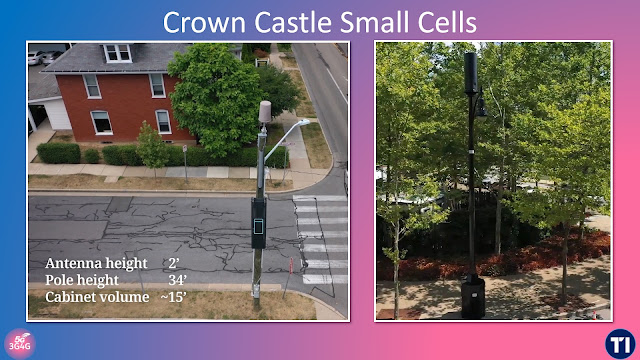
Crown Castle bringing more Small Cells to the USA

Crown Castle owns, operates and leases more than 40,000 cell towers and approximately 80,000 route miles of fiber supporting small cells and fiber solutions across every major U.S. market.

Earlier this month, T-Mobile US, Inc. and Crown Castle announced that the companies have signed a new 12-year agreement to support the continued build-out of T-Mobile's nationwide 5G network with increased access to Crown Castle's towers and small cell locations. The agreement enables the Un-carrier to further expand and deepen the reach of its industry-leading 5G network to serve consumers across the U.S. while also realizing financial synergies following its merger. The agreement also helps Crown Castle generate long-term tower and small cell revenue growth.

An RCR Wireless News article said:

Crown Castle secured commitments for over 50,000 new small cell nodes during the last twelve months, which equates to approximately 70% of the total small cells the booked in its history prior to 2021, the company’s CEO Jay Brown said in a release.

“As a result, we now have approximately 55,000 small cell nodes on-air and more than 60,000 committed or under construction in our backlog. Our customers are already planning for the next phase of the 5G buildout that will require small cells at scale, and this inflection in our small cells business reflects how well-positioned we are to support their wireless network needs for years to come, with our more than 80,000 route miles of fiber concentrated in the top U.S. markets,” the executive said.

“I believe 2022 will be an important transition year for our small cells and fiber business, as we prepare to accelerate our deployment of small cells from approximately 5,000 this year to what we expect will be more than 10,000 per year starting in 2023,” Brown added.

A Light Reading article from last year talked about a new report from Altman Solon. 

Altman Solon said it derived its findings from a database it constructed of small cells across more than 70 US markets. "Leveraging analysis of this database and augmenting with other primary and secondary research and our deep experience and knowledge base in the space for all small cell ecosystem players, Altman Solon has developed preliminary critical insights about the competitive landscape in the US small cell market," the firm boasted.

Among its findings:

  • "Small cell growth has been much slower historically than what industry reports have projected due to the regulatory climate, lack of neutral hosts, and limited backhaul," the firm wrote
  • Roughly 70% of the small cells it identified are located in dense urban and urban areas.
  • Crown Castle operates about 50% of all small cells identified, while mobile network operators like Verizon account for around 35%. Crown Castle operates about 50,000 commercially available small cells today, with another 30,000 on order. ExteNet Systems operates roughly 32,000 small cells across the country, while Mobilitie – recently acquired by Canada's BAI Communications – counts around 10,000 small cells.
  • Altman Solon identified very few neutral host small cells, which are small cells that transmit signals for more than one network operator. Such devices are considered critical to the growth of the industry considering neutral host small cells can generate significant revenues for the companies that operate them.

Here is a short video from Crown Castle explaining their view of small cells

Related Posts: