Showing posts with label Cloud and Edge. Show all posts

Tuesday, 30 September 2025

O-Cloud Driving the Future of Open RAN

For mobile operators, O-Cloud provides the cloud-native platform needed to automate RAN functions, integrate multi-vendor solutions, and optimise network performance at scale.

The Open Cloud, or O-Cloud, is the physical and software foundation that lets operators deploy open RAN in a cloud-native way. At its core an O-Cloud node bundles CPUs, memory, storage, network interfaces, board management controllers and optionally accelerators such as FPGAs to offload computationally heavy tasks. An O-Cloud is not a single machine but a set of resource pools that may be distributed across a centralised site and multiple edge locations. Together those pools provide the compute, storage and timing environments required to host O-RAN central units and distributed units, the management and orchestration layers, and observability and lifecycle services that keep everything running reliably.

Technically oriented operators will want to think of O-Cloud as an integrated stack of requirements rather than a single product. It must support bare metal deployment and tight integration with container orchestration for cloud-native network functions. It needs multi-cluster lifecycle management with automated scaling, network isolation primitives and deterministic CPU and memory control for real-time workloads. Features such as SR-IOV, PCI pass-through, DPDK support, huge pages and device plugins for FPGA or GPU enable low-latency packet I/O and hardware acceleration where needed. Time synchronisation is another non-negotiable; GNSS, PTP and SyncE support are all necessary for distributed scenarios that demand precise phase and timing alignment. On the management side the O-Cloud must provide board and host management, configuration and fault management, secure software update mechanisms and an infrastructure inventory that reports capabilities and resource availability to the orchestrator.

Why O-Cloud matters is best understood by mapping those technical building blocks to operational problems that operators face today. Mobile networks are now a mesh of legacy architectures, virtualised elements and new cloud-native components. Manual processes and basic automation are no longer sufficient to optimise service quality, scale to demand, or keep costs under control. The O-RAN Service Management and Orchestration framework, coupled with the O-Cloud, enables standards-based infrastructure management and cross-organisational data collection. That combination is the prerequisite for sophisticated automation and the application of AI techniques across the RAN.

A concrete operational capability driven by O-Cloud is application homing. When the orchestrator has an accurate inventory of O-Cloud resources and real-time telemetry, it can place workloads on the cloud instance that best meets the latency, throughput and cost profile required by an application. In practice this means low-latency services can be hosted on edge clusters with real-time OS and hardware acceleration while less-sensitive workloads run in centralised clusters that maximise cost efficiency. The O2 interface between the SMO and O-Cloud is what makes this possible by allowing registration and continuous inventory updates so the orchestrator always has an up-to-date picture of available resources.

Multi-cloud orchestration is another operational lever. In a disaggregated ecosystem operators can choose cloud providers or on-prem platforms based on geography, performance, pricing or regulatory requirements. Effective orchestration distributes workloads across these environments to optimise resource usage and resilience. For example, automatic lifecycle management and rolling updates let operators patch and upgrade clusters with minimal service disruption, while integrated observability ensures fast detection and remediation of performance degradations. These capabilities not only improve quality of experience for subscribers but also reduce operational effort and human error.

Security, isolation and regulatory compliance are built into the O-Cloud requirements. A Zero Trust approach that hardens host operating systems, enforces strict service-to-service authentication and integrates automated security testing into CI/CD pipelines is essential. Multi-tenancy and isolation at compute, network and storage layers are critical where regulators demand separation for emergency services, hospitals or public safety. Managing hardware accelerators and firmware securely is also part of the platform responsibilities.

Deutsche Telekom’s independent O-Cloud proof of concept demonstrates how these technical concepts translate into reality. Working with Red Hat and IBM, Deutsche Telekom used Red Hat OpenShift as the CaaS (container-as-a-service) layer to provide the container runtime, cluster lifecycle tools and GitOps-based operations. Red Hat’s automation tooling was used to implement zero-touch provisioning so hardware could be rapidly onboarded and configured. IBM Consulting supported the integration, system design and lifecycle automation that enabled rapid deployment, monitoring and observability across the lab environment. The trial, completed within six months, validated automated lifecycle management, observability and the integration of hardware and software with open interfaces.

The trial’s outcomes reinforce the argument that a properly engineered O-Cloud enables multi-vendor interoperability and operational freedom. Automation and monitoring requirements were met with minimal human intervention. Flexible infrastructure and vendor independence give operators choice and the ability to continuously select best-in-class components. Crucially, the PoC showed that inventory and capability reporting combined with orchestration can enable application homing and cross-cloud resource optimisation in practice, not just in theory.

Looking ahead, real-world O-Cloud deployments will need to balance competing priorities. Operators must plan migration paths that preserve legacy services while incrementally introducing cloud-native elements. They must invest in platform automation, observability and security, and build operational processes that exploit rather than fight cloud-native lifecycle paradigms. Energy and cost management must be considered at the infrastructure layer so that scaling decisions also reflect carbon and capex/opex objectives. Finally, industry collaboration and lab-to-field testing will remain important to refine standards, validate interoperability and mature the tooling around SMO, the O2 interface and multi-cluster management.

O-Cloud is therefore both a technical specification set and an operational philosophy. It ties precise platform requirements to the automation, orchestration and vendor independence that open RAN promises. Deutsche Telekom’s PoC shows that the blueprint works in practice and that the path to cloudified, multi-vendor RANs is feasible when infrastructure, orchestration and automation are designed together. For operators seeking to deliver programmable, resilient and cost-effective 5G and beyond, investing in O-Cloud capabilities will be a defining step on the road to modern RAN operations.

Related Posts

Tuesday, 19 November 2024

SK Telecom's Vision for Future Telco Infrastructure in the AI Era

Last month, SK Telecom released a 6G white paper that explores the evolution of wireless and wired infrastructure through the convergence of AI and telecommunications. The white paper highlights how Telco Edge AI infrastructure can redefine the value of network systems by enabling real-time data processing alongside AI-driven services. You can find my detailed blog post on the white paper here.

Dr. Takki Yu, Vice President of the Infra Tech Office at SK Telecom, leads R&D efforts across end-to-end mobile communication technologies. His work spans Radio Access, Core, Transport, Devices, Location, and Network AI. Dr. Yu’s primary focus is on advancing mobile communications, including 5G and Beyond 5G (6G) systems, as well as innovations in network virtualization, cloud, location-based quantum security, and AI integration. Notably, he played a key role in the successful commercialization of the world’s first 5G network in Korea and continues to lead the charge in developing Beyond 5G and 6G technologies.

At the Brooklyn 6G Summit (B6GS), Dr. Takki Yu delivered a keynote presentation titled "The Path to AI Telecommunications Infrastructure Evolution as Future Architecture." In his talk, he shared SK Telecom's vision for the future of telco infrastructure, reflecting on the expectations of the 6G era and the transformative shift towards AI-driven telecommunications infrastructure.

Related Posts

Monday, 21 August 2023

'Story of the Edge' by Akamai

People share some useful stuff on social networks that I bookmark to visit and write later. This was shared by John Francis Nolan nine months back or so. I have just managed to watch it and definitely worth a share here.

Prof. Ramesh K. Sitaraman is currently a Distinguished University Professor and the Associate Dean for Educational Programs and Teaching in the College of Information and Computer Sciences at the University of Massachusetts at Amherst.  He is best known for pioneering content delivery networks (CDNs) and edge computing services that currently deliver much of the world’s web, videos, edge applications, and online services. As a principal architect, he helped create the Akamai network, the world’s first major content delivery network (CDN) and edge computing service. He retains a part-time role as Akamai’s Chief Consulting Scientist. 

Late last year he delivered a talk 'Living on the Edge for a Quarter Century: An Akamai Retrospective' on The Networking Channel. The following is the abstract of the talk:

As Akamai and the creation of the “edge” turn 25, we look back at the key role that the edge has played in the evolution of internet services. The story of the edge starts in the late 1990s when servers were deployed worldwide to provide content delivery services for web pages and videos. The quest to move dynamic content and application logic closer to users created the first edge computing services a few years later. The growth of the edge that now spans thousands of locations has dramatically increased the scope and importance of services that critically rely on it. This has created new challenges in operating the edge at scale and securing it from sophisticated attacks. Further, as the carbon footprint of the edge grows rapidly, reimagining a sustainable “zero-carbon” edge that is powered by renewable energy poses a key direction for future research.

His talk is embedded below and the PDF copy of his presentation is available here.

You can view the author's publication page here.

Related Posts

Friday, 18 March 2022

The Provider (Telecom, Cloud) and User Open Edge: Innovation with No Vendor Lock-in

Dr. Cliff Grossner was hired at Open Compute Project (OCP) Foundation back in September last year. He leads the market intelligence function at OCP and is responsible for driving awareness of OCP, training and certification programs, and guiding inventors presenting their early-stage company ideas to potential investors.

At the Layer123 Conference back in November 2021, Cliff presented a talk that covered the edges that are forming, use cases and forces driving edge computing. His talk is embedded below:

Related Posts

Friday, 14 January 2022

Building the telco edge with or without hyperscalers!

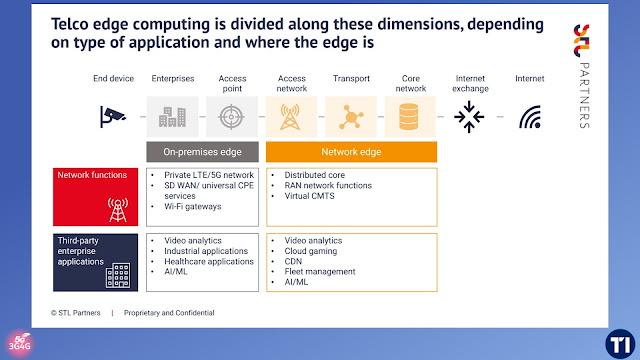
Ever wondered how are operators building their Telco Edge Networks? Is it different in Asian countries as compared to the rest of the world? Some of these questions have been answered in STL Partners webinar they hosted last year. The narrative says:

2021 is seeing growth in telco edge, with some operators in the region having already launched their edge offerings in 2020. In parallel, hyperscale cloud providers are growing their cloud business in Asia and will build new data centres in the next 1-2 years. ​

For telcos, they need to best determine how to build their edge and to what extent they should work with hyperscalers. ​

This webinar draws on data from over 150 surveyed telecoms operators to answer key questions, such as:​

  • How are operators in Asia building the edge?​
  • How much of their edge infrastructure will be provided by a hyperscaler?​
  • Which use cases should Asia operators focus on?​

The webinar video is embedded below:

The slides and Q&A can be downloaded from the webinar page here.

STL Partners have a huge archive of webinars, do check it out here.

Related Posts

Friday, 10 December 2021

Telefonica on the Impact of 5G so far

Enrique Blanco, Global CTIO, Telefónica presented a Keynote at Telecoms Europe 5G 2021 virtual event on 9 Nov 2021. The title of his presentation was What’s the impact of 5G so far? and it discussed how the unprecedented speed is just the start of how 5G is changing the face of connectivity. What has been the impact so far on how people live, work, and play, all over the world? 

The video of his talk is embedded below.

Related Posts:

Friday, 11 June 2021

AWS for Public and Private 5G Networks

wrote about AWS Edge being used to power Private Networks and Industry 4.0 back in March. Since then we had this big announcement from DISH and AWS about formation of 'Strategic Collaboration to Reinvent 5G Connectivity and Innovation'.

It talks about how the new US operator, DISH, will leverage AWS infrastructure and services to build a cloud-based, 5G Open Radio Access Network (O-RAN) that delivers consistent, cost-effective performance from core to the edge. 

Netmanias has done an awesome job of explaining how AWS will be used in the Dish network and compares it with the Rakuten Virtualised network. Reproducing the original from them below.


In addition, they have also done a fantastic job of explaining how different operators are planning to use AWS in their Networks. 


You can read more details for each of the operators below:

  • AWS and Verizon Expand 5G Collaboration with Private MEC Solution
  • AWS and Vodafone Business Bring Edge Computing Closer to Organizations in Europe
  • Announcing the first AWS Wavelength Zone in South Korea on SK Telecom (SKT)’s 5G network
  • KDDI To Launch "AWS Wavelength" On December 16, Offering Ultra Low Latency on the 5G Network Edge
  • Singtel and Optus expand 5G ecosystems with AWS for 5G edge computing
  • Telefónica Germany / O2 builds new 5G core network in the cloud
  • DISH and AWS Form Strategic Collaboration to Reinvent 5G Connectivity and Innovation
  • Bell Canada teams up with AWS for edge computing

Let us know what you think about the operator strategy of moving to AWS for something or other.

Related Posts

Saturday, 3 April 2021

Transition to Infrastructure 2.0

Infrastructure can mean different things to different people in different industries. We tried to explain what it means in the telecoms industry in one of our tutorials here.

When it comes to Infrastructure 2.0, there are articles dating back years. Couple of examples here and here. Back in those days we were talking more about virtualization while today we are talking about containerization and cloudification. We have some introductory presentations on Cloud Native here.

I have heard Qualcomm speakers talk about Infrastructure 2.0 but what does it mean from their point of view? Here is what Cristiano R. Amon, President & CEO-Elect of Qualcomm meant according to RCR Wireless

Infrastructure 2.0 seeks to address the fact that existing core network infrastructure is limited in its ability to handle the highly virtualized network models that the industry is moving toward.

For instance, there has been some concern for awhile now around how data center virtualization will impact existing enterprise networking models.

At the CTIA event, Amon explained that 5G will be revolutionary, creating new industries, use cases, services and network models. However, a network capable of doing all that 5G promises requires “infrastructure like we’ve never seen.”

“It needs to be dense, high-performance, cost-effective and power-efficient for both indoors and outdoors, and support public and private networks with a scalable and flexible networking equipment for diverse deployments across multiple industries and use cases,” he continued. “This modern 5G network is driving a shift towards virtualized radio access solutions or vRAN.”

For further context, in a previous conversation with RCR Wireless News, Amon discussed how this push towards virtualization and openness is a potential vector of disruption to traditional network equipment providers, and this disruption is what will lead to Infrastructure 2.0.

“I believe that vRAN and Open RAN creates a huge opportunity for some of the network equipment providers that will lead the transition in what Infrastructure 2.0 is,” he said, adding that incumbents could “take a leading role in the software that will run in those networks and will provide feature parity between the existing systems and the new systems.”

With the announcement of Qualcomm 5G RAN platforms, we will probably seem them talking a lot more about Infrastructure 2.0

Related Posts:

Friday, 12 March 2021

AWS Edge to Power Private Networks and Industry 4.0

At the ONF 2020 Spotlight Series, '5G Connected Edge Cloud for Industry 4.0 Transformation', Ishwar Parulkar, Chief Technologist, Telco, Amazon Web Services (AWS) gave a keynote presentation on 'How AWS Edge is Powering Industry 4.0'. 

He talked about how AWS Edge is powering the 4th Industrial Revolution by building the connected edge cloud. His talks covers:

  • Edge Developer Expectations
  • AWS Vision of Edge
  • Edge Infrastructure
  • AWS Enabled Private Networks
  • Services for the Connected Edge

The video of the talk is embedded below and the slides are available here.

Back in January, AWS also released a nice whitepaper on 'Next-Generation Mobile Private Networks Powered by AWS'.


This whitepaper introduces the relevant use cases, solutions, and best practices for designing and deploying mobile private networks powered by AWS. Cloud-enabled mobile private networks allow enterprises, governments, and professional organizations to autonomously deploy their own geo-dispersed, secure mobile private networks. These networks cover private facilities while meeting their performance, reliability, availability, security, and scalability requirements. 

It's available to download here.

Related Posts:

Friday, 5 February 2021

SK Telecom’s 5G MEC Status and Plan


Back in December, at '5G Connected Edge Cloud for Industry 4.0 Transformation – 2020 Spotlight Series', Kang-Won Lee, Vice President, 5GX Cloud Labs, SK Telecom gave a talk on SK Telecom’s 5G MEC Status and Plan. 

It was interesting to see that while the industry has changed the definition of MEC to Multi-access Edge Computing, SKT still refers to it as Mobile Edge Cloud. As SKT has now crossed over 10 million 5G subscribers, they have noticed a lot of demand for Edge compute capability. While there is a demand, enterprises, factories, buildings, etc. are not interested in managing their own infrastructure. They would rather somebody else provides the services. This is where SK Telecom sees new business opportunities in the future. Along with the high throughput, high capacity and low latency, security and privacy is very important as well. 

As the services move to edge, there is more predictibility on QoE and the latecny can be reduced to as low as 1ms which is a huge benefit to critical applications. While they are not there yet, they are moving towards that goal. There is also a huge opportunity for public cloud providers here.

SKT has 2 main deployment models as can be seen. The public edge where they have data centres distributed throughout the country and can hence provide MEC services to 5G users nationwide. On the other hand, On-site edge is useful for providing private MEC services to enterprise and government users. Ideal for smart factories, smart hospitals, offices, etc. In both cases, SKT are open to collaborate with the users, communities, open source, big companies, etc.


Finally, SKT MEC Architecture can be seen in the picture above. The 5G network and 5G-MEC gateway can be seen which is connected with the compute and storage resources which are in turn connected to SKT tech assets or other operator platform or public cloud platform as required. The video provides more details including the SKT MEC Architecture details.

The slides are available to the registered users here and the talk is embedded as follows:

Related Posts:

Friday, 3 April 2020

Operator Cloud Infrastructure and Innovation Strategy

When I wrote about Docomo's Open Innovation Cloud, there was some discussion about what exactly is meant by the cloud, whether it has to be public or private (there is hybrid as well) and if service providers (SPs) are embracing it or not.
So before we jump into the mobile operator's strategies, I thought it would be good to do a quick introduction / recap on what is meant by cloud. Embedded below is a slightly long presentation, which goes in some detail but for most people the first 7 minutes is more than enough.


GSMA's 'The 5G Guide' which was produced last year has a lot of valuable information for the operators and everyone else willing to learn from that. Section 3.11 deals with '5G Value Enablers: Operator Cloud'. The key takeaways from that section are:

  • The Operator Cloud will combine the best of both cloud and edge to enable the 5G ‘Service Delivery Model’.
  • Edge computing in 5G networks will be delivered as Multi-access Edge Computing to reduce latency.
  • An Operator Cloud can help operators to save up to 2% of capex by improving operational efficiency and customer experience.
  • If operators can create competitive global platforms for edge/cloud services, this could unlock a new revenue opportunity of up to $100bn.

The GSMA whitepaper details the importance of operator cloud and the case for MEC, which is suited in what scenario. I am not detailing them here except for the final section below:

Value creation and capture with the Operator Cloud is firstly about an ‘infrastructure strategy’

A common refrain in the industry about the Operator Cloud, edge computing and MEC is that they present a chicken and egg dilemma. Operators seek a robust business case with clearly identified revenue sources and sizes before embarking on the journey to deploy the distributed edge/cloud infrastructure. While this may look like the prudent thing to do, it creates inertia for action and can lead to operators foregoing the opportunity completely.

An alternative approach is to consider the Operator Cloud, firstly as part of the infrastructure strategy of an operator. Under this approach, the Operator Cloud is progressively rolled out together with 5G network build out. Operators also begin to use it for backhaul relief and to improve the QoE for customers.

Under this approach, operators can satisfy their own operational and customer experience needs, and then address new opportunities without needing to impose an unachievable ROI hurdle. Figure 3.11.3 shows the contrast between the infrastructure strategy vs. the innovation strategy.

With new 5G services and applications being defined in more mature markets, operators are keeping their options open as to when is the right time to change their strategy from infrastructure centric to innovation centric.


Related Posts:

Monday, 23 March 2020

Docomo 5G Open Innovation Cloud


Earlier, I wrote about how the Japanese operator NTT Docomo is creating a whole new set of innovative 5G applications and use cases with the help of partners. For that purpose they have created the 5G Open Cloud platform. While NTT Docomo is using it to deliver it's own use cases and innovative applications, partners are encouraged to create their own services on top of that too.

In this post I am embedding a talk and the corresponding presentation looking at the challenge of creating this platform and how this is being solved. This presentation is from last year but still has lots of good information and I doubt things would have changed significantly.


Related Posts:

Friday, 28 February 2020

Rakuten details how Cloud will make Telecommunications Industry Irrelevant


Yesterday we detailed Rakuten's Open RAN and Innovation Journey here. Today, we look at a presentation from the recent 5G Malaysia International Conference 2020 where Tareq Amin, CTO, Rakuten Mobile, presented his vision on how Cloud will eventually make Telecommunications Industry Irrelevant.


Innovation has allowed them to create a site with the smallest footprint. Not only that, the change of design has allowed the operator to save massive amounts of money and at the same time pushing the software in the cloud  allows the site to come up is 8.5 minutes as compared to the traditional time of between half to two days.

Rakuten uses 6 hardware types in their data centers which are COTS servers and this has helped them achieve some amazing results as can be seen here.


Tareq is expecting Opex to reduce even more due to automation. Time will tell. Here is the presentation embedded below.


Related Posts: