Friday, 25 March 2022

Taoglas Advanced Antennas and RF Components

Taoglas is a leading provider of advanced technology for a smarter world. Focused on best-in-class, high-performance antenna and RF design with advanced positioning, imaging, audio and artificial intelligence technologies, Taoglas has unique expertise in integrating and commercializing highly complex technology solutions. 

At the Mobile World Congress 2022, we caught up with Baha Badran, Global Head of Engineering at Taoglas to tell us about the different types of antennas and what they are used for. Baha didn't disappoint us and gave us a whirlwind tour of all the antennas on the display at their booth. The video is embedded below.

To learn more about Taoglas, visit their website here.

Related Posts

Friday, 18 March 2022

The Provider (Telecom, Cloud) and User Open Edge: Innovation with No Vendor Lock-in

Dr. Cliff Grossner was hired at Open Compute Project (OCP) Foundation back in September last year. He leads the market intelligence function at OCP and is responsible for driving awareness of OCP, training and certification programs, and guiding inventors presenting their early-stage company ideas to potential investors.

At the Layer123 Conference back in November 2021, Cliff presented a talk that covered the edges that are forming, use cases and forces driving edge computing. His talk is embedded below:

Related Posts

Sunday, 13 March 2022

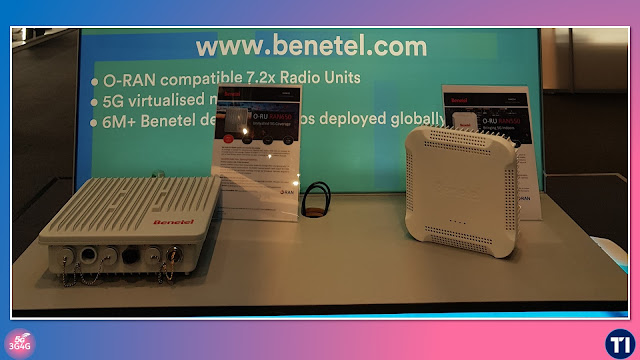
Benetel shows their Open RAN RU Progress

Benetel, headquartered in Dublin, Ireland, has a 20 year history with over 6 million Benetel designed radios deployed around the world. We caught up with them at Mobile World Congress 2022 to find out what they have been up to. 

We first heard of Benetel when they announced the launch of its flagship BNTL-RAN550 High-Performance 5G O-RAN radio unit (O-RU) back in 2020. Their MWC 2022 press release provides details on their latest RAN650 RU :

This is intended to bring 5G capacity to private, campus and industrial networks, as well as rural networks and public hotspots. A 4T4R antenna arrangement is featured with up to 5W of output power being delivered per antenna port (equating to 20W in total). The 7.2x functional split employed will help minimize the costs associated with fronthaul network implementations, while support for 100MHz of instantaneous bandwidth will allow maximum coverage to be attained.

Benetel’s new RAN650 RU can be deployed in either a Cat A or Cat B based configuration (using selected distributed units), thereby providing flexibility to address radio access network architectures. Key to its elevated performance and versatility is the cutting-edge semiconductor technology that has been designed into it. Each RU incorporates an Intel Arria 10 FPGA along with an Analog Devices’ ADRV9029 4T4R transceiver with integrated Digital Pre-Distortion (DPD). The initial version of the RAN650 covers the n77u (3.7GHz to 4.2GHz) frequency range. An n78 variant (3.3GHz to 3.8GHz) will be made available in the second quarter of 2022.

The RAN650 RU runs off a 48V supply. It has a maximum power consumption of 110W. The robust IP65-rated enclosure use means that even the most challenging of outdoor conditions can be coped with. An operational temperature range spanning from -33°C to +45°C is supported.

The RAN650 complements Benetel’s existing OpenRAN portfolio, including the RAN550 indoor 5G RU that the company announced back in late 2020. Active network trials are already being conducted on the Benetel RAN650 by several pilot customers.

TMN reported last year that, Benetel said it has integrated its Radio Unit (RU) with Radisys’ 5G NR Open RAN CU-DU software and has also licensed Radisys’ LTE software for its eNodeB radio platforms. The official announcement comes after Benetel told TMN last month that it was working with both Radisys and Altran on DU-CU integration.

If you are interested in learning more about Benetel then watch Olli Andersson, Benetel's senior VP for the Americas, discussing the O-RAN architecture's climb into market relevance here.

Related Posts:

Sunday, 27 February 2022

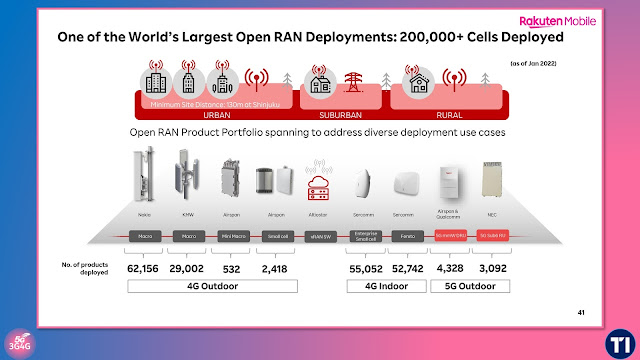
Rakuten Mobile shows off their Open RAN Portfolio

(Click on image to enlarge)

During the Full Year and Fourth Quarter 2021 earning call, President of Rakuten Mobile, Yoshihisa Yamada gave a short summary of the progress of the mobile network. During that, he also showed the Open RAN product portfolio spanning to address diverse deployment use cases.

The portfolio can be seen in the picture above and you can listen to his part of the talk in the video below: 

You can download the slides from here.

Related Posts

Friday, 18 February 2022

UK will make Street Furniture accessible for Telecoms Infrastructure

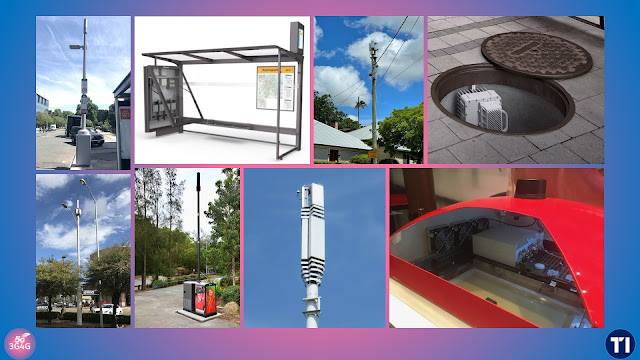
The UK government has announced new plans to slash red tape from 5G roll out and improve mobile phone connectivity. For this to happen, street lights, bus shelters and traffic lights will be allowed host more mobile network equipment thereby helping boost mobile coverage as part of a new scheme to cut red tape and install more 4G and 5G kit.

The following is from the press release:

Eight winning projects will receive a share from the £4 million Digital Connectivity Infrastructure Accelerator (DCIA) to explore how digital software can help simplify local authority processes when telecoms operators request access to publicly-owned buildings and curbside infrastructure.

Street furniture such as road signs and CCTV poles can be used to improve 4G coverage but they are also integral to the roll out of 5G, which requires a larger number of smaller ‘cell sites’ - where antennas and other telecoms equipment are placed to form a network - to ensure seamless coverage and to meet surging demand for connectivity.

However, telecoms firms can often find it difficult and time consuming to acquire the information needed to verify a structure is suitable for hosting network equipment - such as its location, physical dimensions, proximity to the street or access to a power source - which is slowing down the pace of deployment.

In response, the government will invest in piloting the latest innovations in digital asset management platforms. This software will enable local councils to more easily share data mobile companies need to accelerate their roll out plans and deliver the revolutionary benefits of 4G and 5G to people and businesses.

From what we can see, this news has been well received by operators.

Related Posts:

Friday, 11 February 2022

THOR - Verizon's Disaster Response COW

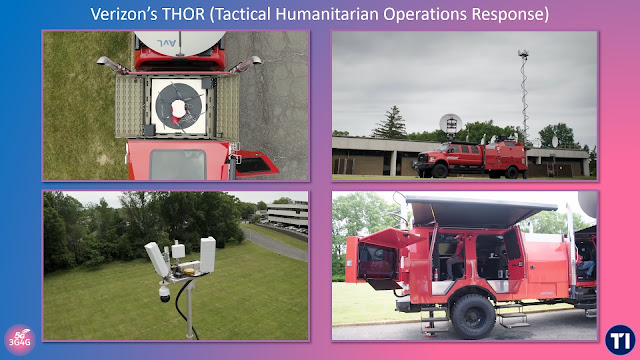
When we wrote about how Verizon uses satellite connectivity to restore services after hurricanes, someone made us aware of THOR, the Verizon disaster response vehicle in a league of its own.

The Verizon Response Team (VRT) has a collection of different types of field equipment, which they refer to as 'The Barnyard'. This includes COWs (Cell On Wheels), COLTs (Cell On Light Trucks), CROWs (Cellular Repeater On Wheels) and GOATs (Generator On A Trailer). The latest addition to this is THOR (Tactical Humanitarian Operations Response).

The press release points out:

THOR is National Incident Management System — or NIMS-1 — compliant and offers full radio interoperability and onboard Joint Operations Center services. It provides a multitude of connectivity options, spanning private 5G, commercial 4G LTE, Land Mobile Radio and tactical radio, wireless networking, microwave, mesh and more. Other components include 4G/5G radios, a rear command center, a camera, a six-seat cabin and an exterior touch screen display.

It also comes equipped with a tethered drone to capture an aerial view that can be fed over the network to devices on the ground and the command center below, potentially helping those in public safety or the military with risk and damage assessment, situational awareness or search and rescue operations.

As a prototype, there are currently no plans to build a second THOR, as designs for future 5G-enabled response vehicles continue to evolve.

Here is a video with more details of THOR.

Related Posts:

Monday, 31 January 2022

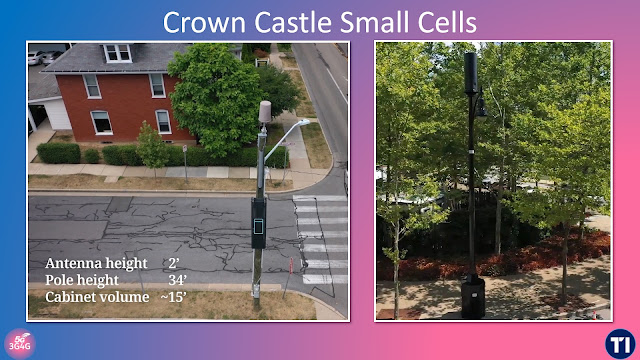
Crown Castle bringing more Small Cells to the USA

Crown Castle owns, operates and leases more than 40,000 cell towers and approximately 80,000 route miles of fiber supporting small cells and fiber solutions across every major U.S. market.

Earlier this month, T-Mobile US, Inc. and Crown Castle announced that the companies have signed a new 12-year agreement to support the continued build-out of T-Mobile's nationwide 5G network with increased access to Crown Castle's towers and small cell locations. The agreement enables the Un-carrier to further expand and deepen the reach of its industry-leading 5G network to serve consumers across the U.S. while also realizing financial synergies following its merger. The agreement also helps Crown Castle generate long-term tower and small cell revenue growth.

An RCR Wireless News article said:

Crown Castle secured commitments for over 50,000 new small cell nodes during the last twelve months, which equates to approximately 70% of the total small cells the booked in its history prior to 2021, the company’s CEO Jay Brown said in a release.

“As a result, we now have approximately 55,000 small cell nodes on-air and more than 60,000 committed or under construction in our backlog. Our customers are already planning for the next phase of the 5G buildout that will require small cells at scale, and this inflection in our small cells business reflects how well-positioned we are to support their wireless network needs for years to come, with our more than 80,000 route miles of fiber concentrated in the top U.S. markets,” the executive said.

“I believe 2022 will be an important transition year for our small cells and fiber business, as we prepare to accelerate our deployment of small cells from approximately 5,000 this year to what we expect will be more than 10,000 per year starting in 2023,” Brown added.

A Light Reading article from last year talked about a new report from Altman Solon. 

Altman Solon said it derived its findings from a database it constructed of small cells across more than 70 US markets. "Leveraging analysis of this database and augmenting with other primary and secondary research and our deep experience and knowledge base in the space for all small cell ecosystem players, Altman Solon has developed preliminary critical insights about the competitive landscape in the US small cell market," the firm boasted.

Among its findings:

  • "Small cell growth has been much slower historically than what industry reports have projected due to the regulatory climate, lack of neutral hosts, and limited backhaul," the firm wrote
  • Roughly 70% of the small cells it identified are located in dense urban and urban areas.
  • Crown Castle operates about 50% of all small cells identified, while mobile network operators like Verizon account for around 35%. Crown Castle operates about 50,000 commercially available small cells today, with another 30,000 on order. ExteNet Systems operates roughly 32,000 small cells across the country, while Mobilitie – recently acquired by Canada's BAI Communications – counts around 10,000 small cells.
  • Altman Solon identified very few neutral host small cells, which are small cells that transmit signals for more than one network operator. Such devices are considered critical to the growth of the industry considering neutral host small cells can generate significant revenues for the companies that operate them.

Here is a short video from Crown Castle explaining their view of small cells

Related Posts:

Friday, 21 January 2022

Telefónica Deutschland Activates Germany's First Open RAN Small Cells with Airspan Networks

O2 / Telefónica is a technological pioneer in the use of Open RAN. Since December 2020, it has successfully integrated four base stations in Landsberg am Lech into its mobile network. At present, they are testing the technology, gaining experience and planning further expansion at other locations once all tests have been successfully completed. 

In an announcement this week, it said that it is the first German mobile network operator to have activated the first mini-radio cells with innovative Open RAN technology (ORAN) in Munich. They are intended to provide all O2 Germany customers with even more capacity and higher bandwidths at busy locations in the future. 

While the press release doesn't mention the vendor, Airspan Networks Tweeted that the ORAN Small Cell is supplied by them

Selected extract from the press release as follows:

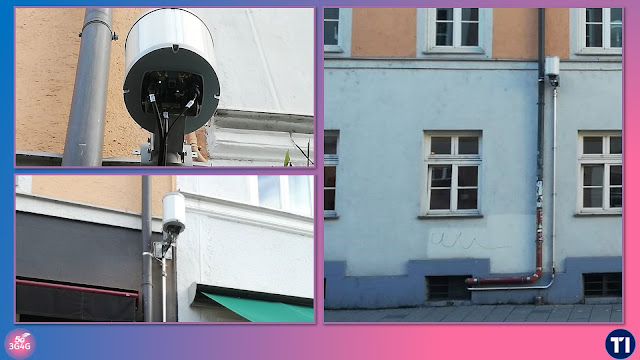
With the compact, flexibly deployable latest-generation mini mobile cells, the company is able to increase 5G/4G capacities in the O2 network at high-traffic locations in urban areas faster than before. The mini-radio cells, attached to a building facade on Klenzestraße in Munich's Gärtnerplatz district, supplement the 4G/5G mobile network installed on rooftops in the city center, but do not replace it.

Small Cells directly enhance the network experience for local customers. The new technology, which is not much bigger than a shoebox, provides customers in very close proximity with 4G and bandwidths of up to 100 Mbps. In the near future, O2 / Telefónica will also use the small cells for targeted, selective 5G coverage. Here, too, the focus will primarily be on particularly busy locations in German city centers, such as very busy squares, shopping streets or public transport stops.

In addition to a power supply, the small cells required a connection via fiber optics. In Munich, this is provided by the fiber optic infrastructure of Stadtwerke München and the local telecommunications provider M-net.

In the coming weeks, further installations will follow in Munich's city center: First, two 4G radio cells at Gärtnerplatz and later this year, O2 / Telefónica will also install pure 5G Open RAN mini radio cells ("5G Standalone") for the first time in the area of Kaufinger Straße in the Bavarian capital. In the course of these expansions, it is also conceivable to use existing infrastructures of Stadtwerke München - such as bus stops or power distributors.

Related Posts

Friday, 14 January 2022

Building the telco edge with or without hyperscalers!

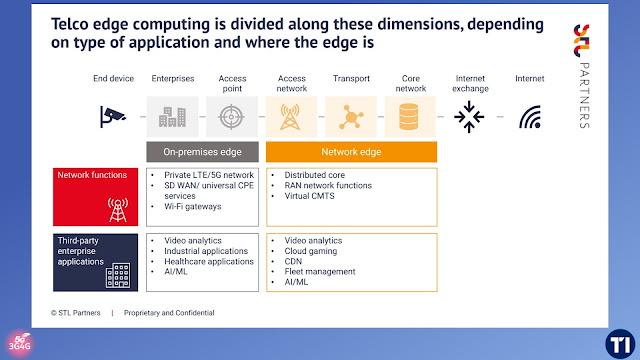
Ever wondered how are operators building their Telco Edge Networks? Is it different in Asian countries as compared to the rest of the world? Some of these questions have been answered in STL Partners webinar they hosted last year. The narrative says:

2021 is seeing growth in telco edge, with some operators in the region having already launched their edge offerings in 2020. In parallel, hyperscale cloud providers are growing their cloud business in Asia and will build new data centres in the next 1-2 years. ​

For telcos, they need to best determine how to build their edge and to what extent they should work with hyperscalers. ​

This webinar draws on data from over 150 surveyed telecoms operators to answer key questions, such as:​

  • How are operators in Asia building the edge?​
  • How much of their edge infrastructure will be provided by a hyperscaler?​
  • Which use cases should Asia operators focus on?​

The webinar video is embedded below:

The slides and Q&A can be downloaded from the webinar page here.

STL Partners have a huge archive of webinars, do check it out here.

Related Posts

Friday, 7 January 2022

5G for Defence and Autonomous Military Solutions

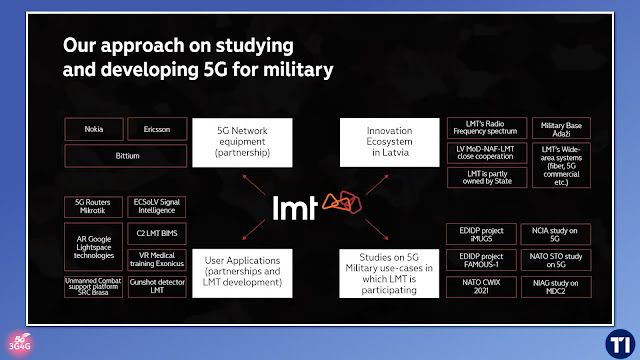
Integrated Modular Unmanned Ground Systems (iMUGS) consortium is a 13-party collaboration focused on standardising a European-wide ecosystem for aerial and ground platforms, command, control and communication equipment, sensors, payloads, and algorithms. The parties involved in the iMUGS project are Milrem Robotics, Latvijas Mobilais Telefons (LMT), Talgen Cybersecurity, Safran Electronics & Defense, NEXTER Systems, Krauss-Maffei Wegmann, Diehl Defence, Bittium, Insta DefSec, sol.one, dotOcean, GMV Aerospace and Defence, and Royal Military Academy of Belgium.

Within the iMUGS project, the Latvian MNO LMT is conducting a study on the potential use of 5G in autonomous military solutions. Back in September, the future role of 5G in autonomous military solutions was demonstrated by LMT in collaboration with the iMUGS Consortium. 

A press release said:

The demonstration, during which various scenarios were played out in battlefield-like conditions while showcasing specific use cases, took place today, on September 23rd, at the Ādaži military base in Latvia.

This was the second of a total of six demonstrations with the aim of showcasing the results of the iMUGS (Integrated Modular Unmanned Ground System) project – one of Europe’s leading defence industry development projects. The demonstration was organised by LMT, one of the members of the iMUGS consortium, with the support of the Latvian National Armed Forces and the project coordinator Milrem Robotics.

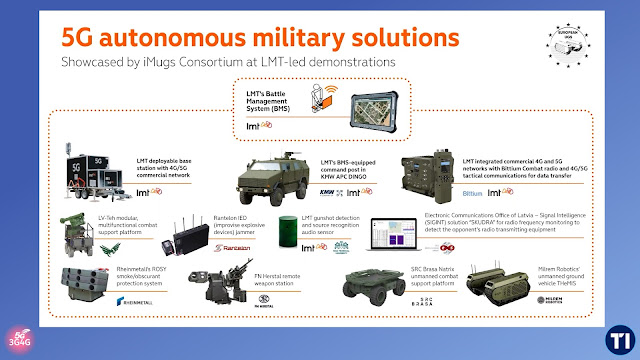
During the demonstration, the troops played out close-to-reality military scenarios in operational environments and relevant climatic conditions. Milrem Robotics’ unmanned ground vehicle THeMIS, was used, along with a number of other cutting-edge military technologies, such as:

  • LMT’s battle Information Management System for displaying the data of the payloads and as a command system for scenario execution
  • LMT’s Intelligence Surveillance Reconnaissance (IRS) system for performing aggressive fire detection and source recognition
  • The ISR system ‘Skudra’ for performing the signal intelligence mission
  • A highly protected wheeled vehicle DINGO 2 as a command post from which the mission was led

Alternative communication networks were used by the troop and an unmanned ground vehicle, in scenarios that included switching from a tactical network, provided by Bittium in collaboration with LMT, to 4G and 5G networks.

Some videos shared by LMT are embedded below:

At the 5G Techritory 2021, Armands Meirāns, Innovation Leader for Defence & Public Safety at LMT gave a presentation on 5G for Defense, as showcased by iMUGS Consortium. His talk is embedded below:

Related Posts: